
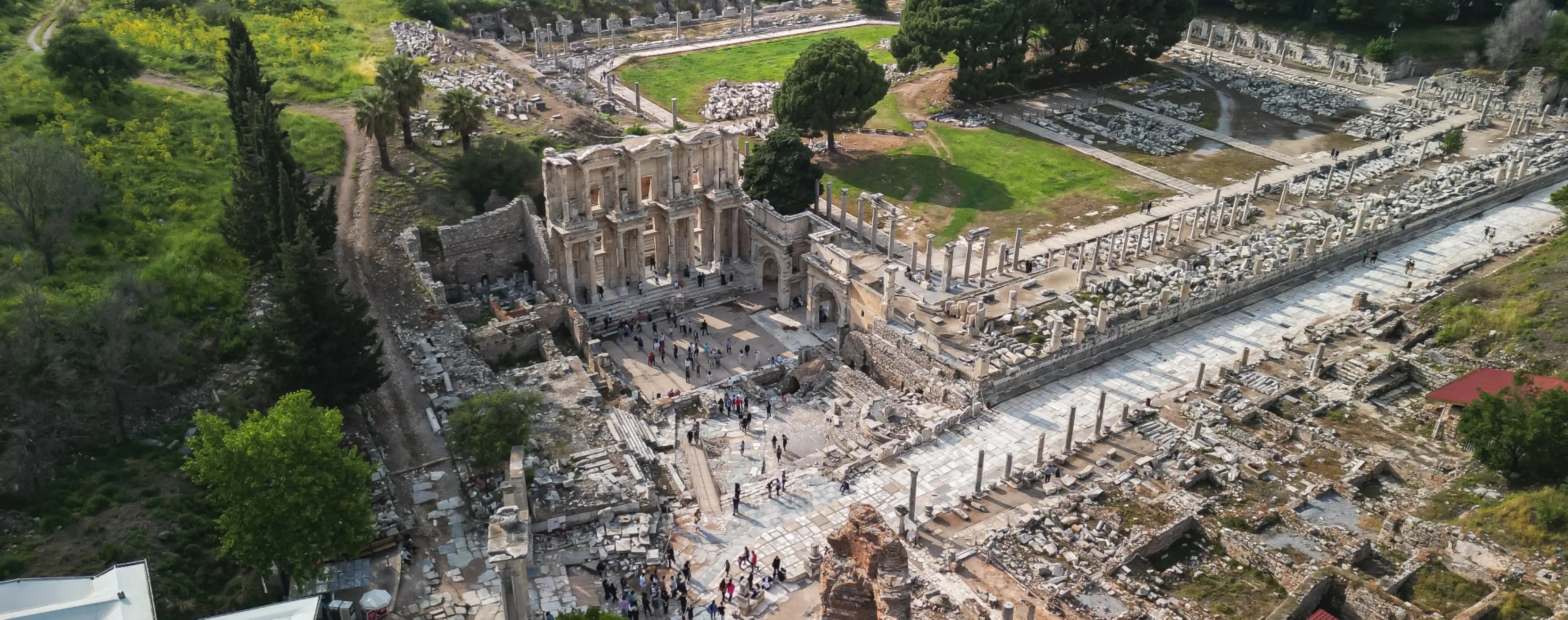
Agora of Ephesus
Agora of Ephesus in Izmir, Turkey
The Agora of Ephesus is located within the archaeological complex of ancient Ephesus, near modern-day Selcuk in Izmir Province. It was situated south of the Basilica and was one of the important public spaces of the city during the Roman period. This site is interesting because it makes it possible to imagine not only the layout of the ancient center, but also the everyday business life of Ephesus.
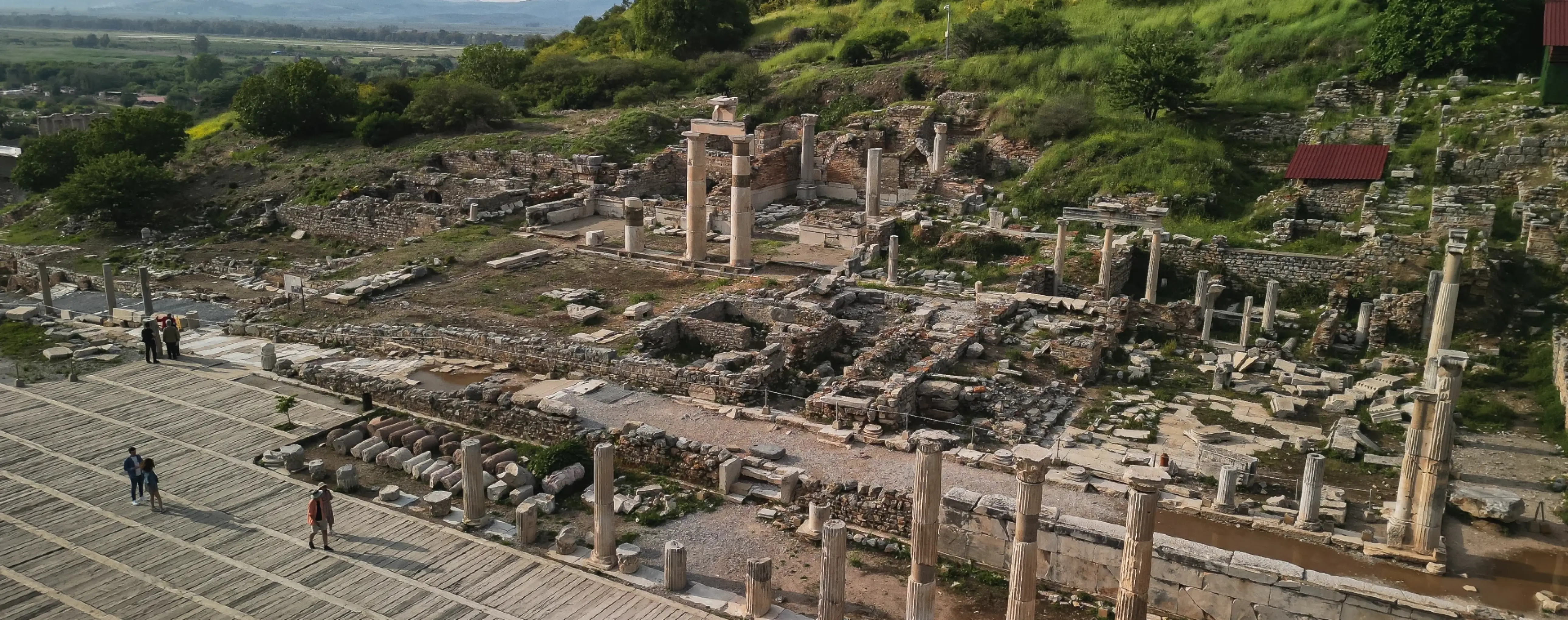
Unlike trading squares with a clearly defined market function, this agora was used primarily for meetings, discussions of city affairs, and the making of agreements. The square had a rectangular shape and was surrounded by colonnades, which created a convenient space for movement and gatherings. The preserved remains make it possible to judge the scale and orderliness of Roman-period urban development.
Archaeological finds show that the history of this site began much earlier. In the northeastern part, burials from the Archaic period were discovered, as well as a paved road and a terracotta sarcophagus. These data suggest that before the later Agora was formed, part of the area was used as a necropolis.
In the center of the square there was a sanctuary, usually associated with the cult of Isis, and in one of the corners a reservoir was arranged, connected to the city's water supply system. Today, the Agora of Ephesus is of interest to those who want to better understand the structure of an ancient city, its public functions, and its development over several eras.
Agora of Ephesus on the map
Izmir, Ephesus: Archaeological monuments
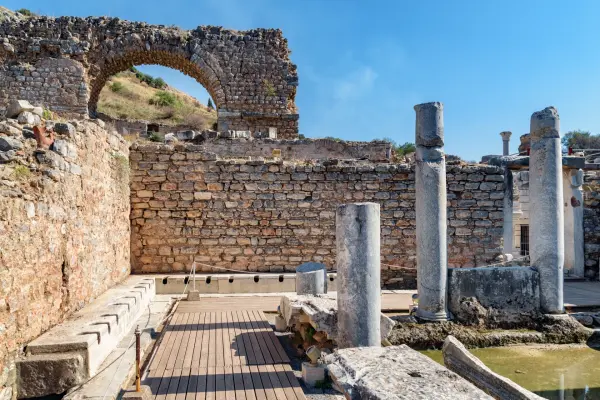
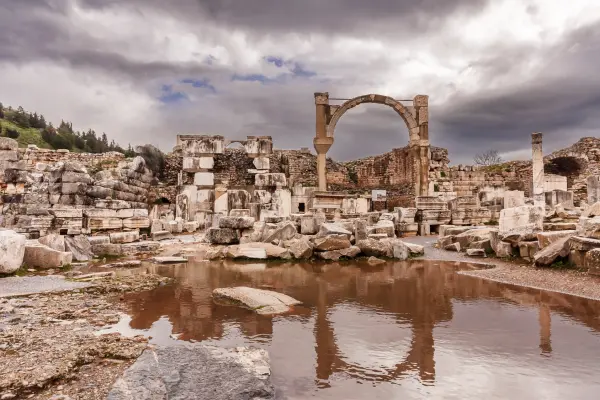
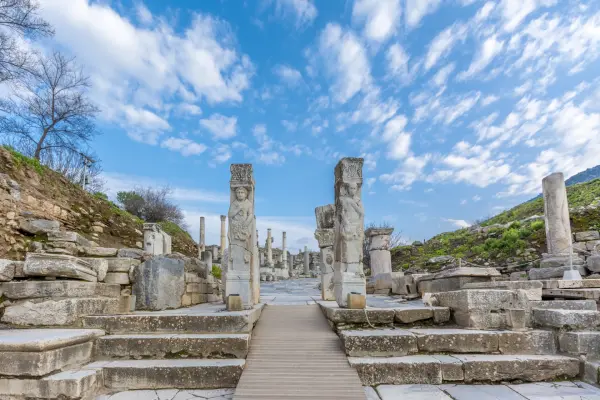
Ancient Public Toilet in Ephesus, Pollio Fountain, Hercules Gate, Bas-relief of the Goddess Nike
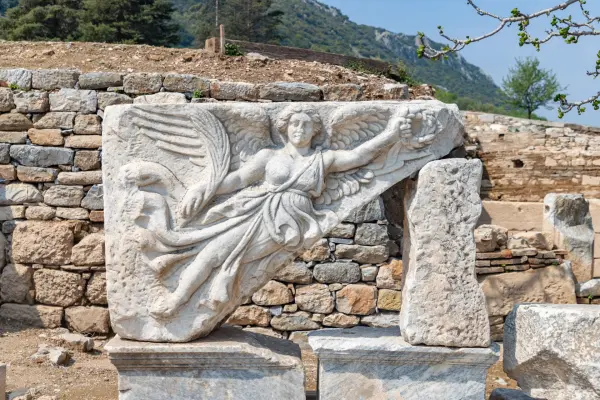
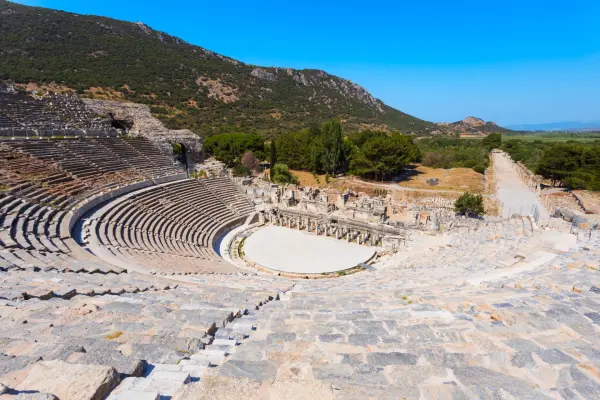
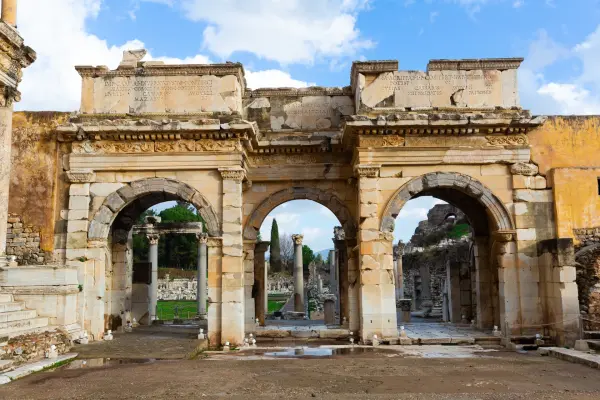
The Agora of Ephesus and its place in ancient Ephesus
Here you can see the layout of the public center of a Roman city.
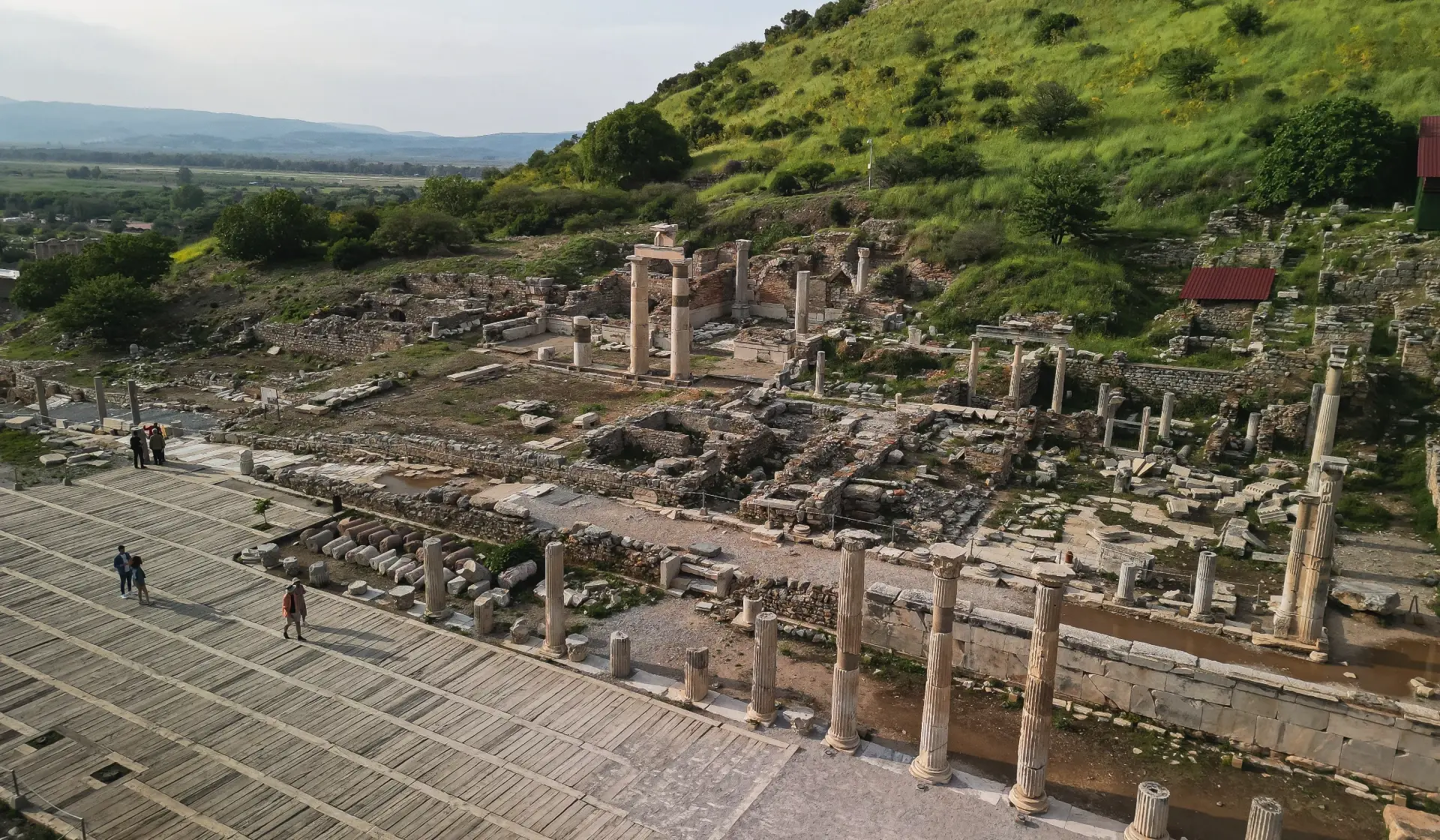
Rectangular square with colonnades and traces of an early necropolis
At the site of the Agora, visitors see an open rectangular square framed by the remains of Roman-period architectural structures. What is most clearly visible here is the organization of the space itself: a broad square, the lines of the colonnades, and the connection with neighboring public buildings. This is one of those parts of Ephesus where it is especially noticeable how the ancient city was divided into administrative, religious, and public zones.
During a visit, it is worth paying attention not only to the Roman remains, but also to the archaeological context of this site. Earlier burials were found in the area, showing the change in the function of the place from an Archaic necropolis to an urban public center. For visitors, this is an important detail: it is clearly visible here that Ephesus developed in layers, and the Roman development arose on a site with a much older history.
The Agora is usually visited as part of the general route through Ephesus together with the Basilica, the state agora, the Odeon, the Prytaneion, and the streets of the ancient city. This order helps to better understand how the different public spaces were connected to one another. It is convenient to allow time for a walk through this area as part of a full visit to the archaeological zone, especially if you want to read the information panels and study the layout.
You can reach it through the archaeological complex of Ephesus from the Selcuk side, which is usually accessed from Izmir by car, bus, or commuter train. Since the Agora is located next to other key monuments, it does not usually require a separate visit, but it complements the overall understanding of the structure of the ancient city well.
Best tours and travel experiences across the continent

Photos of the Agora
Guided tours, popular attractions, and top-rated hotels across the continent


