
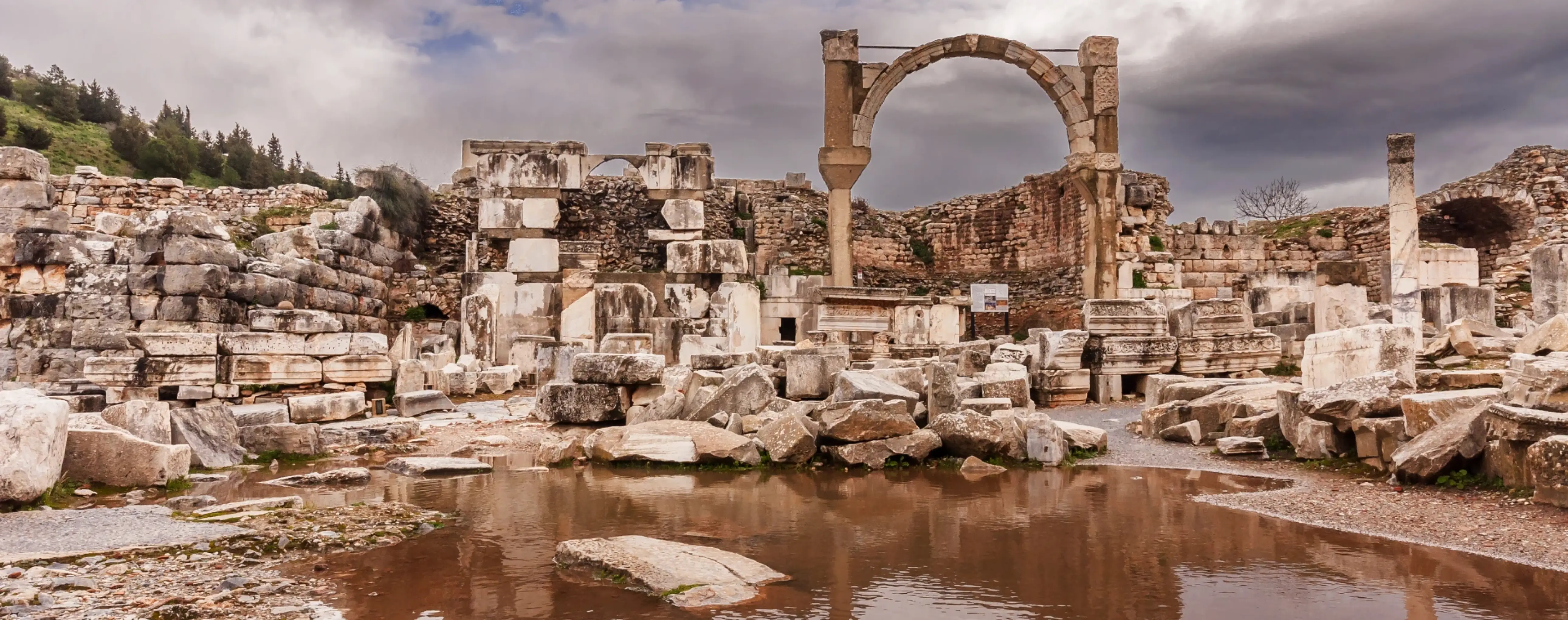
Pollio Fountain
Pollio Fountain in Izmir, Turkey
Pollio Fountain is located within ancient Ephesus, near the State Agora and opposite the Odeon, in the Selcuk district of Izmir Province. It is one of the notable public fountains of the ancient city, built at the end of the 1st century AD with funds provided by Gaius Sextilius Pollio and his family. The structure was part of the city's water supply system, which provided water to squares, baths, and other public spaces.
In Ephesus, water arrived via aqueducts from several sources and was distributed through pipes within the city. Such fountains served not only practical purposes but also emphasized the status of the city's streets and squares. Pollio Fountain shows how important engineering, urban improvement, and public architecture were for Roman Ephesus.
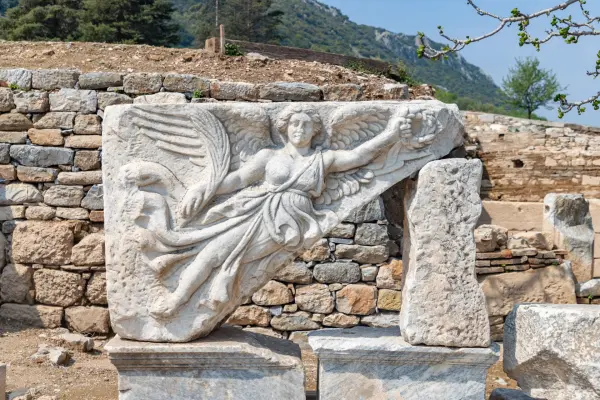
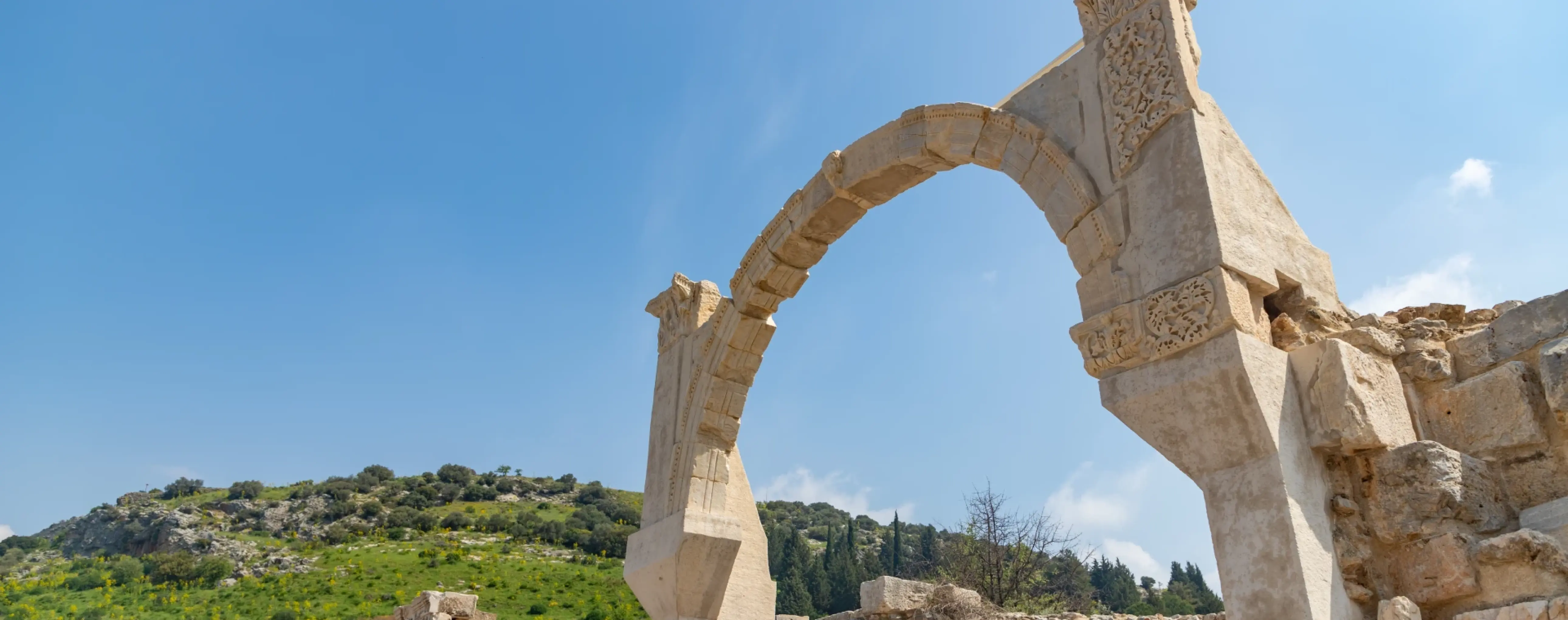
Originally, the fountain was designed as a monumental facade with a high niche, architectural decoration, and sculptural adornment. Today, tourists mainly see the surviving fragments of the structure, which make it possible to imagine its original scale. Several well-known sculptural finds are associated with the fountain, some of which are kept in the Ephesus Archaeological Museum.
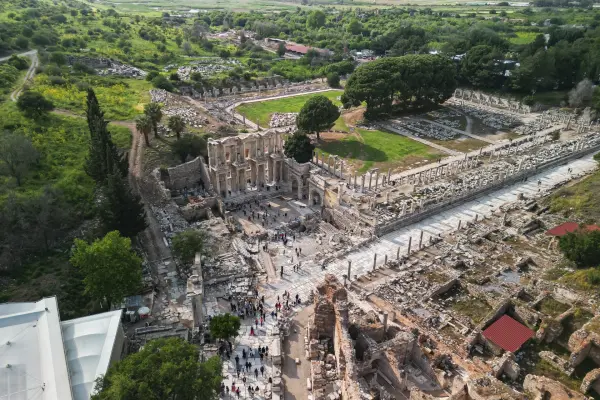
This site is of interest to those who want to better understand the layout of the ancient city beyond its most famous monuments. A visit to the fountain is usually included in a walk through the central part of Ephesus, where the Odeon, the State Agora, the Temple of Domitian, and other Roman-period structures are located nearby.
Pollio Fountain on the map
Izmir, Ephesus: Archaeological monuments
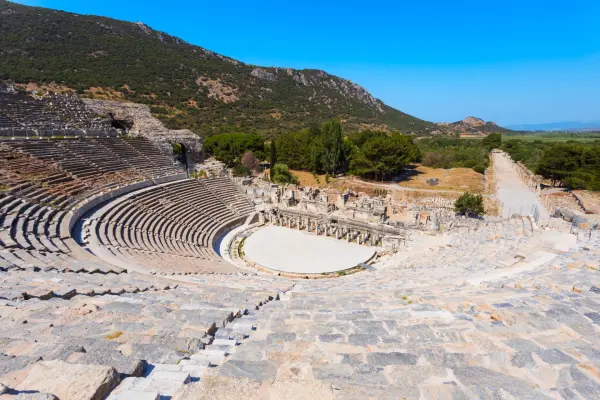
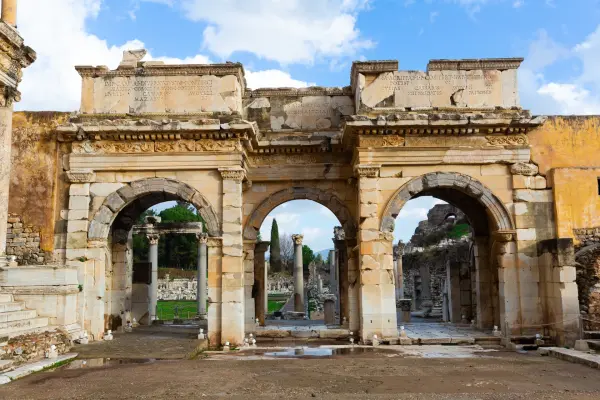
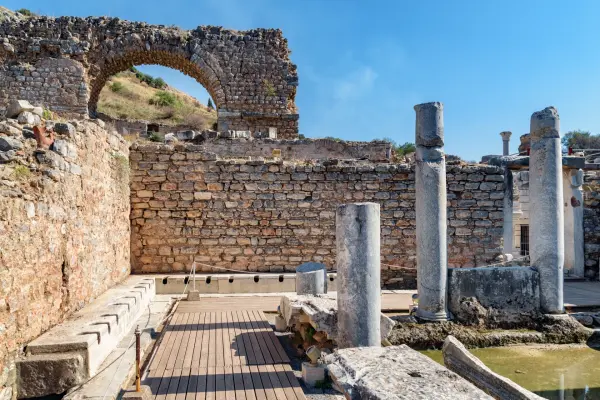
Ephesus Theatre, Gate of Mazeus and Mithridates, Ancient Public Toilet in Ephesus, Agora of Ephesus
Pollio Fountain and the Urban Architecture of Ephesus
The monument shows how water and public space were combined in Ephesus.
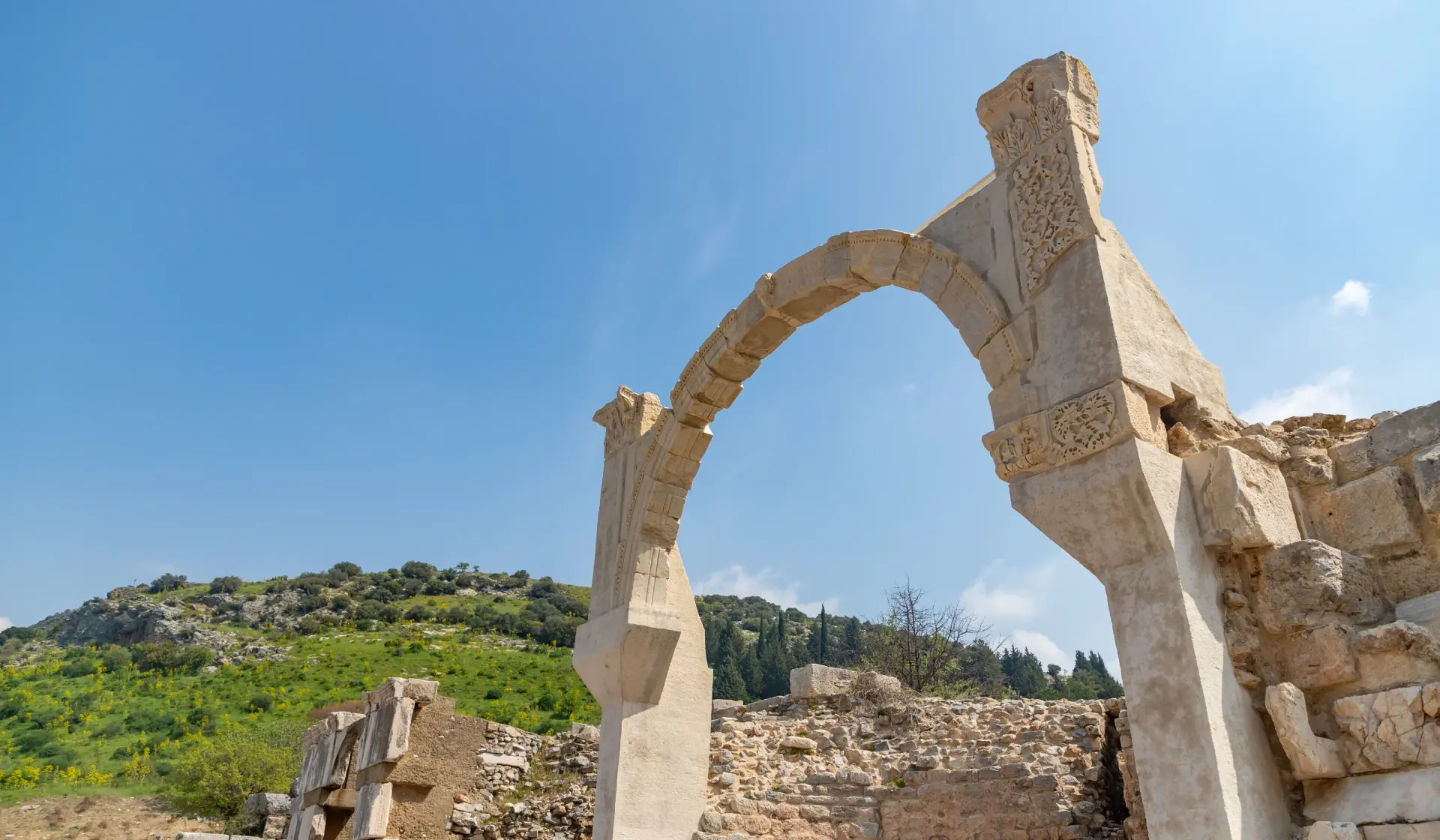
Monumental city fountain near the Odeon and the Agora
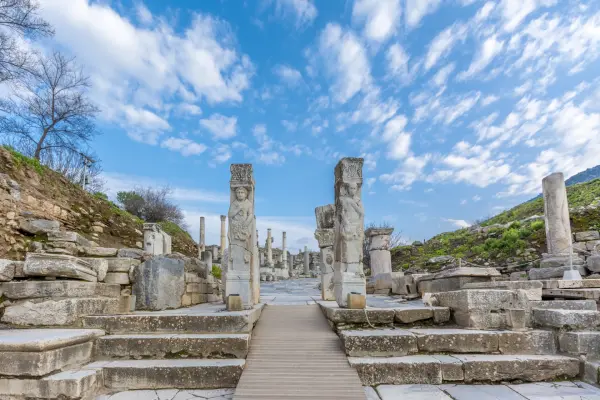
At the site, visitors can examine the base of the structure, the remains of the facade, and architectural elements that help explain how a public fountain functioned in a Roman city. The fountain stood in an important urban space, so its design was intended not only for supplying water but also for how it would be perceived as part of the surrounding development.
For visitors, this is a convenient point at which to focus on the everyday side of life in Ephesus: how water reached the city, how it was distributed among public buildings, and how engineering solutions were combined with decorative architecture. It is best to view the site together with other nearby ruins in order to see it within the overall plan of the ancient center.
Nearby are the Odeon, the State Agora, the Temple of Domitian, and the streets of the administrative part of Ephesus. The archaeological zone is usually reached via Selcuk, from where taxis, tour transport, and local minibuses run to the entrances of Ephesus.
Since the fountain has only partially survived, it is worth bearing in mind in advance that this is more of an archaeological site than a fully restored monument. Nevertheless, it provides a clear idea of the role public fountains played in the layout and appearance of ancient Ephesus.
Best tours and travel experiences across the continent

Photos of the fountain
Guided tours, popular attractions, and top-rated hotels across the continent


