
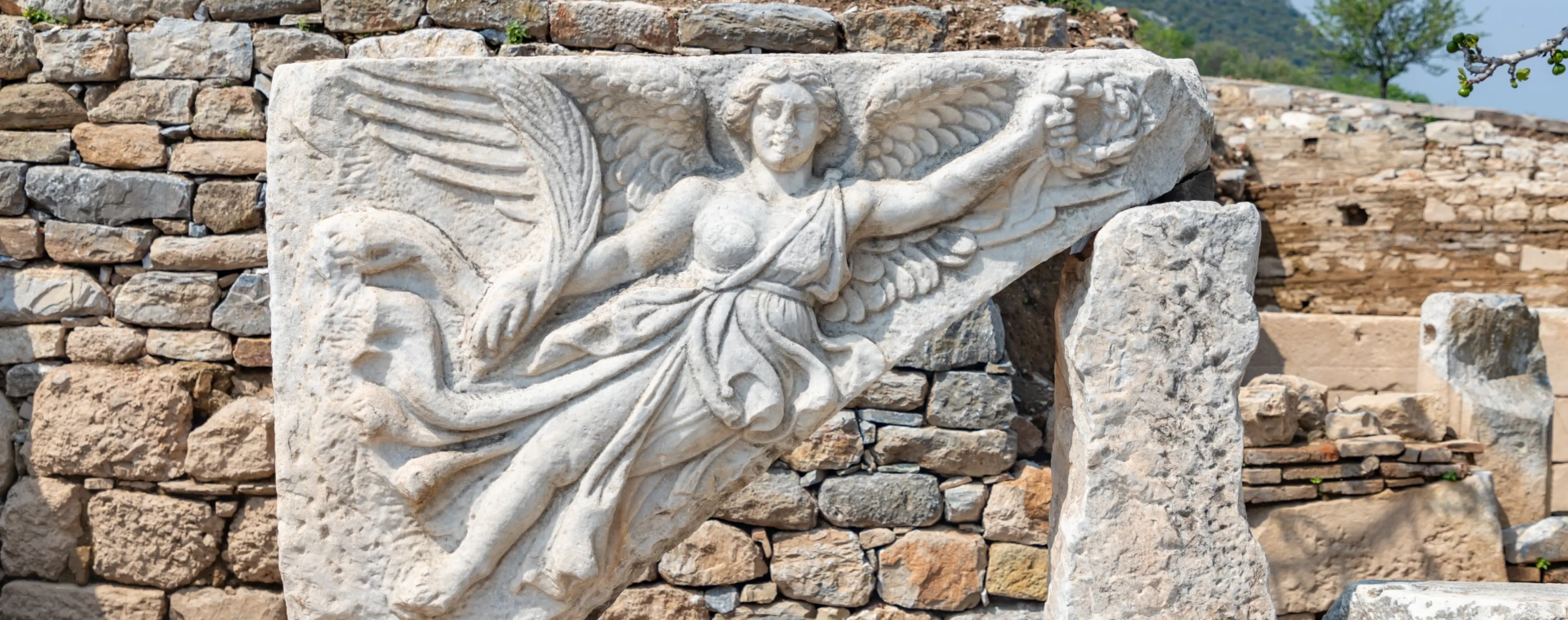
Bas-relief of the Goddess Nike
Bas-relief of the Goddess Nike in Ephesus, Izmir, Turkey
The bas-relief of the goddess Nike is located in the ancient city of Ephesus near Selcuk, not far from Izmir. It is one of the easily recognizable relief fragments of the ancient city that has survived among its streets, facades, and architectural details. For tourists, it is interesting as a clear example of decorative art integrated into the urban environment of Ephesus.
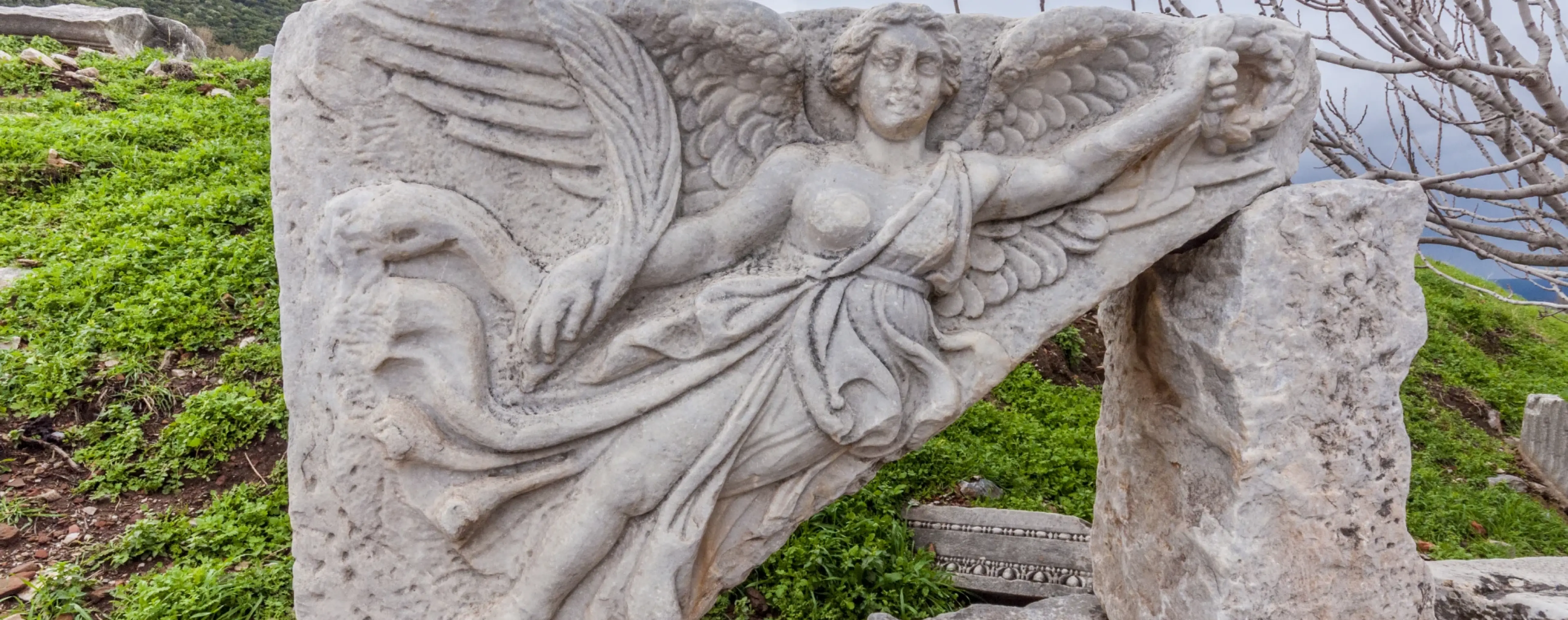
The relief depicts Nike, the goddess of victory in the ancient Greek tradition. The figure is carved into a stone block, and it is precisely because of its expressive form that this fragment often attracts the attention of visitors during a walk through the archaeological zone. Even in its partially damaged state, the relief helps to imagine how carefully public spaces and buildings were decorated in antiquity.
The bas-relief is not a separate museum or an isolated monument: it is usually viewed as part of the route through Ephesus. This format is convenient for travelers who want to see not only major structures but also small details that reveal the artistic appearance of the ancient city. It is especially interesting for those who pay attention to ancient symbolism and plastic art.
This image is often associated with the popular comparison to the graphic sign of the Nike brand, although such a connection should rather be understood as a cultural association than as a confirmed historical fact about the monument itself. In any case, the bas-relief remains a notable detail of Ephesus and helps to see the ancient city not only as a collection of ruins, but also as a space with thoughtfully designed decorative elements.
Bas-relief of the Goddess Nike on the map
Izmir, Ephesus: Archaeological monuments
Varius Baths, Agora of Ephesus, Ephesus Theatre, Hercules Gate
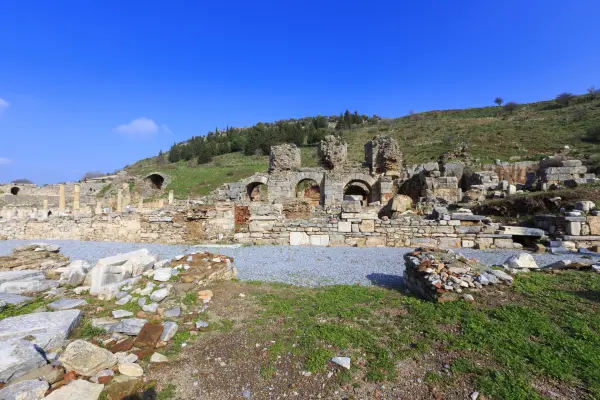
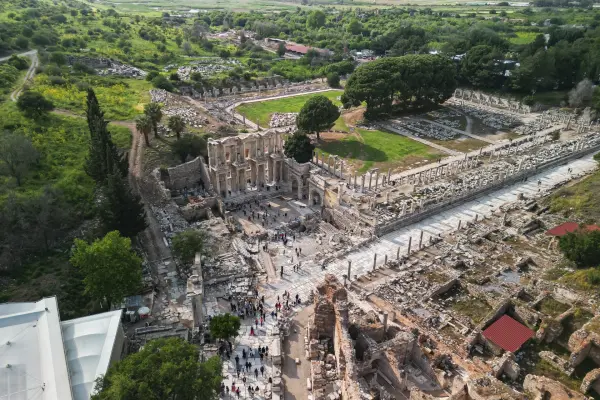
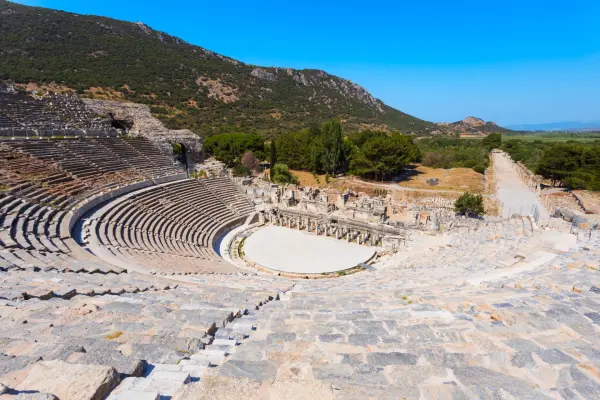
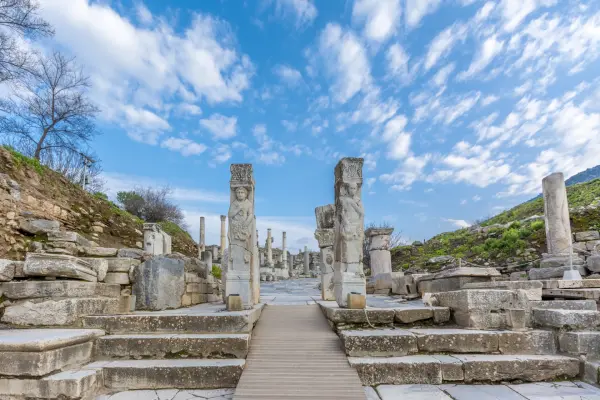
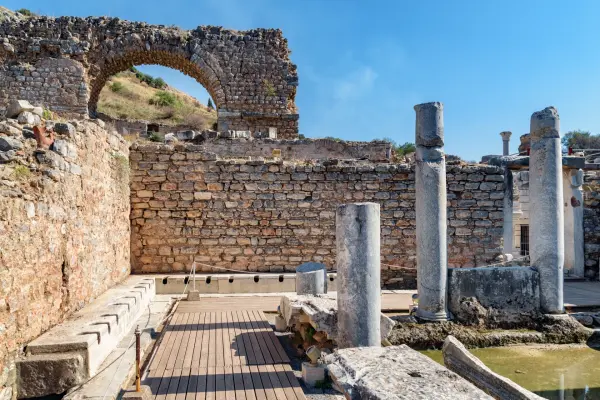
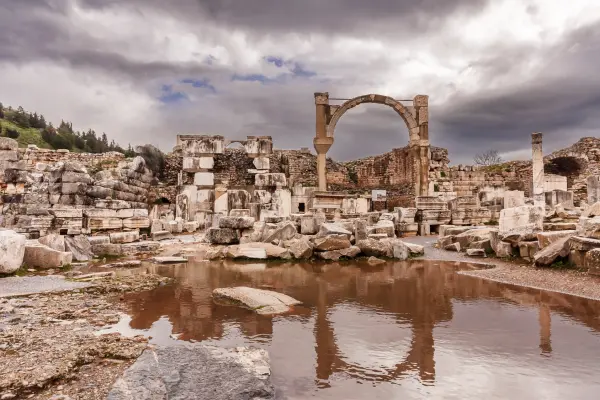
The Bas-relief of the Goddess Nike as Part of the Route Through Ancient Ephesus
The relief helps reveal the decorative details of the ancient city.
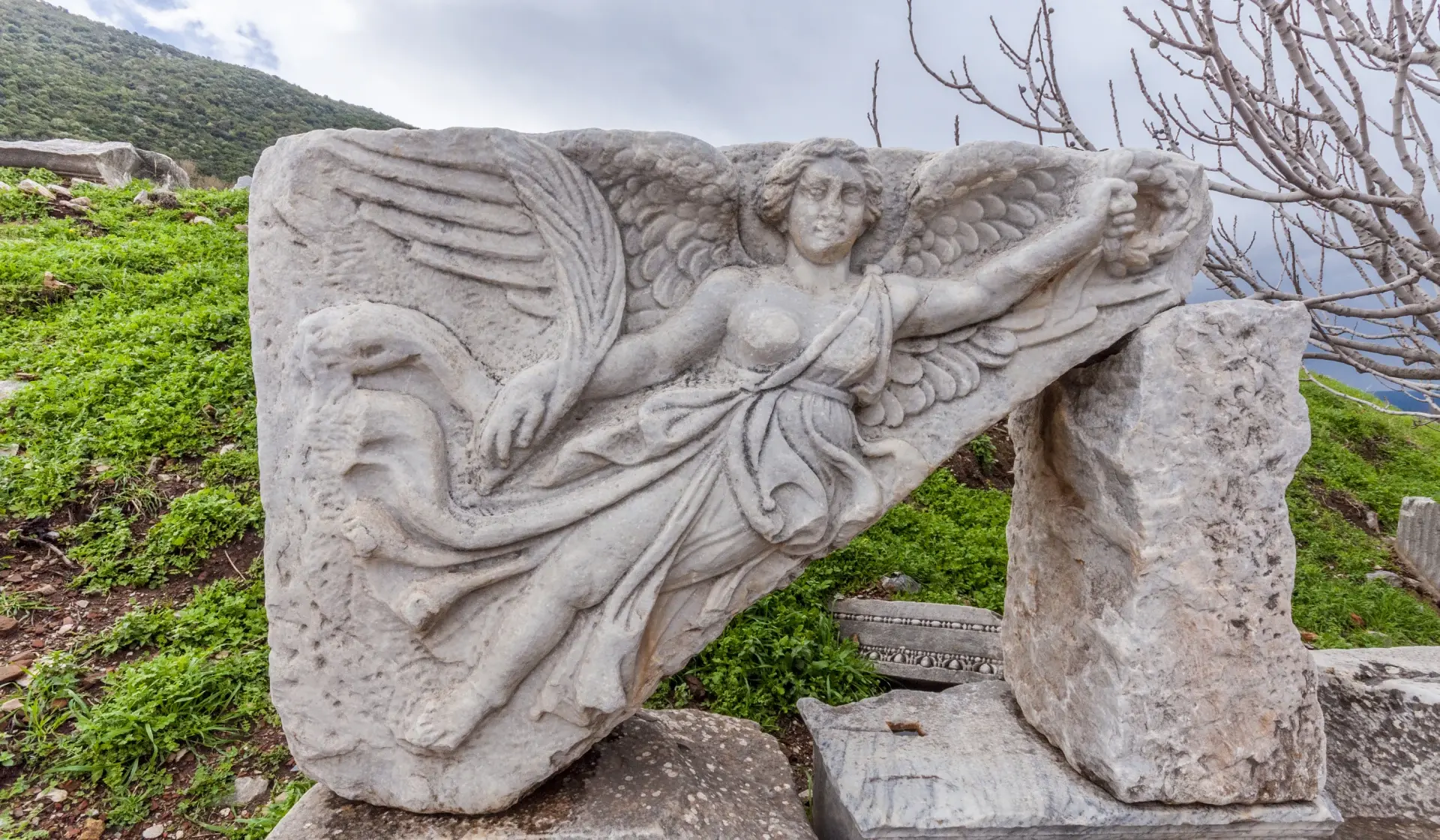
Stone relief with the image of the goddess of victory in the ruins of Ephesus
During a visit to Ephesus, the bas-relief is usually perceived not as a separate stop, but as part of the overall walk through the archaeological complex. Visitors can examine the outline of the figure, the shape of the wing, and the character of the stone carving, as well as understand how such images functioned in the architectural context of the ancient city. This is especially interesting for those who want to notice not only large buildings but also decorative elements.
It is best to view the relief at a calm pace, combining its inspection with a visit to other parts of ancient Ephesus. On site, you can pay attention to the texture of the stone, the degree of preservation of the details, and how the relief relates to the surrounding ruins. Such a fragment gives a more concrete idea of the visual language of ancient art than an abstract description in a guidebook.
Nearby are the Library of Celsus, the Great Theatre, and the streets of the ancient city, so the bas-relief can easily be included in a general route through Ephesus. People usually come here from Selcuk or from Izmir by car, excursion bus, or local transport to the entrance of the archaeological zone.
Best tours and travel experiences across the continent




Photos of Ephesus
Guided tours, popular attractions, and top-rated hotels across the continent


