

Cleopatra's Pool
Cleopatra's Pool in Pamukkale, Turkey
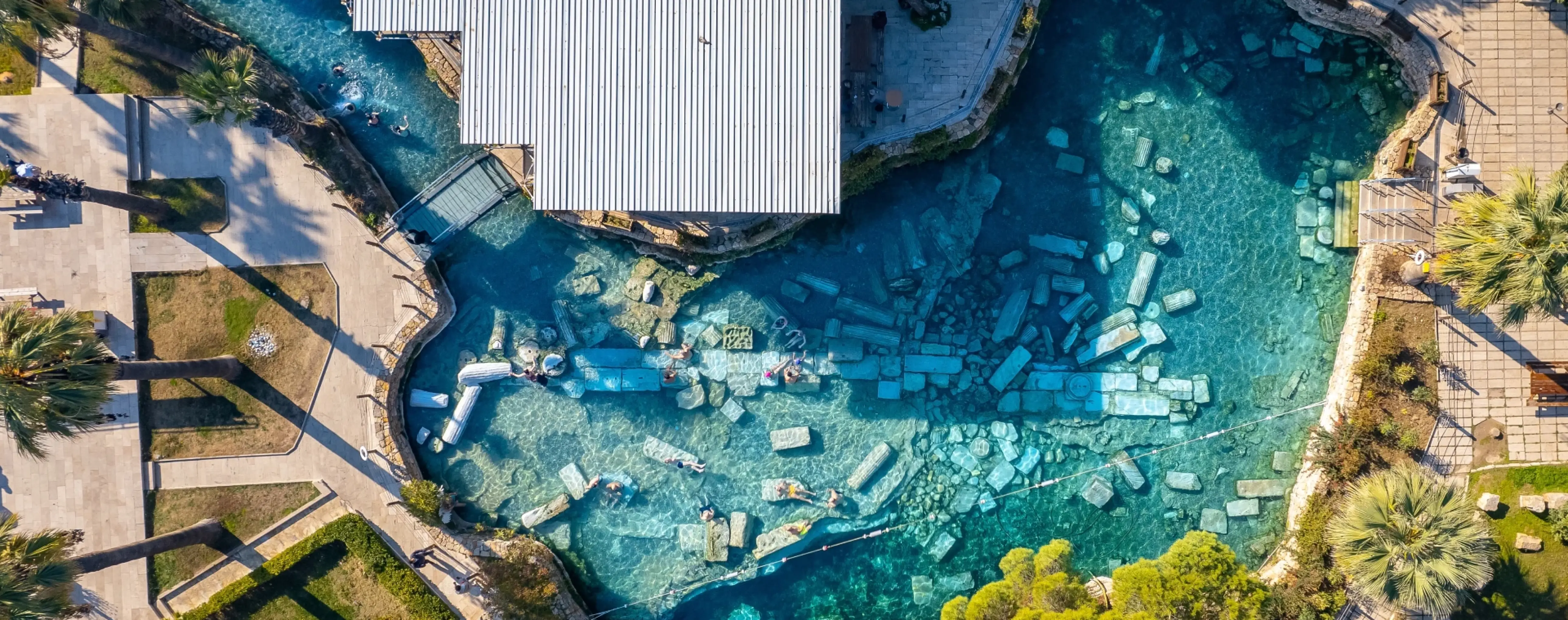
Cleopatra's Pool is located in Pamukkale, next to the ruins of ancient Hierapolis, within the protected Hierapolis-Pamukkale complex. It is a thermal pool often referred to as the Antique Pool. It is known for the fact that fragments of ancient columns and stone structures, preserved after an earthquake, lie in its clear warm water.
The spring feeds the pool with mineral water at a constant temperature of about 36 °C. The water contains carbon dioxide, so small bubbles are visible on the surface and near the stones. Thanks to the combination of warm water and archaeological remains, the place is perceived not only as a bathing area but also as part of the historical landscape of Hierapolis.
Visitors come here to bathe in the thermal water and see ancient fragments in their natural setting. The depth of the pool varies, and the bottom is uneven and slippery in places, so it is worth entering the water carefully. Bathing is paid separately from admission to the archaeological zone, and it is useful to check the current opening hours before visiting.
A trip to the pool is easy to combine with visiting other landmarks of Pamukkale - the travertine terraces, the ancient theater of Hierapolis, the Temple of Apollo, and the archaeological museum. This place is interesting for those who want to combine a walk through a UNESCO World Heritage Site with a visit to an active thermal spring.
Cleopatra's Pool on the map
Pamukkale: Healing springs
Pamukkale Hot Springs, Karahayit Village
Cleopatra's Pool - depth, infrastructure, and tips
Warm mineral water combines with archaeological remains
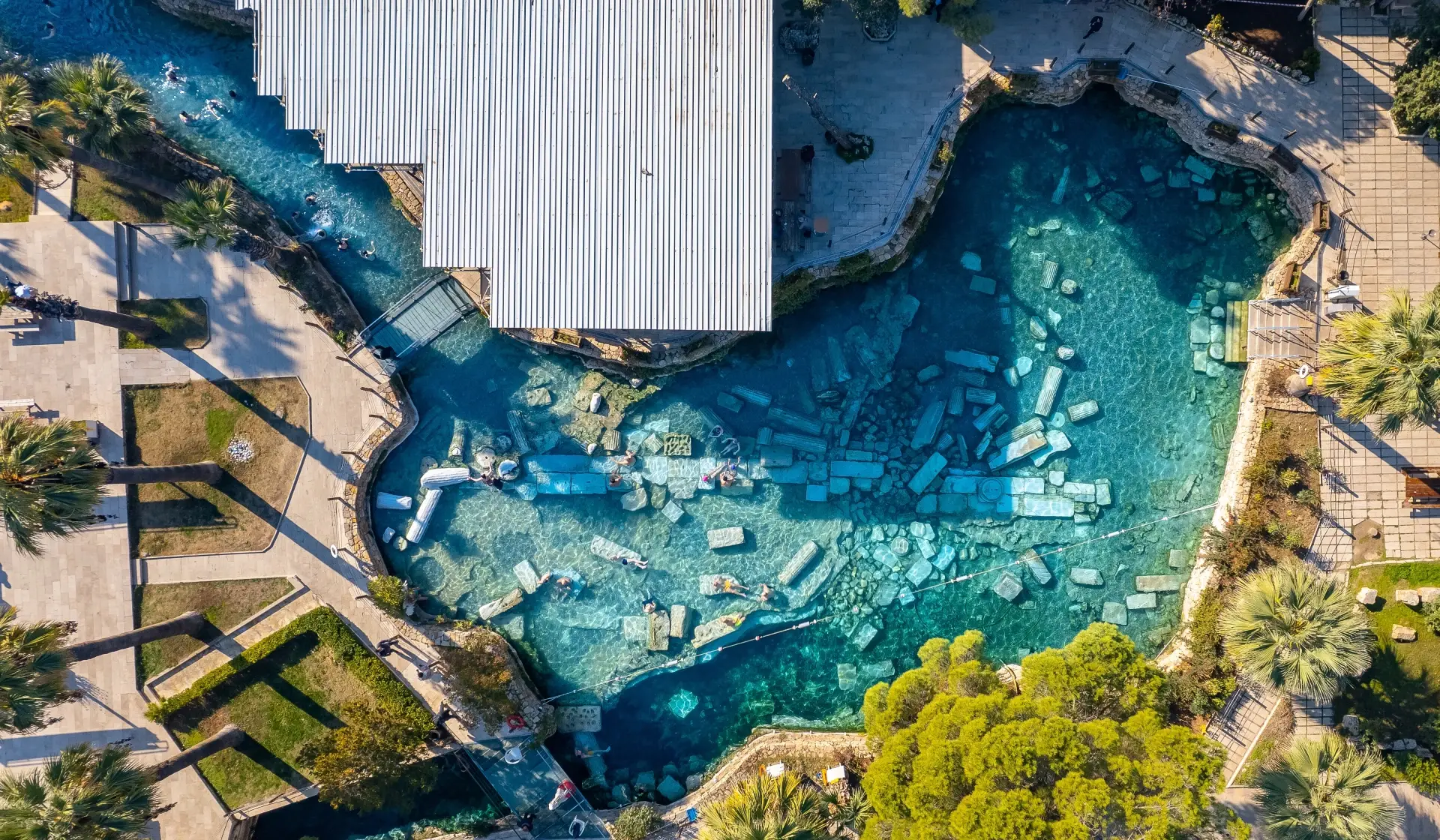
Warm mineral water among ancient columns
Inside the pool, areas of different depths are designated, so here you can either simply stand in the warm water or swim a little. The main feature is the large stone blocks and columns on the bottom, which are clearly visible through the water. Because of the mineral deposits and uneven terrain, it is better to move slowly, especially near the entrance and in the shallower areas.
There is usually basic infrastructure for visitors on site: changing rooms, showers, places to relax, and lockers for belongings for an additional fee. Bathing takes place in the format of a regular visit to a thermal pool, but it is important to keep in mind that this is part of an archaeological complex with its own rules of conduct and restrictions. Children should stay close to adults, and those who are not confident swimmers are better off choosing the shallow areas.
Nearby, you can continue your walk through Hierapolis: the ancient theater, necropolis, Hierapolis Museum, and the white travertines of Pamukkale are not far away. You can usually get here from the center of Pamukkale on foot or in a few minutes by local transport and taxi if you are staying in the village.
Before visiting, it is worth checking the opening hours of the complex and the entry conditions, as access to the pool and to the archaeological zone is paid separately. For bathing, it is convenient to bring non-slip footwear, a towel, and a change of clothes, and it is better not to leave valuables unattended.
Best tours and travel experiences across the continent

Photos of the pool
Guided tours, popular attractions, and top-rated hotels across the continent


