

Pamukkale Hot Springs
Pamukkale Hot Springs in Denizli Province, Turkey
The Pamukkale Hot Springs are located in the town of the same name, not far from the center of Pamukkale, in Denizli Province in southwestern Turkey. This thermal complex is known for its white travertine terraces, which were formed on the slope of the plateau by mineral water rich in calcium. Together with the ruins of ancient Hierapolis, the area is included on the UNESCO World Heritage List.
The name Pamukkale is usually translated as "cotton castle." It is connected to the appearance of the pale limestone deposits that cover the slope and form steps, shallow basins, and cascades. Warm water flows from natural springs and, running down the surface, continues to contribute to the formation of travertine. Because of this, the appearance of individual sections may change depending on the water distribution system and conservation measures at the site.
The springs were already in use in antiquity, when the city of Hierapolis stood nearby - a well-known thermal and religious center. Today, visitors come here not only for the natural landscape, but also for a walk through a large historical area where thermal waters, archaeological monuments, and panoramic views of the Denizli surroundings come together.
Specially marked routes are open to visitors and help preserve the fragile limestone surfaces. Some of the white terraces can only be walked on barefoot, and bathing is permitted only in certain zones. Pamukkale is interesting because in one place you can see a rare natural process, traces of ancient spa culture, and one of the most recognizable thermal landscapes in Turkey.
Pamukkale Hot Springs on the map
Pamukkale: Healing springs
Cleopatra's Pool, Karahayit Village
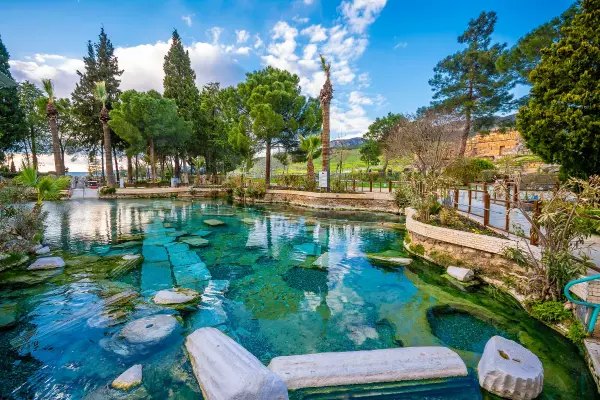
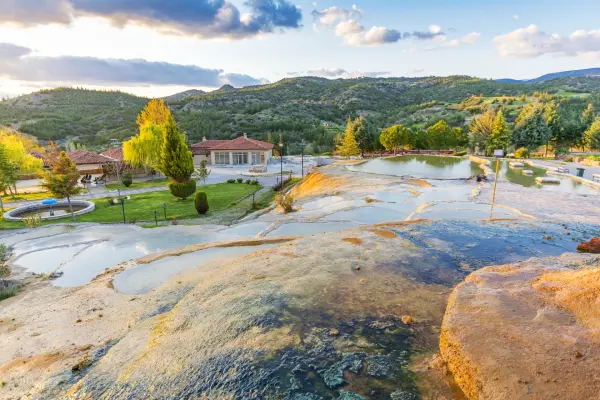
Pamukkale Hot Springs and the Hierapolis Archaeological Zone
Thermal waters stand alongside archaeology, and the routes help preserve the travertines.
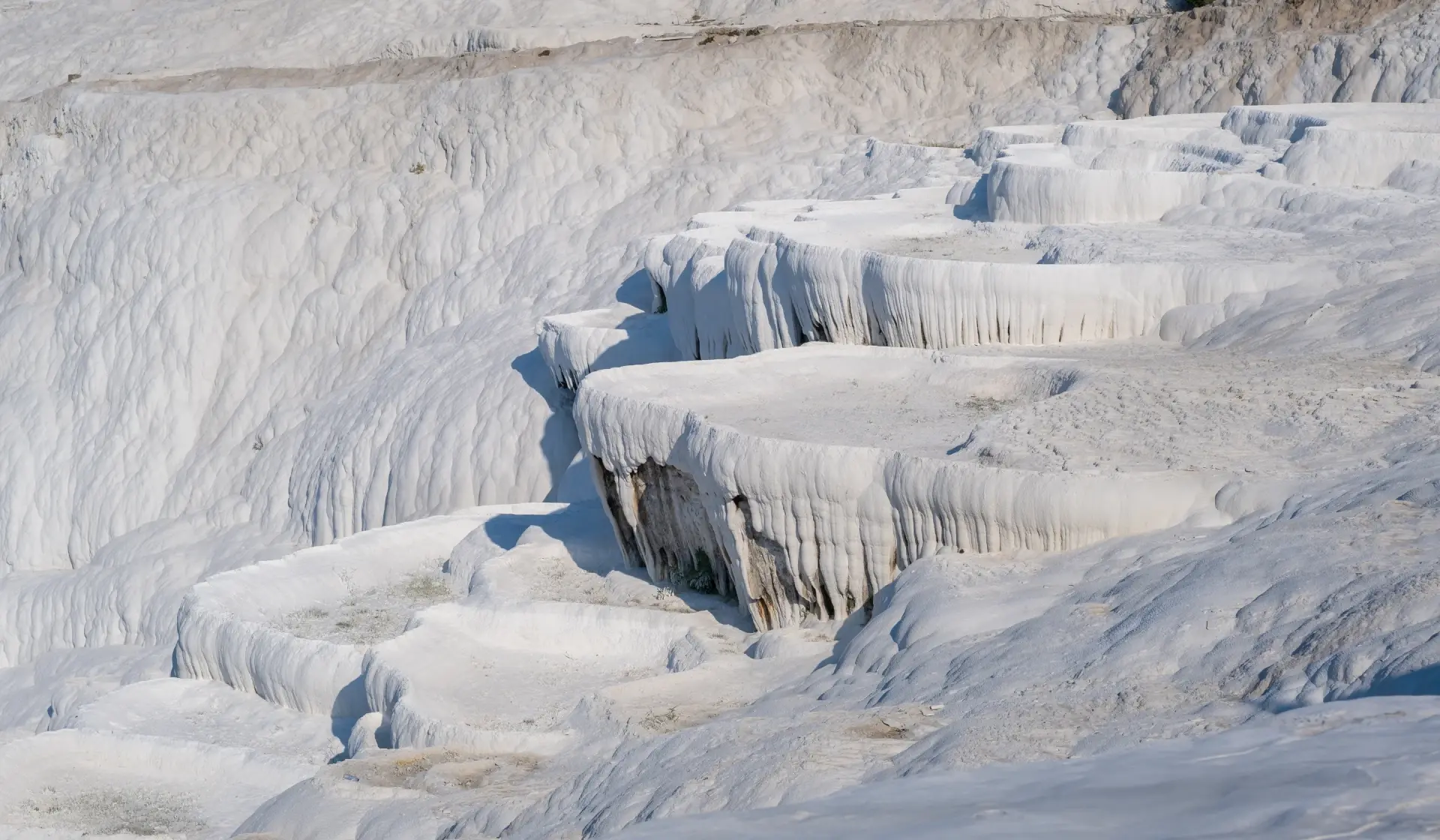
White travertine terraces and warm mineral waters
During a visit, guests usually walk along designated paths beside the white slopes and climb to the areas where warm water flows through the travertine basins. In some sections, it is permitted to walk barefoot through the shallow water so as not to damage the surface. The water does not always fill all the pools at the same time: the flow is distributed across different zones, so the दृश्य changes throughout the day and with the seasons.
In addition to the springs themselves, visitors can explore ancient Hierapolis with the ruins of streets, baths, a theater, and a necropolis. Of particular interest is the Antique Pool, often called Cleopatra's Pool: this is a thermal pool among ancient remains, where bathing is usually organized for an additional fee. At the top of the plateau there are viewing points with a wide view over the valley.
A visit requires comfortable footwear that is easy to remove before entering the travertines, as well as a supply of water in hot weather, since much of the sightseeing takes place outdoors. Nearby are also the Hierapolis Archaeological Museum and the city of Denizli, from where many people come for the day.
You can usually get here from Denizli by bus, minibus, or taxi, and the entrances to the site are located on the side of the lower town and near the upper part of the archaeological zone.
Best tours and travel experiences across the continent




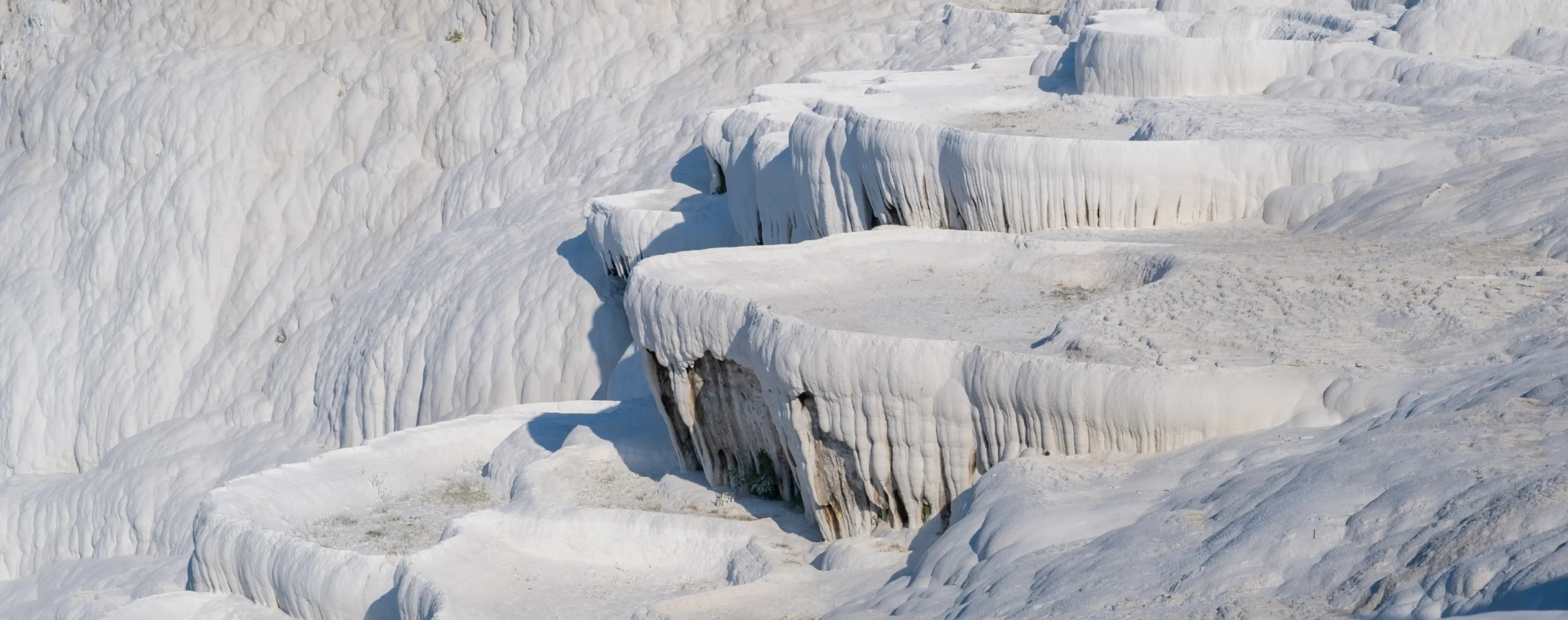
Pamukkale Gallery
Guided tours, popular attractions, and top-rated hotels across the continent


