
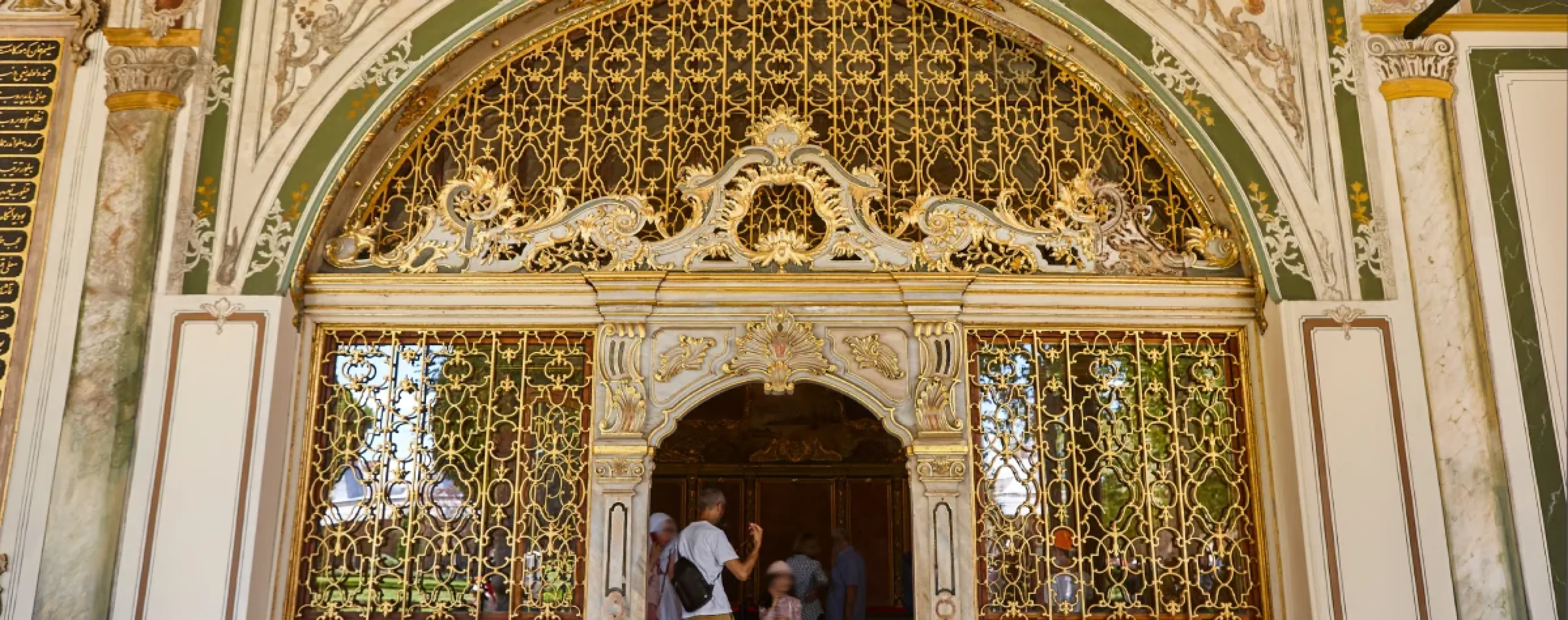
Divan-i Humayun Building
Divan-i Humayun Building at Topkapi Palace, Istanbul, Turkey
The Divan-i Humayun Building is located within the grounds of Topkapi Palace in the historic center of Istanbul, next to the Second Courtyard of the complex. It is one of the key administrative spaces of the Ottoman palace, where the imperial council gathered and matters of state administration were discussed. For visitors, it is interesting because it offers a view not of the ceremonial, but of the working side of life in the sultan's residence.
The building's current appearance is mainly associated with reconstructions from the Ottoman period, primarily in the 16th century, when the palace complex was being actively renewed. The structure has an elongated shape and consists of several connected rooms designed with arches. Nearby rises the Tower of Justice, a prominent landmark in this part of Topkapi, easily recognizable against the background of the palace buildings.
Inside, attention is drawn to features characteristic of Ottoman palace architecture: decorative finishes, paintings, and elements emphasizing the official status of the hall. Particularly well known is the small grilled window above the place of the grand vizier, from which the sultan could observe the meetings without appearing before the participants. This detail helps to better understand the structure of power and court ceremonial in the Ottoman Empire.
A visit to the Divan-i Humayun usually forms part of a tour of Topkapi Palace. Even if the building is perceived as part of a large ensemble, it provides important historical context and helps visitors imagine how representative, residential, and administrative functions were combined within the palace complex.
Divan-i Humayun Building on the map
Istanbul: Buildings and structures
Maiden's Tower, Treasury Gate, Galata Tower, Ahirkapi Lighthouse




Layout and Functions of the Divan-i Humayun Building in the Palace Complex
The hall reveals the administrative structure and court order.
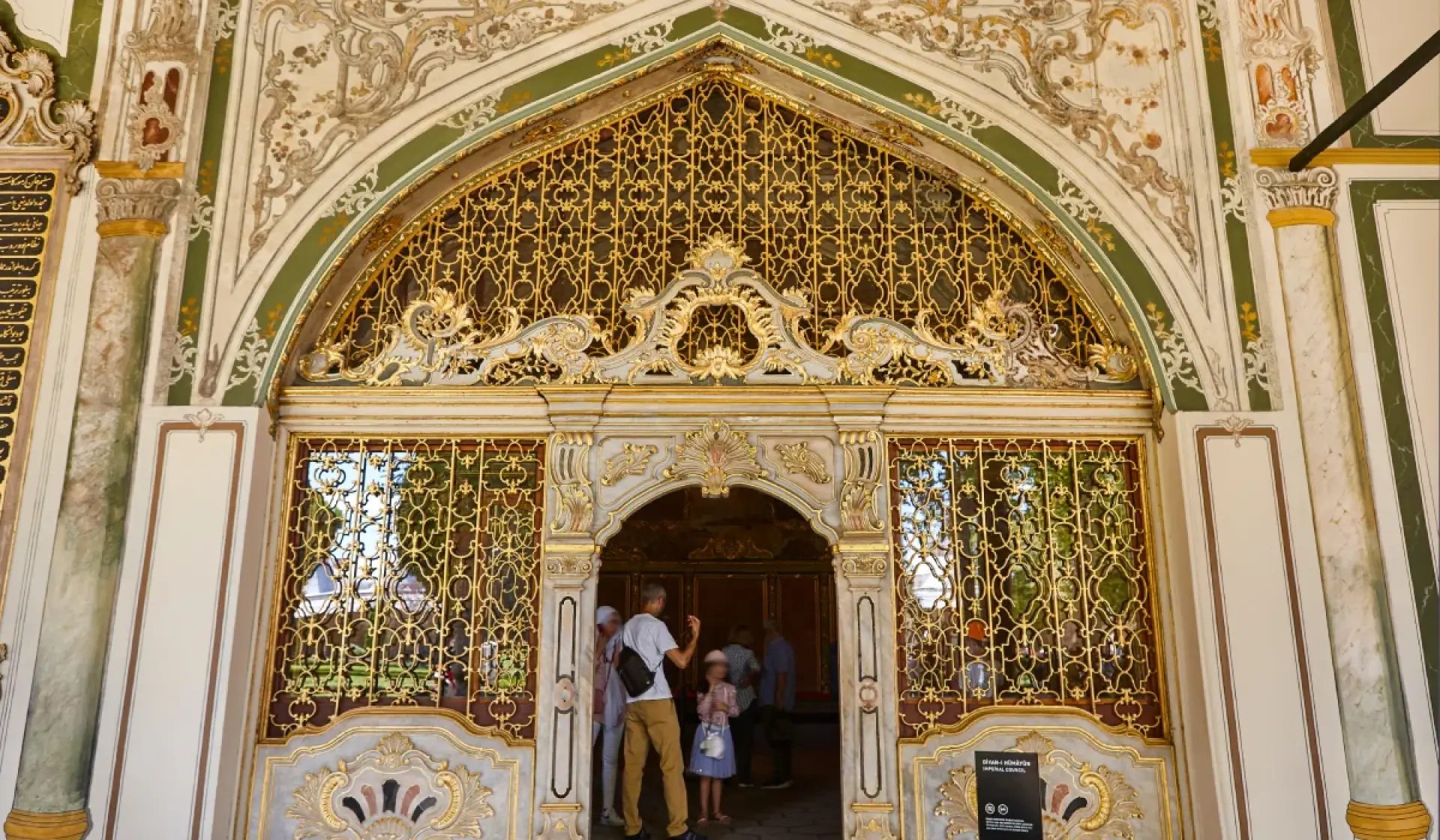
The Imperial Council Hall beneath the Tower of Justice
During the visit, people usually pay attention to the layout of the building and its connection with palace ceremonial. What matters here is not only the council chamber itself, but also how it is integrated into the space of Topkapi: nearby ran the routes of court officials, and access to different parts of the complex emphasized the hierarchy of the Ottoman court. Because of this, the building is perceived not in isolation, but as part of a functioning administrative system.
In the interiors, it is worth looking at the details of the decoration and the form of the arcades, which create a strict, official character of the space. The best-known element is the hidden window associated with the sultan's presence during meetings. This feature makes the hall especially understandable for visitors: it makes it easy to imagine how the sessions were conducted and how control, distance, and ritual were combined in the system of governance.
The building is best viewed together with other sites of the Second Courtyard and nearby parts of the palace. Close by are the palace gates, the kitchens of Topkapi, and passages to the inner courtyards, so a visit to the Divan-i Humayun fits well into the overall route through the complex. The visit usually does not require much time, but it adds important details to the understanding of the entire residence.
You can get here only through the entrance to Topkapi Palace in the Sultanahmet district, in the historic center of Istanbul. The nearest well-known landmarks are Hagia Sophia, Sultanahmet Square, and Gulhane Park.
Best tours and travel experiences across the continent




Photos of the Divan-i Humayun
Guided tours, popular attractions, and top-rated hotels across the continent


