
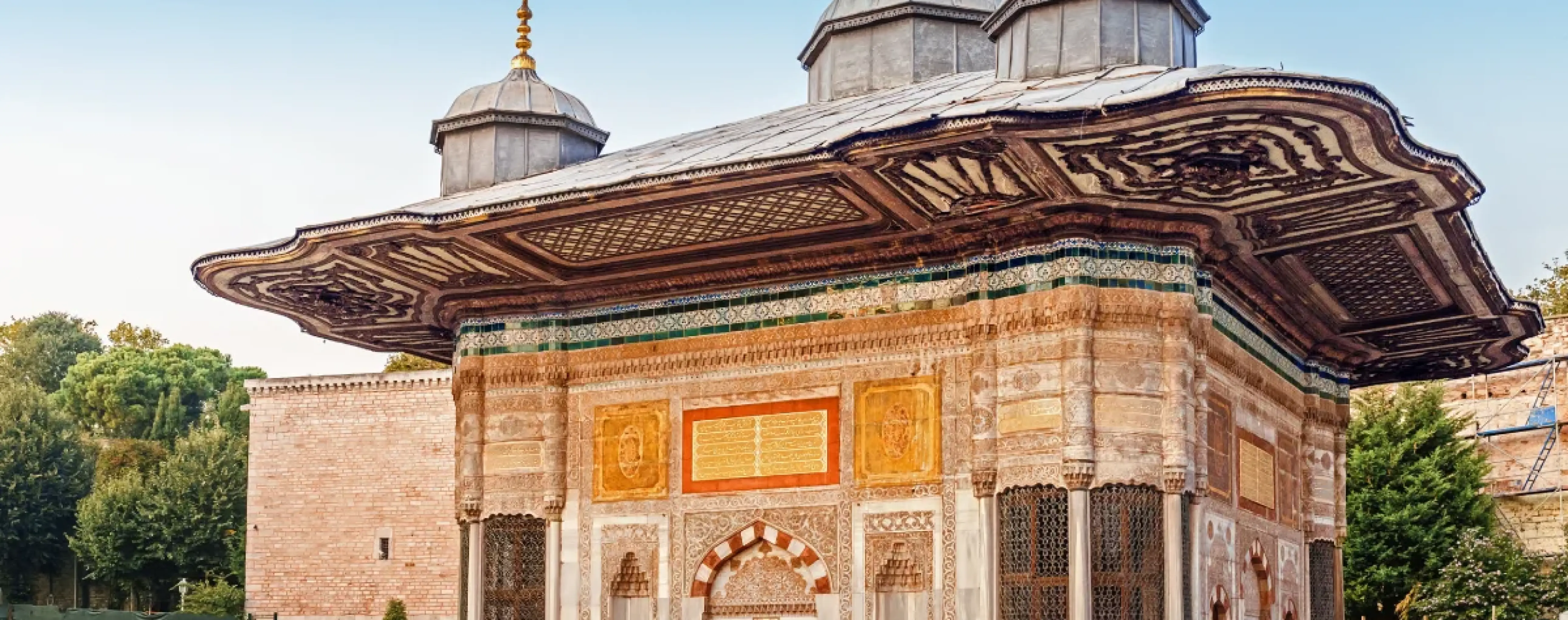
Fountain of Ahmed III
The Fountain of Ahmed III in Sultanahmet Square, Istanbul, Turkey
The Fountain of Ahmed III is located in the historic center of Istanbul, in Sultanahmet Square, between Topkapi Palace and Hagia Sophia. It is one of the most notable street monuments of early 18th-century Ottoman Istanbul, associated with the reign of Sultan Ahmed III. The fountain was created as a public structure for distributing drinking water and as an important element of the urban space at the ceremonial entrance to the palace complex.
Built in 1728, the fountain belongs to the Tulip Period, a time when Ottoman architecture placed increased emphasis on decoration and refined finishing. The structure was designed as a freestanding pavilion with a square plan, a wide cornice, and small domed caps at the corners. Sebils and niches were arranged on its facades, where water was once distributed to passersby.
Of particular interest is the decoration of the monument. The facades are covered with delicate stone carving, vegetal and floral ornamentation, as well as calligraphic inscriptions. The poetic texts on the panels are connected with the themes of water, charity, and sultanic patronage. Thanks to this, the fountain is of interest not only as an architectural object, but also as a monument of Ottoman artistic culture.
Today, people come here primarily for the historic atmosphere of Sultanahmet and the opportunity to see one of the characteristic monuments of late Ottoman architecture. The fountain is easy to include in a walk through the old city: it stands next to the district's main attractions and is well appreciated as part of the ensemble of the square and the palace surroundings.
Fountain of Ahmed III on the map
Istanbul: Monuments and memorials
Column of Constantine, Monument to Mehmed the Conqueror in Istanbul, Serpent Column, Republic Monument
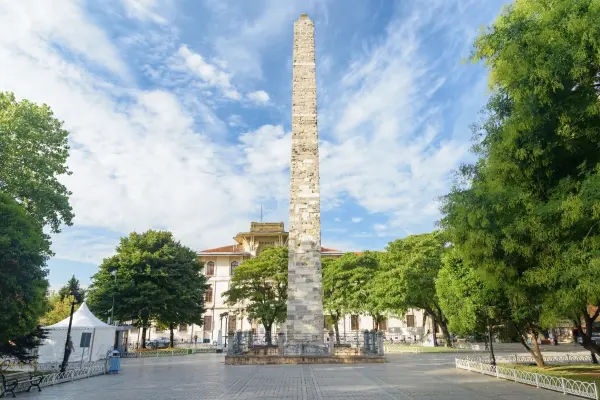

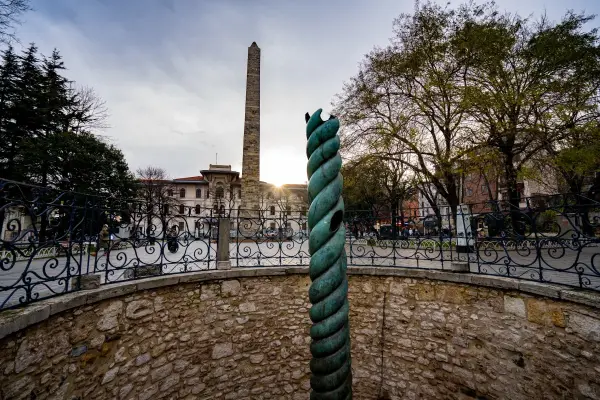


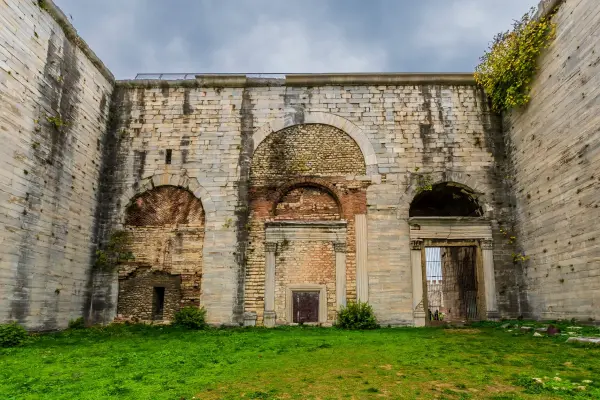
The Fountain of Ahmed III: carving, ornamentation, and inscriptions
The structure combines a public function with the decorative finishing of the late Ottoman period.
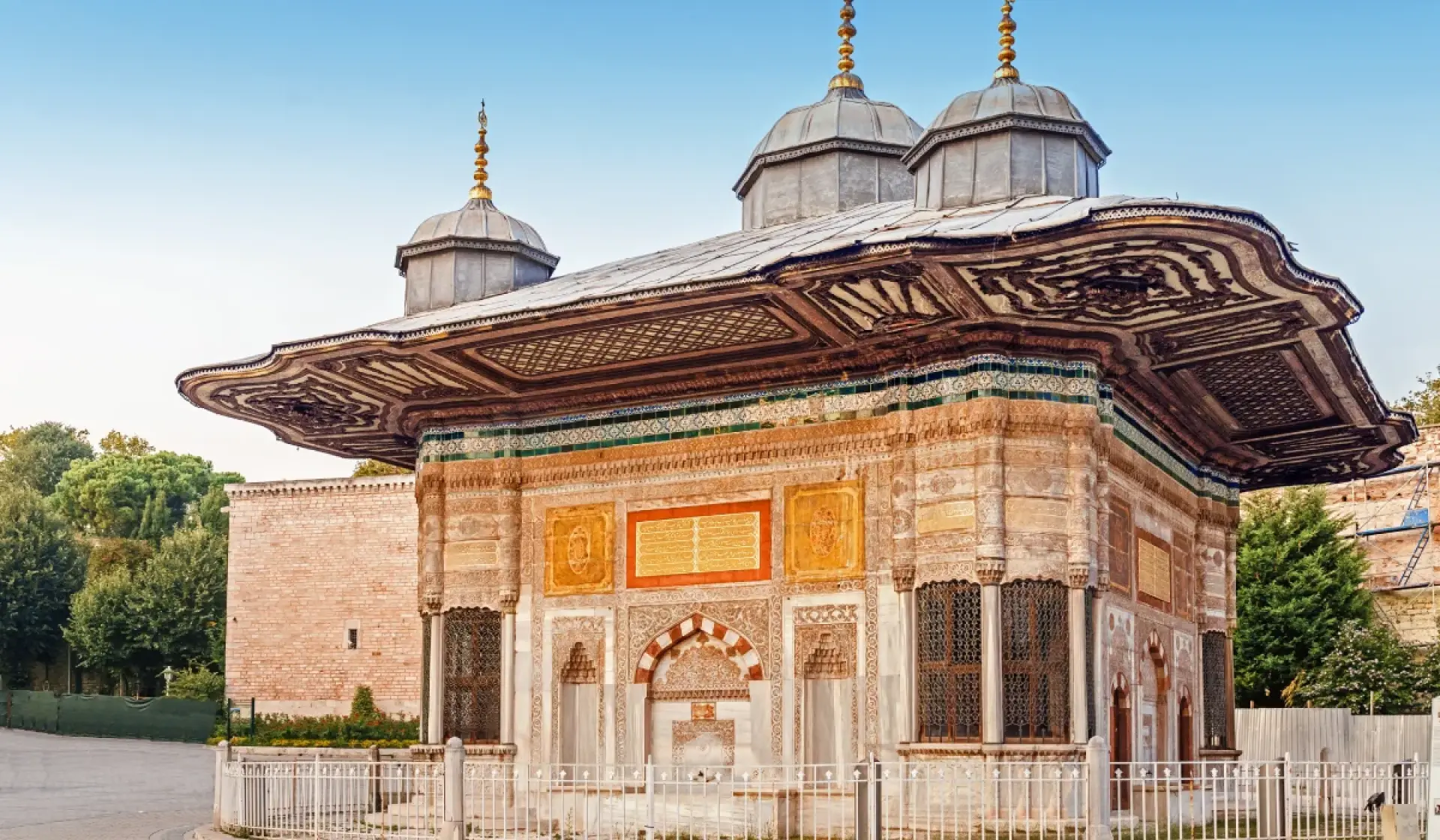
A carved pavilion with poetic inscriptions at the entrance to Topkapi
At the fountain, it is worth paying attention to each of the four sides: the composition of the facades was designed so that the structure would be perceived as an independent urban pavilion, not simply a water source. The most noticeable features are the wide projecting cornice, the decorative grilles of the sebil windows, the corner columns, and the carefully executed reliefs with floral motifs. The details are especially easy to appreciate in daylight, when the depth of the stone carving is visible.
Visitors usually view the fountain from the outside, walking around its perimeter and examining the inscriptions and ornamentation on the different facades. This is not an interior site, so the visit takes little time, but it provides a good reason to linger in the square and see how the public architecture of the Ottoman Empire combined practical function and representational character. For those interested in the history of the city, the fountain helps better understand the structure of old Istanbul, where water was an important part of urban charity.
Topkapi Palace, Hagia Sophia, the Basilica Cistern, and the Blue Mosque are all very close by, so the fountain is easy to visit during a walking tour of the Sultanahmet district. The easiest way to get here is by taking tram line T1 to the Sultanahmet or Gulhane stop, after which the square can be reached on foot in a few minutes.
Best tours and travel experiences across the continent



Photos of the fountain
Guided tours, popular attractions, and top-rated hotels across the continent


