

Goreme Open-Air Museum
Goreme Open-Air Museum in Goreme, Turkey - rock-cut churches and frescoes
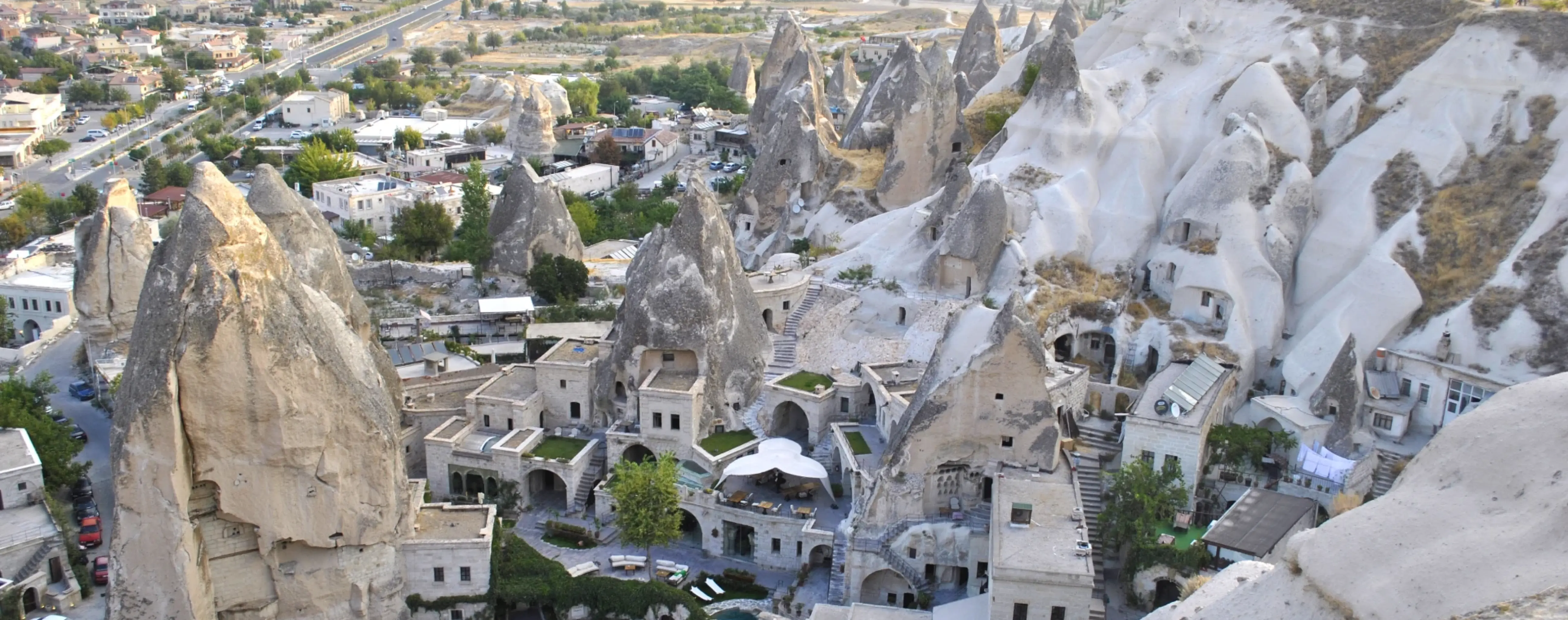
The Goreme Open-Air Museum is located in Cappadocia, not far from the center of Goreme, and brings together a group of monastery buildings carved into tuff from the early Christian and Byzantine periods. It is one of the region’s most famous landmarks and forms part of the UNESCO World Heritage site “Goreme National Park and the Rock Sites of Cappadocia.” The complex helps visitors understand how monastic life was organized in the rock-cut valleys of Central Anatolia.
The main part of the surviving churches, rooms, and paintings dates from the 10th-12th centuries, although the tradition of monastic retreat took shape here earlier. Inside, visitors can see churches, chapels, refectories, cells, and utility rooms connected by paths between the rock formations. Of particular interest are the wall paintings: from earlier ones made with red ochre to well-preserved multicolored frescoes depicting biblical scenes and images of saints.
Among the best-known monuments in the complex are St. Basil’s Church, St. Barbara’s Church, the Apple Church, the Snake Church, the Sandals Church, and the Dark Church, known for the preservation of its paintings. Tokali Kilise also stands out as the largest church in the museum area, located near the entrance. The churches, differing in layout and decoration, make it possible to see how artistic techniques and the design of rock-cut sanctuaries changed in Cappadocia.
The museum is of interest to those who want not only to see the characteristic landscapes of Goreme, but also to better understand the history of Christian Cappadocia. The visit follows equipped paths and platforms, and information boards help visitors navigate the layout of the complex. It is worth allowing enough time for the visit: not only the individual churches matter here, but also the overall appearance of the rock-cut monastic settlement.
Goreme Open-Air Museum on the map
Cappadocia, Goreme: Museums
Ceramics Factory Museum, Weaving Factory-Museum in Avanos
What to see at the Goreme Open-Air Museum
A visit to the complex reveals the structure of monastic life and the development of church painting.
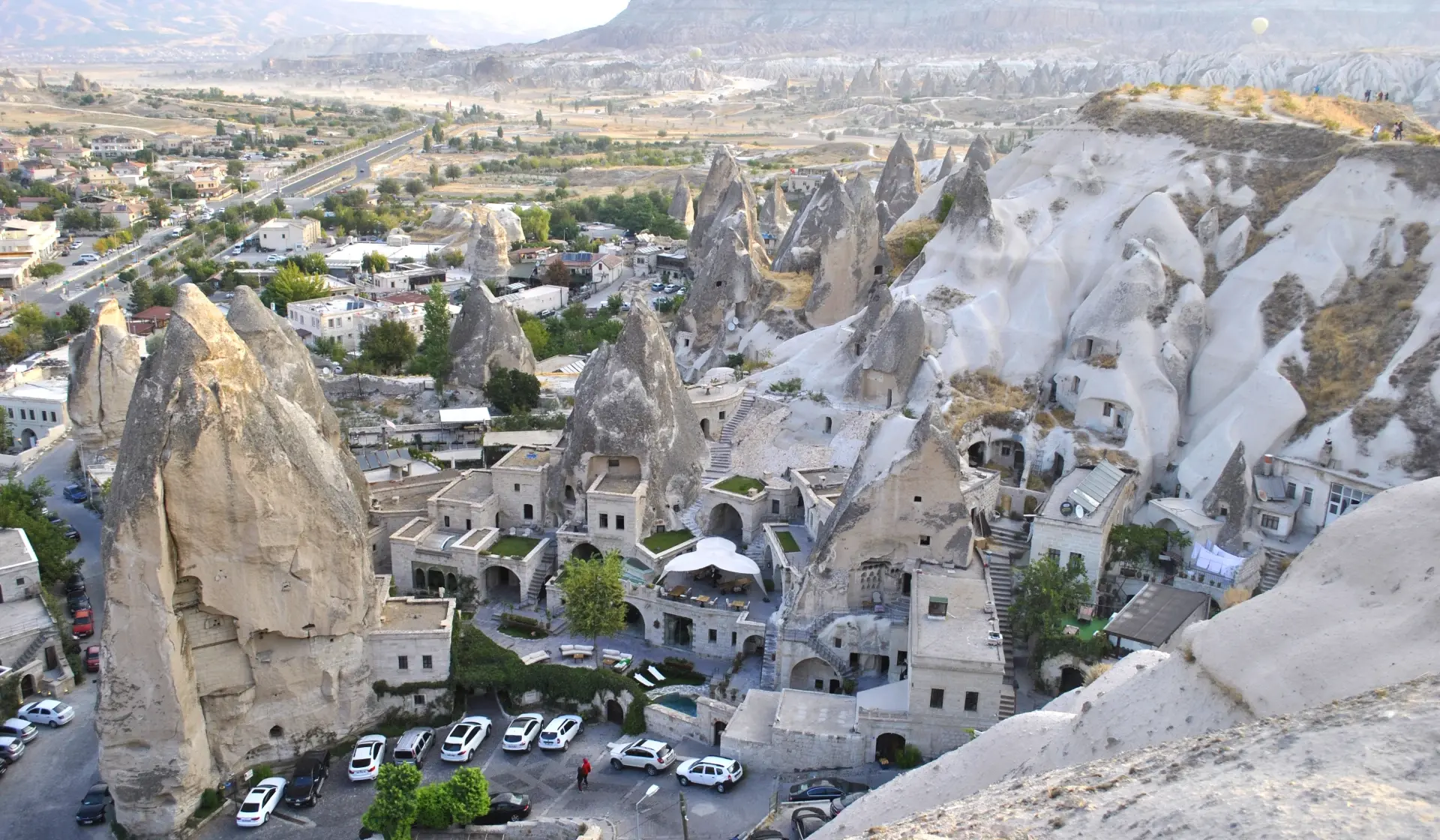
Rock-cut churches and 10th-12th century frescoes in tuff rock formations
During a visit to the museum, tourists follow a route between the rock-cut monastic buildings and enter several churches with different decorative styles. In some interiors, simple ornaments and symbolic images have survived; in others, there are extensive scenes from the life of Christ, figures of saints, and Gospel subjects executed in the Byzantine tradition. As a result, the complex is of interest not only as an archaeological monument, but also as a place where visitors can trace the development of church painting in the region.
One of the most famous sites is the Dark Church, where the frescoes have been well preserved due to the limited access to light; it usually requires a separate ticket. Tokali Kilise stands out for its size and richness of paintings, while St. Barbara’s Church, the Apple Church, and the Snake Church allow visitors to compare different types of rock-cut churches. In addition to the churches, cells, refectories, and utility rooms are noticeable on the grounds, helping to imagine the daily life of the monastic community.
For the visit, it is best to choose comfortable footwear: the route runs along stone paths, steps, and sections with uneven surfaces. Inside the churches, it is important to observe visiting rules, treat the paintings with care, and pay attention to any photography restrictions indicated on site. Nearby are the Goreme viewpoints, Love Valley, and Uchisar Castle, which are often included in the same trip around Cappadocia.
The museum is usually reached on foot from the center of Goreme in about 20-25 minutes or by taxi in a few minutes. If you are planning a detailed visit, it is better to come in the morning, when there are usually fewer people on the route and it is easier to view the church interiors.
Best tours and travel experiences across the continent



Photos of the Goreme Museum
Guided tours, popular attractions, and top-rated hotels across the continent


