
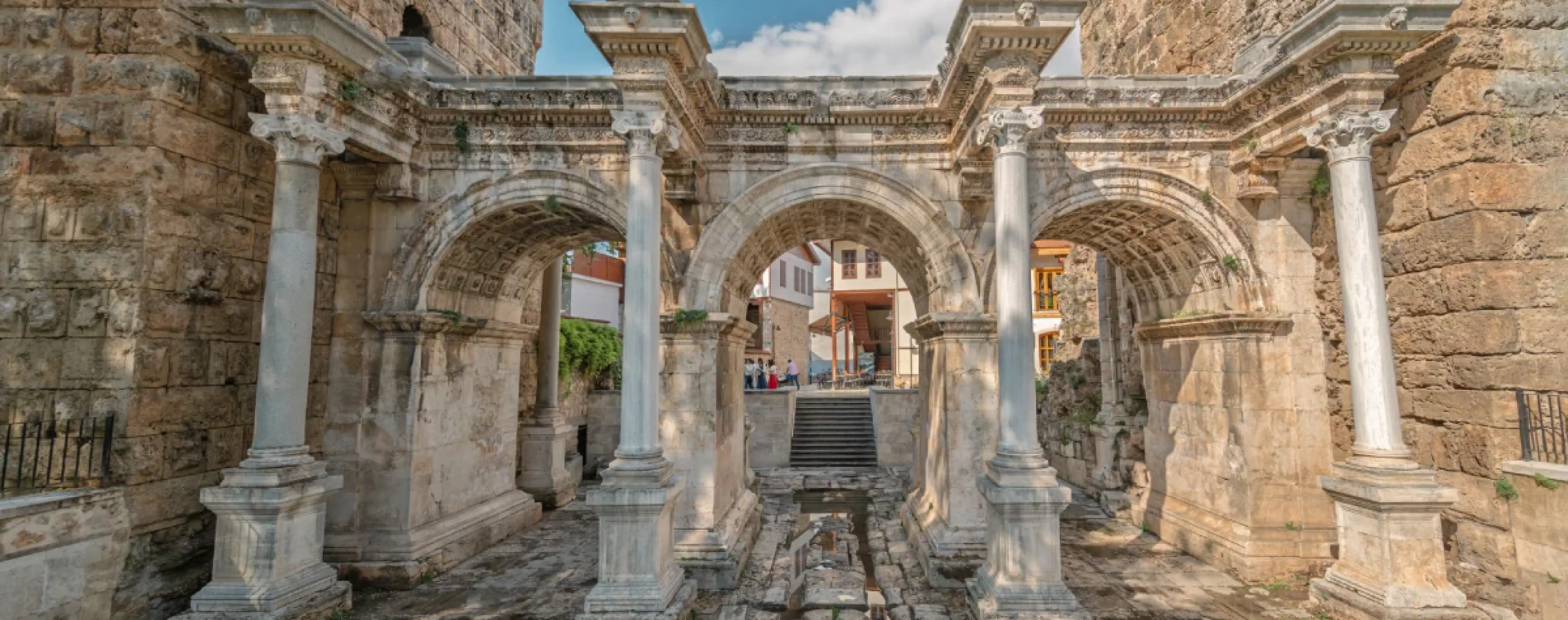
Hadrian's Gate
Hadrian's Gate in Antalya, Turkey - a Roman triumphal arch
Hadrian's Gate is located in the center of Antalya, at the transition between the modern districts and the old town of Kaleici. It is one of the city's most prominent ancient monuments, preserved since the time of the Roman Empire. The structure is usually dated to 130 AD and is associated with Emperor Hadrian's visit to Attaleia. In Turkish, the monument is known as Uckapilar - "The Three Gates."
Visitors are greeted by a triumphal arch with three passageways, Corinthian columns, and marble cladding. Despite losses, the architectural details remain clearly visible and make it possible to imagine what the ceremonial entrance to the city looked like in antiquity. The proportions of the arches and the decorative elements of the upper part of the facade are especially striking.
The gate is interesting not only as a separate monument but also as part of the city's history. For a long time, it was incorporated into the fortification system, which helped preserve it better than many other Roman structures. On both sides of the monument stand towers from different periods: one dates back to Roman times, while the other belongs to the later medieval period.
Today, Hadrian's Gate remains an important landmark for walks around Antalya. It provides a convenient entrance to Kaleici with its narrow streets, historic buildings, small squares, and access to the old harbor. For travelers, it is a rare opportunity to see an ancient monument not apart from the city, but within its everyday life.
Hadrian's Gate on the map
Antalya: Monuments and memorials
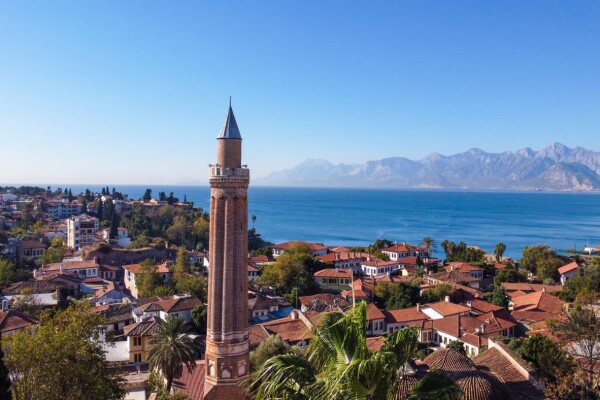
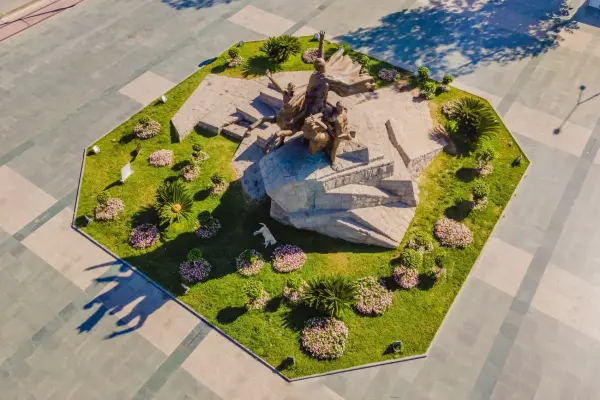
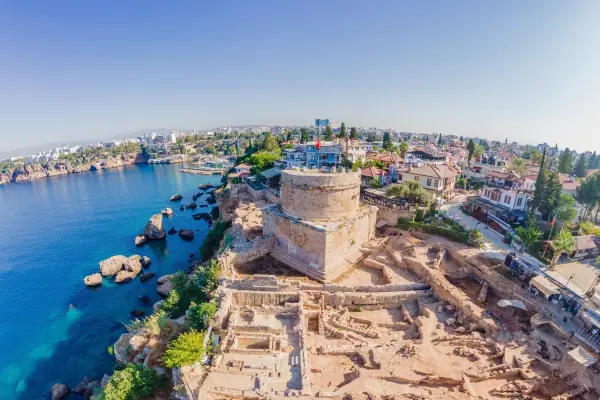
Yivli Minaret, Kemal Ataturk Monument at Republic Square, Hidirlik Tower, Antalya Clock Tower
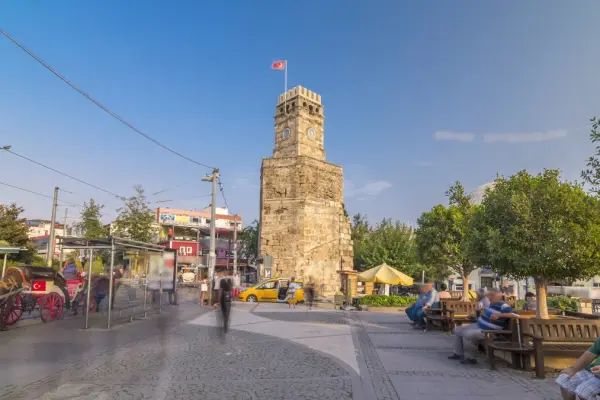

Hadrian's Gate - architectural details and surroundings
An archaeological monument integrated into the city's walking route.
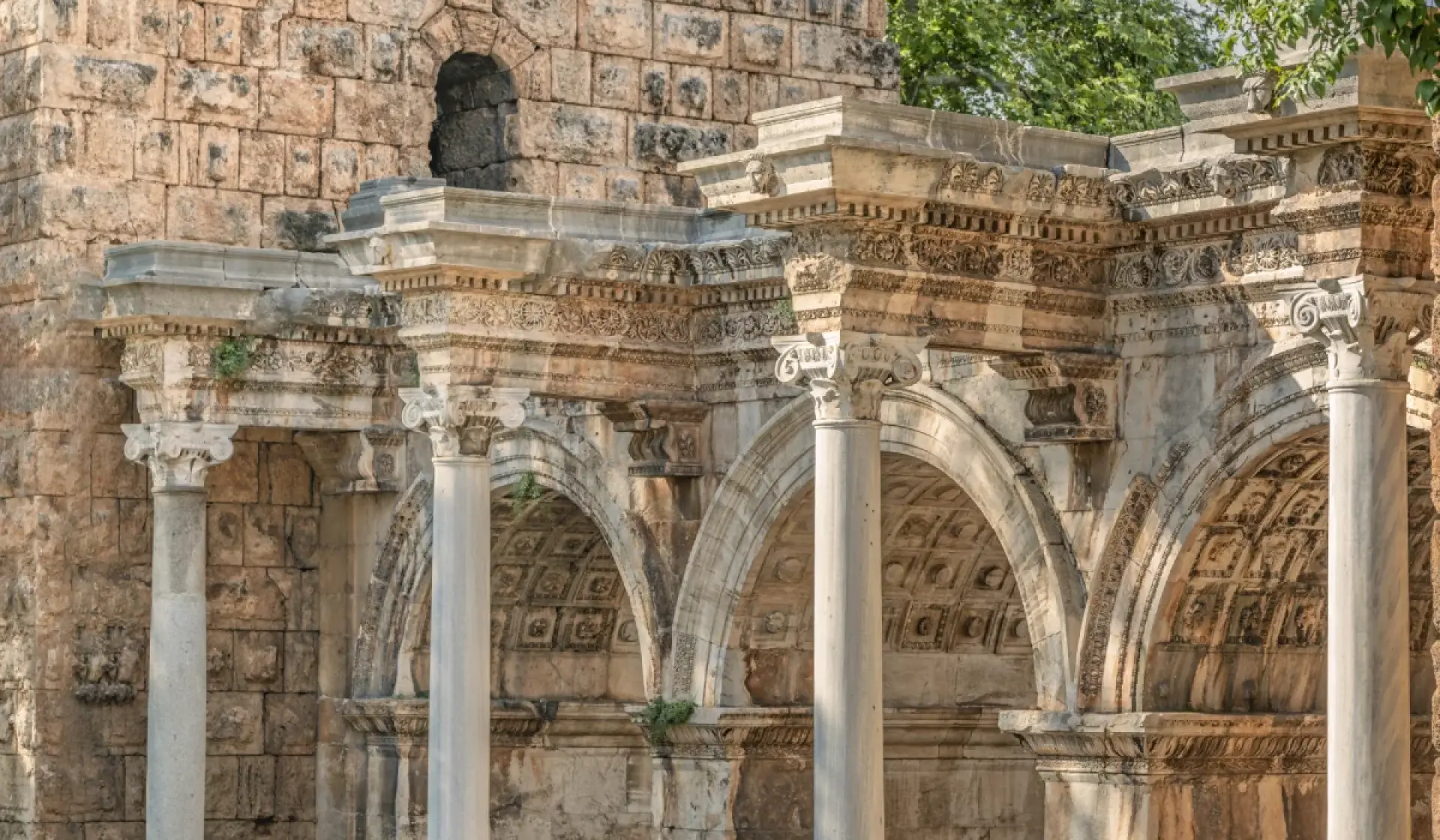
Three Roman arches at the entrance to the old town
When visiting, it is worth paying attention to the stone paving beneath the arches. Fragments of the ancient road have been preserved here, with visible wheel ruts - one of the few details that make it possible to imagine everyday movement in Roman Attaleia. The passage itself is now intended for pedestrians, so the monument can be examined calmly up close.
It is best to approach the gate from both sides: from Ataturk Avenue, there is an overall view of the facade, while from the Kaleici side, it is easier to notice the monument's connection with the old city walls and towers. The architectural elements vary in their state of preservation, but this is precisely what helps to understand how the ancient structure changed and was used in subsequent centuries.
A visit is usually combined with a walk through Kaleici. Nearby are old Ottoman houses, Hidirlik Tower, Yivli Minaret, and Antalya's old harbor. The monument itself does not require much time to inspect, but it works well as a starting point for getting acquainted with the historic center.
The easiest way to get here is on foot from central Antalya or by tram to the stop by the old town, from where the gate is just a few minutes' walk away.
Best tours and travel experiences across the continent




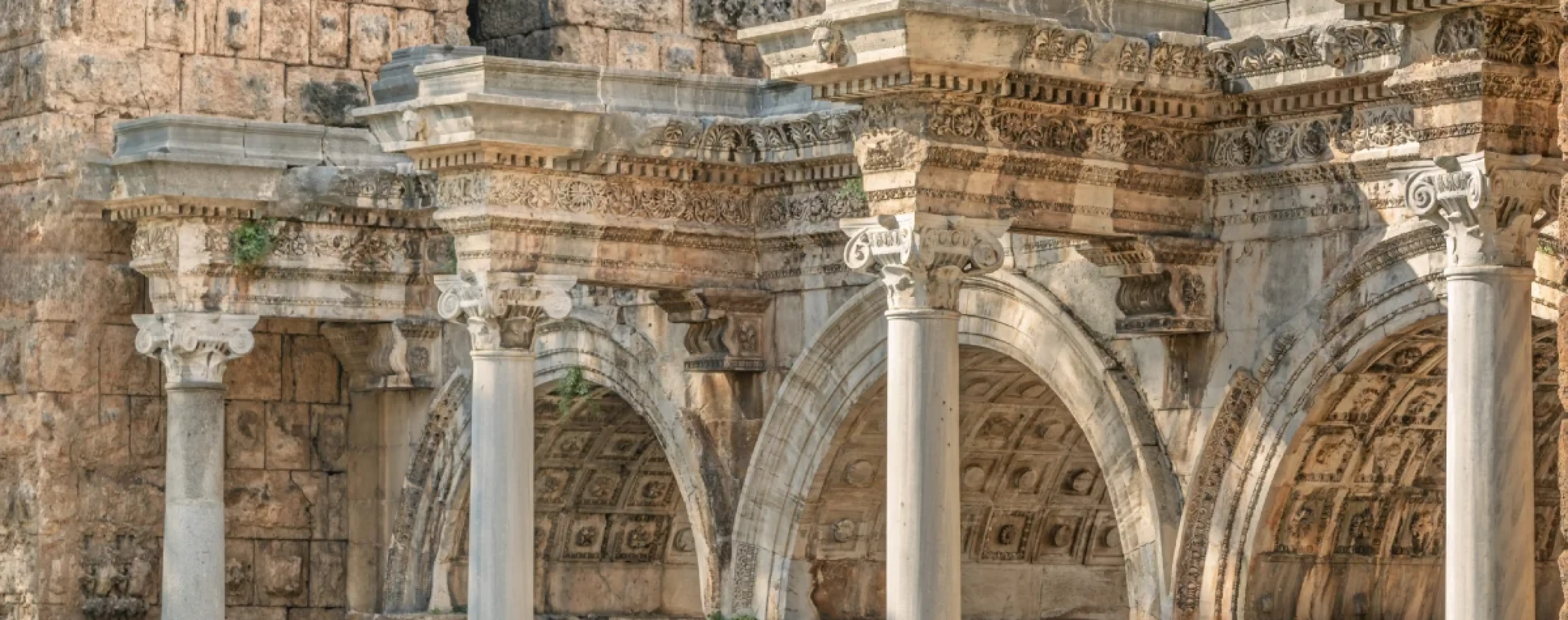
Photos of Hadrian's Gate
Guided tours, popular attractions, and top-rated hotels across the continent


