
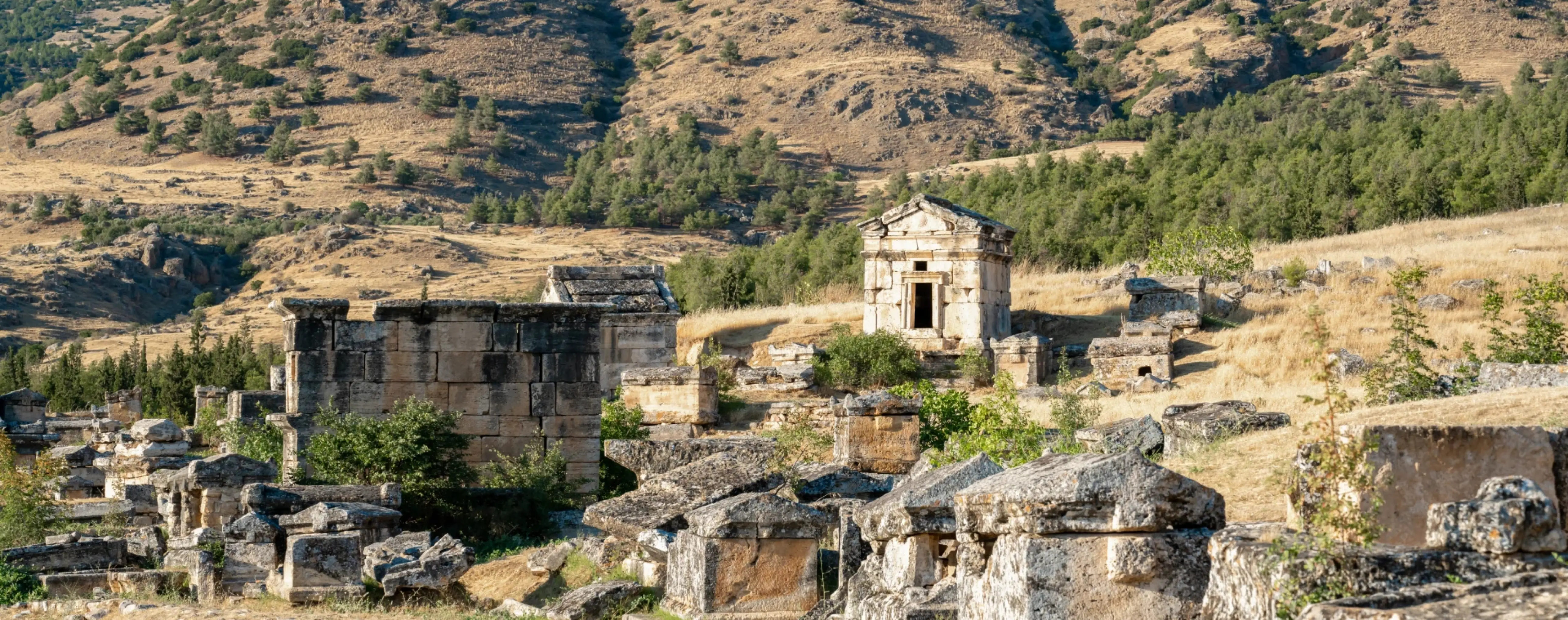
Hierapolis Necropolis
Hierapolis Necropolis in Hierapolis, Turkey - ancient burial area
The Hierapolis Necropolis is located in Pamukkale, next to the ruins of ancient Hierapolis and not far from the white travertine terraces. It is a large burial area outside the ancient city, forming part of the Hierapolis-Pamukkale archaeological complex, which is included on the UNESCO World Heritage List.
The city of Hierapolis emerged in the Hellenistic era and developed especially in Roman times, when people came here for the thermal springs. As in many ancient cities, burials were placed along the roads outside the city walls. Because of this, the necropolis stretches over a considerable distance and today makes it possible to imagine what the cemeteries of a major city in Asia Minor looked like.
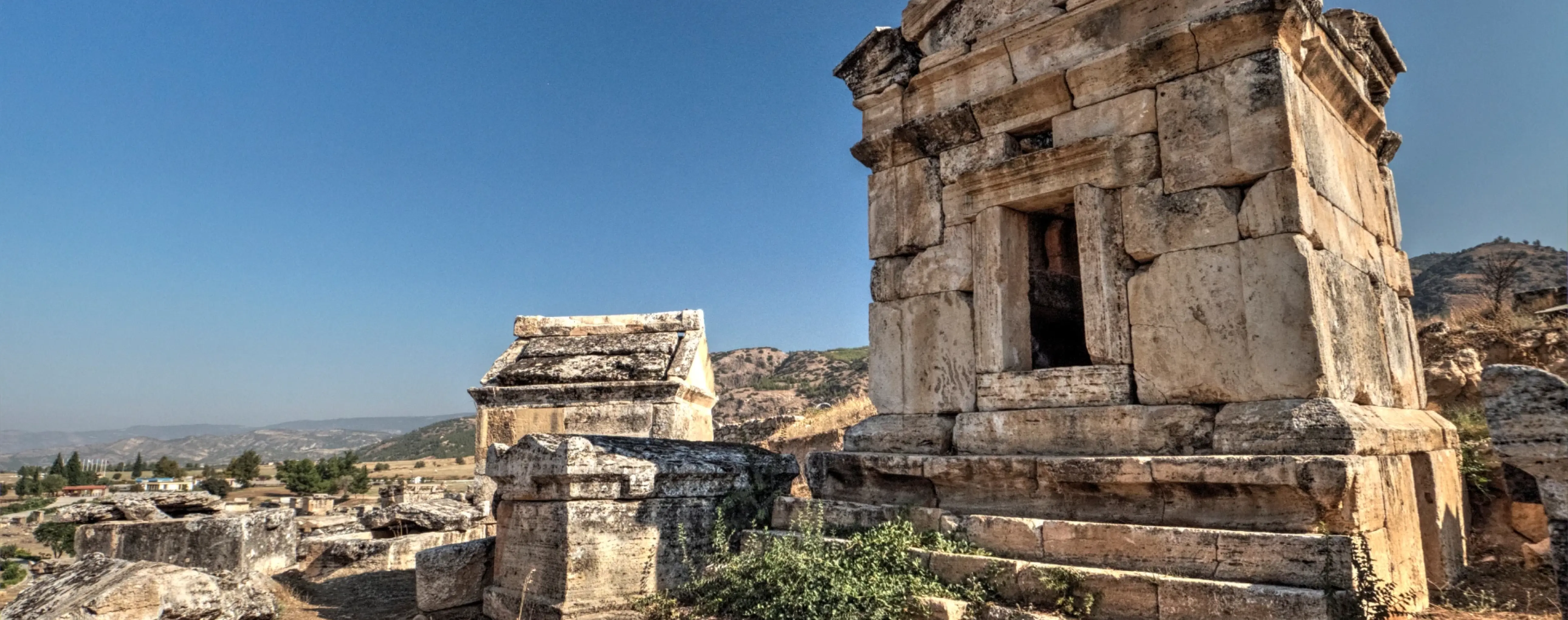
Within the necropolis, sarcophagi, stone tombs, mausoleums, and tumulus burials from different periods have been preserved. The architectural forms and inscriptions show how burial traditions changed from the Hellenistic era through the Roman period to Byzantine times. This makes the necropolis interesting not only as part of the ancient landscape, but also as an important source of information about daily life, beliefs, and family memory in the ancient city.
For tourists, the necropolis is of interest as one of the best-preserved parts of Hierapolis. It is usually explored during a walk through the entire archaeological zone, combining the visit with the theatre, the streets of the ancient city, thermal structures, and the natural terraces of Pamukkale.
Hierapolis Necropolis on the map
Hierapolis Necropolis - sarcophagi, mausoleums, and burial mounds
Here you can see the changes in burial traditions from the Hellenistic to the Byzantine era.
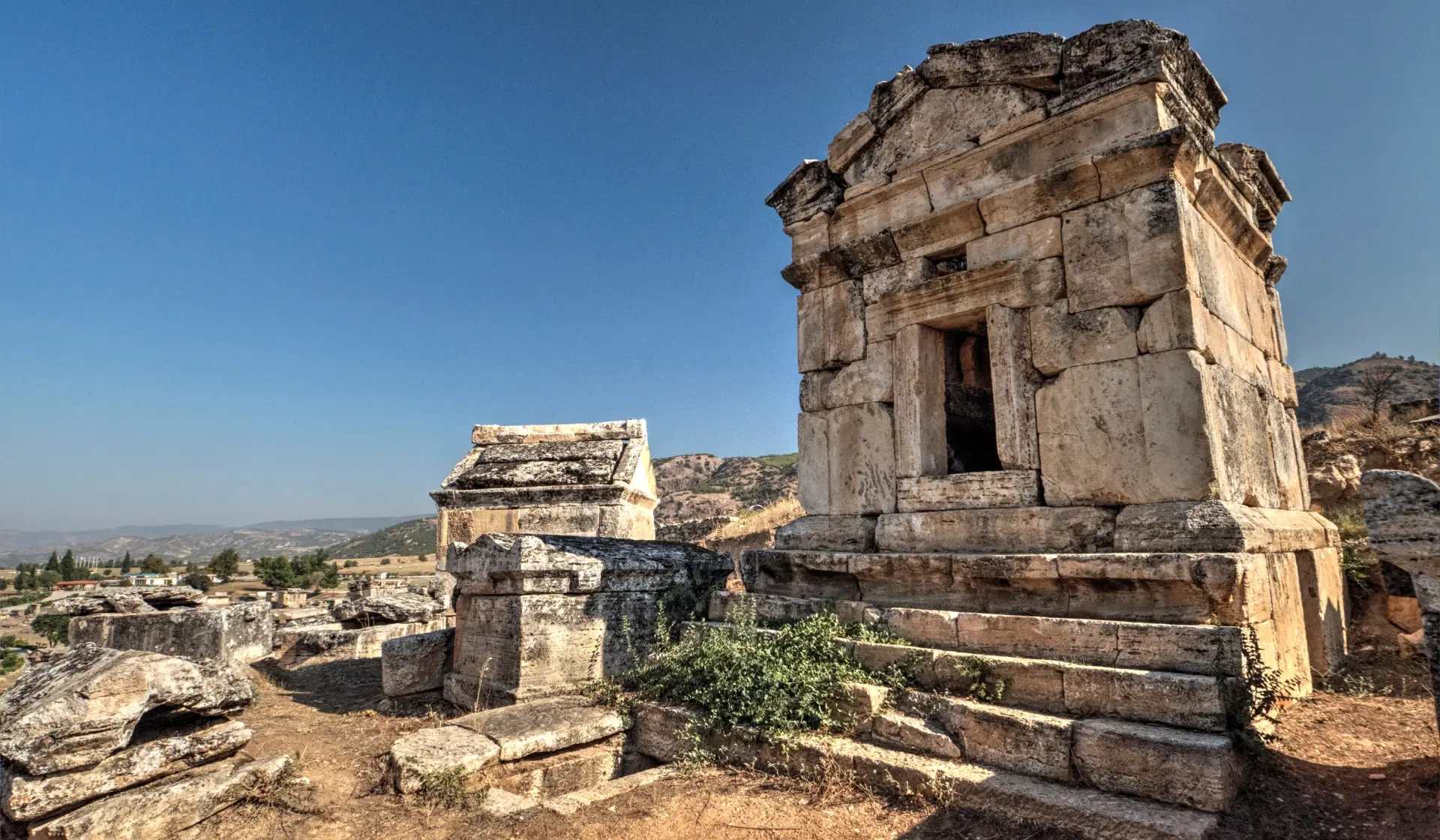
A long strip of ancient tombs along the road to the city
During a walk through the necropolis, you can see how varied ancient burials were. Here there are massive travertine sarcophagi, family tombs, small mausoleums, and burial mounds. Some tombs stand separately, while others form entire rows, helping to better understand the layout of the cemetery at the entrances to the ancient city.
Particular attention is usually drawn to the shapes of the sarcophagus lids, relief details, and preserved inscriptions. Even without special preparation, it is noticeable that the monuments belong to different periods and differ in size and decoration. It is best to combine the visit with a leisurely walk, because the area is extensive, and the most striking monuments are located not in one place, but along the ancient roads.
Other important parts of Hierapolis are nearby: the ancient theatre, the Frontinus Gate, the Roman baths, and the Hierapolis Museum. The travertine terraces of Pamukkale are also close by, so a visit to the necropolis can easily be included in the overall route around the complex.
You can get here through the entrances to the Pamukkale archaeological zone, which can be reached on foot from the centre of Pamukkale or by local transport and taxi from Denizli. It is worth choosing comfortable shoes for the visit, as the route runs along stony paths in the open air.
Best tours and travel experiences across the continent


Photos of the Hierapolis Necropolis
Guided tours, popular attractions, and top-rated hotels across the continent


