
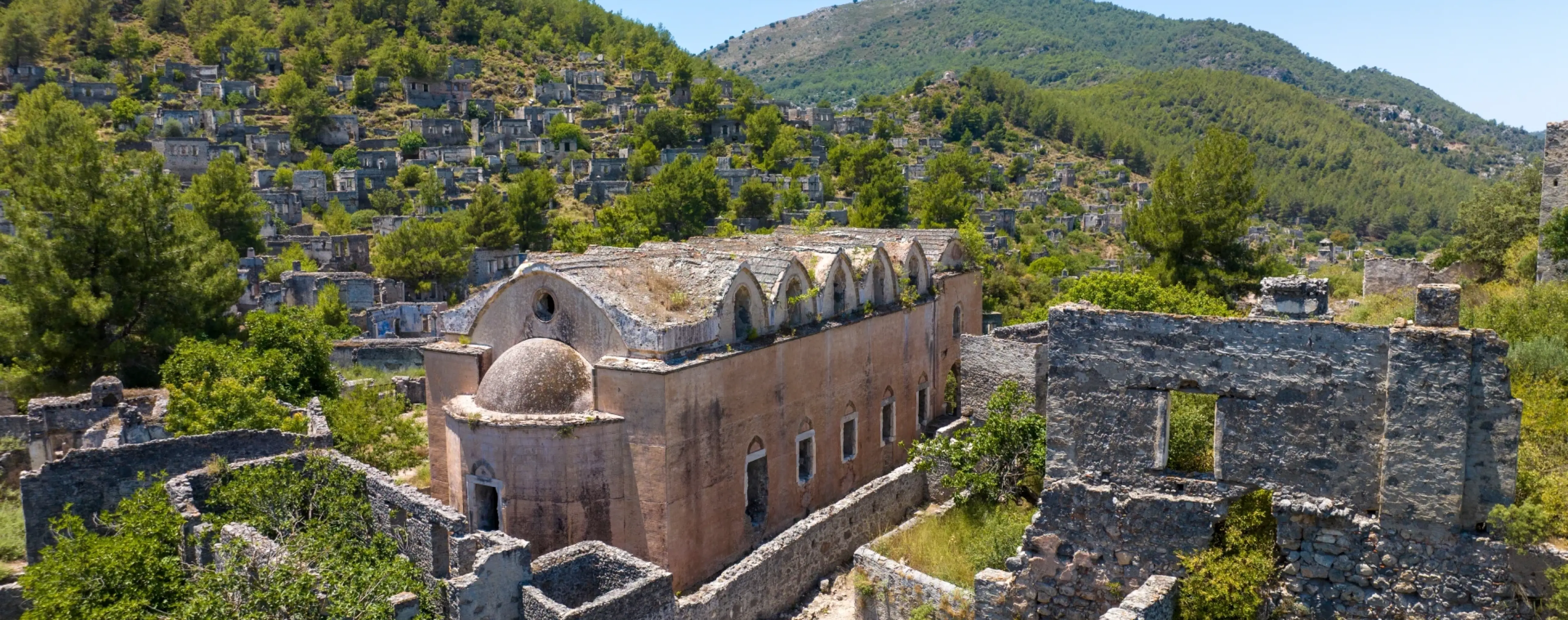
Kayakoy Village
Kayakoy Village in Fethiye, Turkey: an abandoned settlement on a hillside
Kayakoy Village is located in the mountains south of central Fethiye, on the road toward Oludeniz. It is one of the best-known abandoned settlements in southwestern Turkey, where a large expanse of stone buildings has been preserved in the open air. Today, Kayakoy is seen as a historical site associated with the late Ottoman period and the events of the population exchange between Greece and Turkey in the early 20th century.
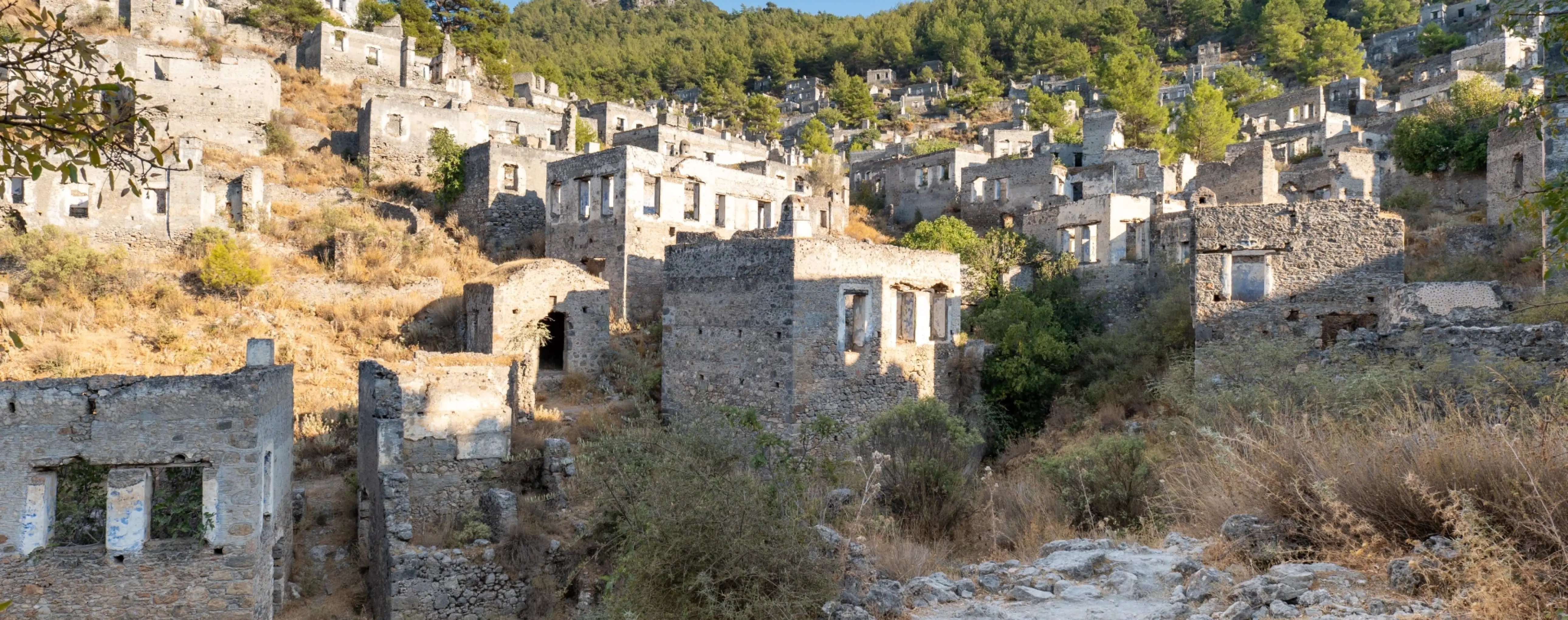
The settlement rises up the slope in terraces, so its structure is easy to understand even without restored interiors. Rows of roofless houses, narrow streets, stairways, and the remains of utility buildings, cisterns, and public structures have been preserved here. Two large Orthodox churches are especially striking, helping to convey the scale and layout of former village life.
The historical value of Kayakoy is connected above all with the integrity of its setting. It is not a single monument, but a large area where you can see how the living space of a mountain settlement at the end of the 19th and beginning of the 20th century was organized. After the residents left, the buildings gradually deteriorated, and some structures were damaged by earthquakes, but the stone walls and layout have survived quite well.
For tourists, Kayakoy is appealing as a place for a leisurely walk and an introduction to the region’s history outside the format of a conventional museum. People come here to walk along the old streets, examine the architecture without later reconstruction, and better understand how life in this part of the Fethiye area changed. A visit is easy to combine with the road to Oludeniz or with stops at nearby viewpoints and nature trails.
Kayakoy Village on the map
Kayakoy Village: terraced streets and stone houses
The historical setting of an early 20th-century mountain settlement has been preserved here.
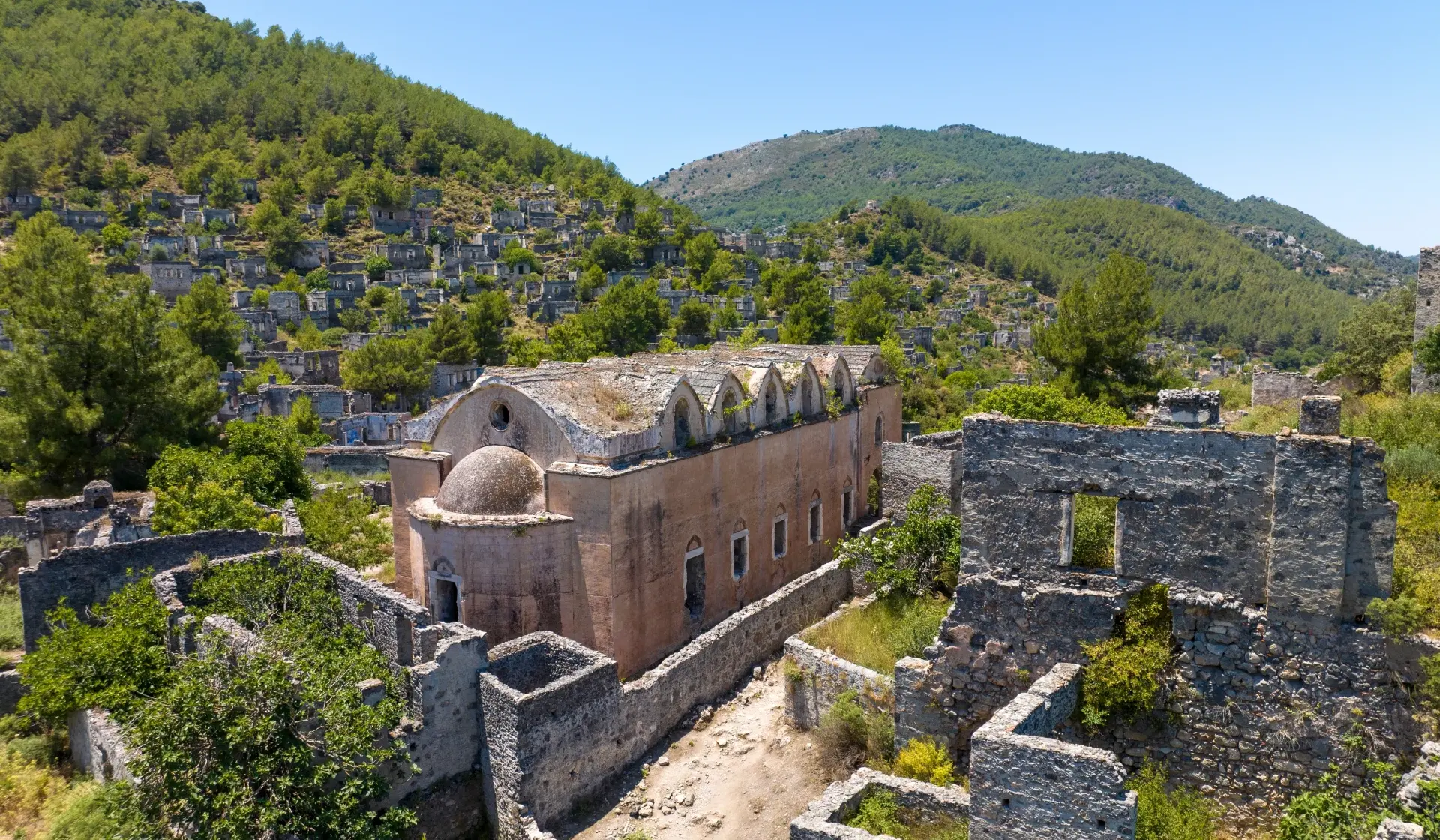
Terraced streets and stone houses on the hillside
In Kayakoy, visitors usually walk along the old streets between rows of empty stone houses, climb the stairways, and look at the preserved facades, doorways, and layout features. Because of the terrain, there are views of neighboring quarters from almost any point, making it especially clear how the houses were arranged in steps one above another. This helps explain how the settlement was adapted to the mountainside.
The two large churches deserve special attention, as they have been preserved better than many of the residential buildings. Inside and around them, characteristic features of the public architecture of that time are visible, and along the way there are remains of small courtyards, utility rooms, and water collection structures. Kayakoy does not have a dense museum exhibition in the usual sense, so the main attraction here is the historical setting itself and the opportunity to examine it closely in its natural environment.
It is worth choosing comfortable shoes for the visit: the paths are rocky in places, with climbs and uneven sections. In summer, it is better to come in the morning or closer to the evening, as there is little shade on the slope. Near Kayakoy are Oludeniz, Blue Lagoon Beach, and mountain trails toward the coast, so a visit to the village is often included in an itinerary around the Fethiye area.
The easiest way to get here is from central Fethiye by car, taxi, or local transport along the road toward Oludeniz. The visit usually takes from one to several hours, depending on your walking pace and interest in historical architecture.
Best tours and travel experiences across the continent


Photos of Kayakoy
Guided tours, popular attractions, and top-rated hotels across the continent


