
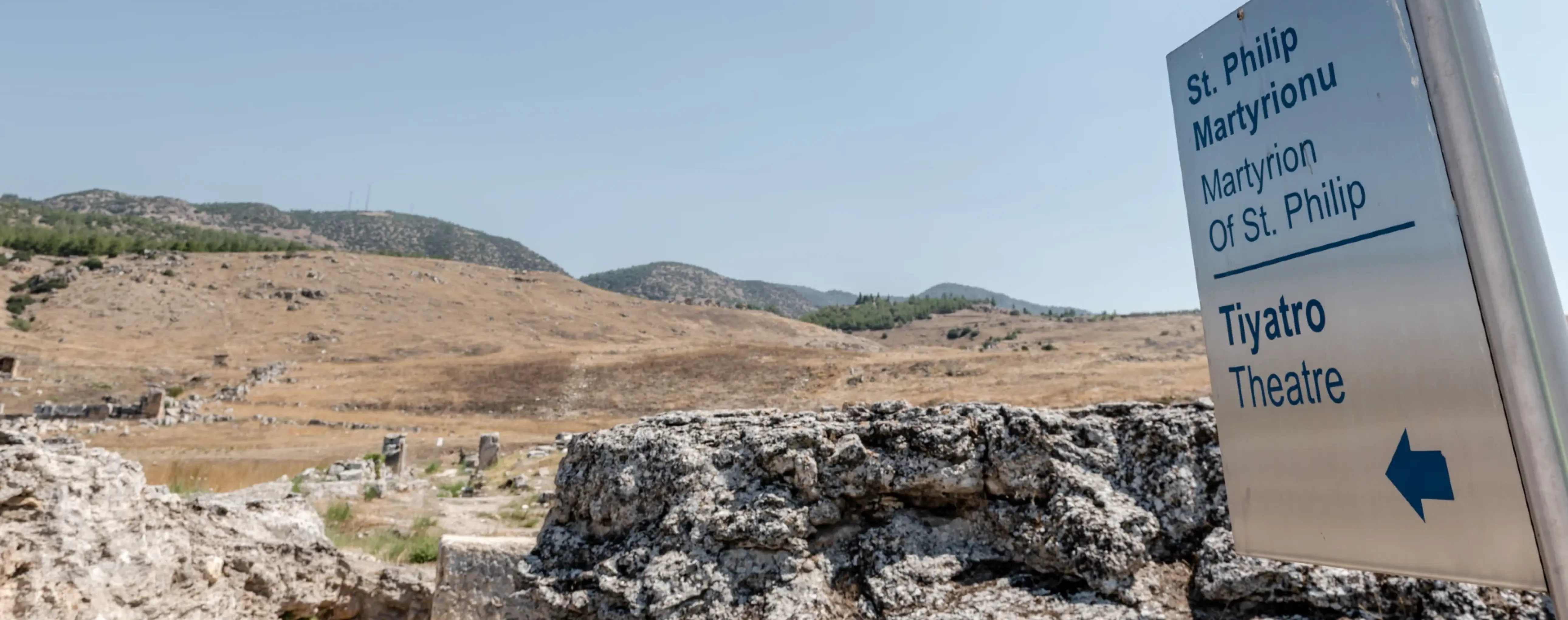
Martyrium of Saint Philip
Martyrium of Saint Philip in Denizli, Turkey
The Martyrium of Saint Philip is located in the archaeological zone of Hierapolis in Pamukkale, near the city of Denizli. This early Christian sanctuary on a hilltop is traditionally associated with the veneration of the Apostle Philip. The monument is part of the UNESCO World Heritage Site "Hierapolis-Pamukkale" and is regarded as an important part of the religious history of this ancient city.
The structure was built during the Byzantine era, presumably at the beginning of the 5th century, on a site that local tradition considered to be connected with the apostle's martyrdom. In terms of layout, it is a centrally planned building with an octagonal core surrounded by rooms and passageways. This scheme is characteristic of Late Antiquity and reflects the function of the complex as a place of pilgrimage and worship.
Today, visitors see ruins from which the original scale of the structure can still be imagined: sections of walls, column bases, stairways, and elements of the entrance areas have survived. Thanks to its elevated position, there are excellent views from here over the ruins of Hierapolis, the surrounding plateau, and the white travertine terraces of Pamukkale.
The martyrium is of interest to those who want to better understand the early Christian architecture of Asia Minor and the organization of Byzantine-era pilgrimage centers. It is usually visited together with other monuments of Hierapolis, so a stop here is especially convenient as part of a walk through the entire archaeological complex.
Martyrium of Saint Philip on the map
The Martyrium of Saint Philip and its ruins above Hierapolis
The monument helps explain the early Christian history of Hierapolis.
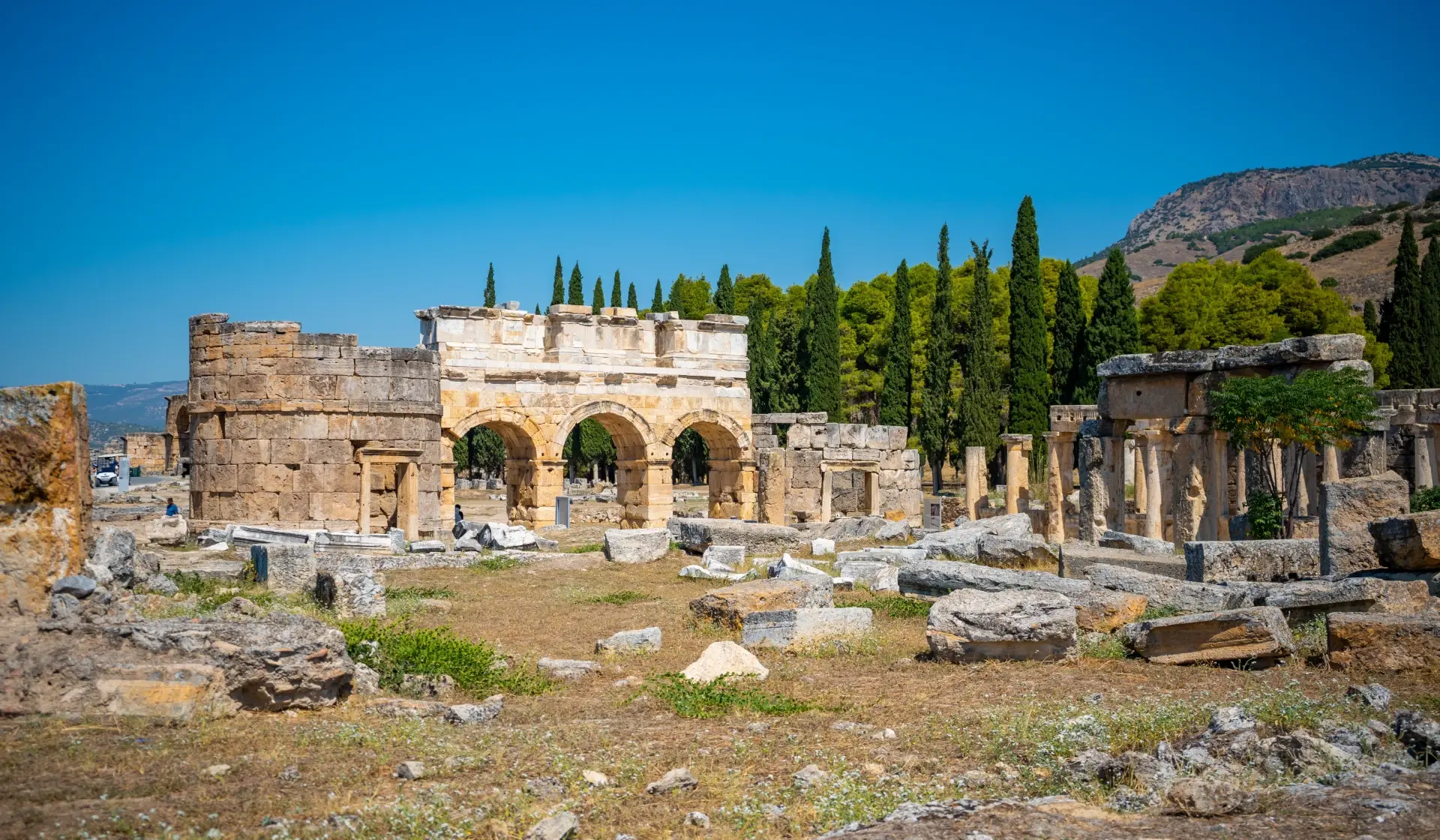
The octagonal sanctuary on the hill above Hierapolis
What stands out most on site is the unusual composition of the monument. The surviving outlines show how the central octagonal space was combined with adjoining rooms and passageways, forming an almost cross-shaped structure. For visitors, this is an opportunity to see not just isolated ruins, but a clearly legible plan of a Late Antique religious building.
The ascent to the martyrium takes little time, but it is worth bearing in mind the open terrain and the sun, especially in the warm season. On the site, it is convenient to examine the remains of walls and architectural fragments, and then linger for the panoramic view of the valley. It is best to come in comfortable footwear, as the paths in the archaeological zone are uneven in places.
Nearby are the ancient theater of Hierapolis, the necropolis, the Roman baths, and the travertine terraces of Pamukkale, so a visit to the martyrium can easily be combined with seeing other parts of the complex. This makes the site interesting not only for those studying Christian monuments, but also for travelers getting acquainted with the history of Hierapolis as a whole.
People usually come here on foot through the Pamukkale archaeological zone after entering Hierapolis. From the center of Denizli, Pamukkale is easily reached by car, taxi, or local transport, and then the route continues on foot.
Best tours and travel experiences across the continent



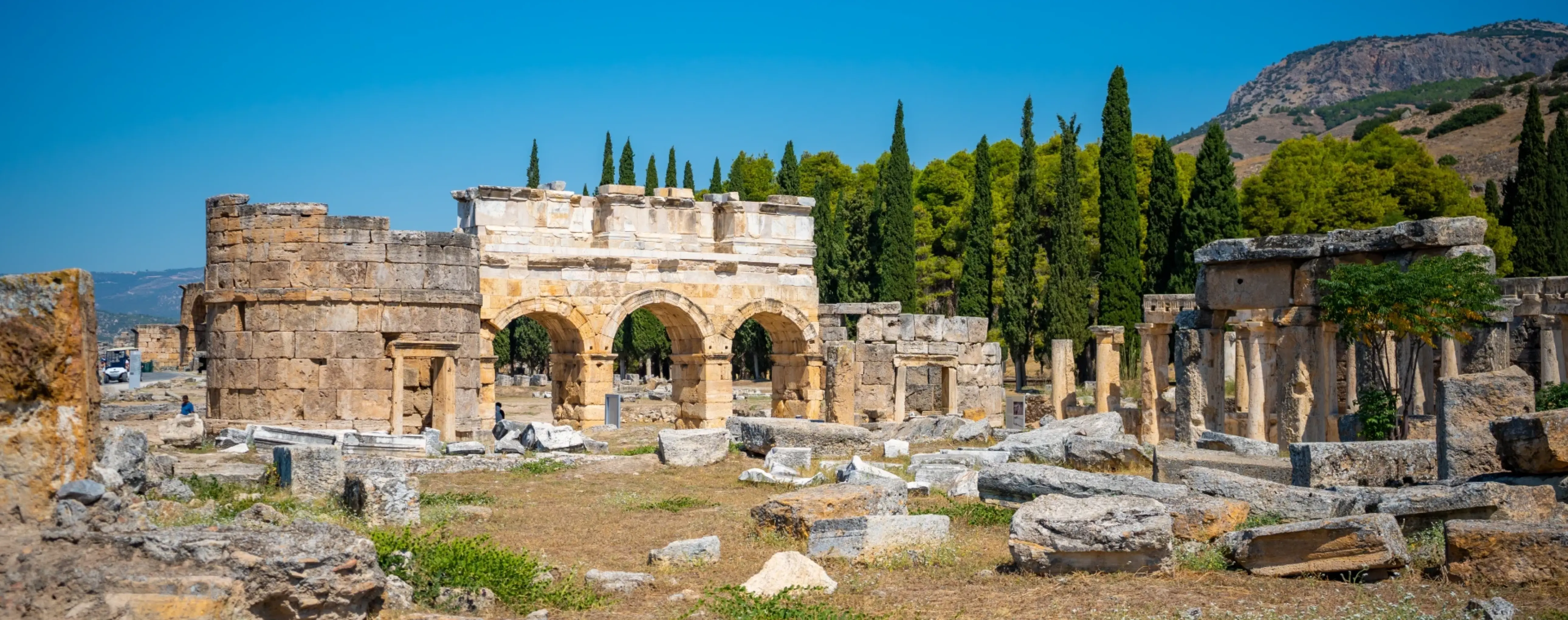
Photos of the martyrium
Guided tours, popular attractions, and top-rated hotels across the continent


