
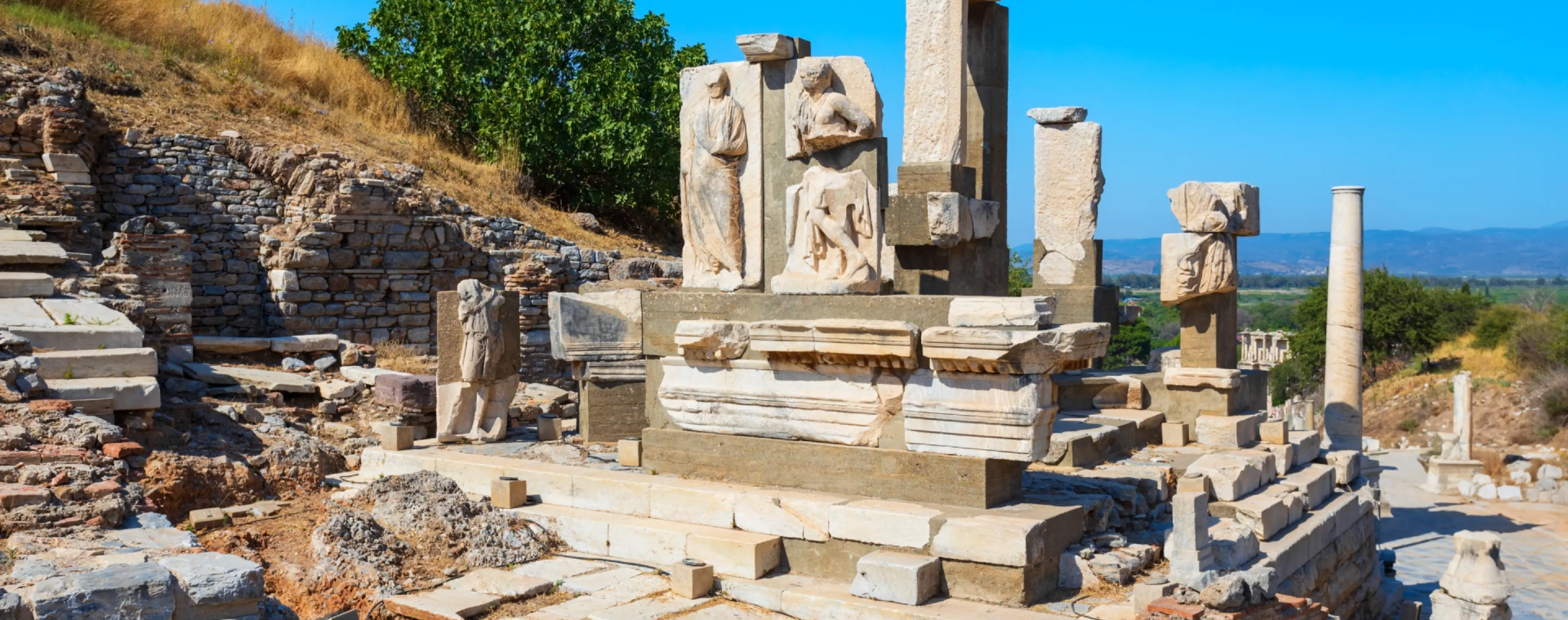
Monument of Memmius
Monument of Memmius in Izmir, Turkey
The Monument of Memmius is located in the archaeological zone of ancient Ephesus near modern Selcuk, south of Izmir. It can be seen in the upper part of Curetes Street, one of the main streets of the ancient city, where many well-known ruins from the Roman period are concentrated.
The monument is associated with Gaius Memmius, the grandson of the Roman dictator Sulla. It is usually dated to the end of the 1st century BC, when Ephesus was already under strong Roman influence. The monument has not survived in full to the present day, but from the preserved blocks, reliefs, and layout, it is possible to imagine that it was a prominent decorative structure integrated into the urban environment.
For tourists, the monument is interesting not as a standalone site, but as part of the route through Ephesus. It helps to better understand how politics, urban architecture, and the cult of memory were combined in the ancient city. During a walk along Curetes Street, it is usually viewed together with neighboring structures, so a stop here naturally fits into a visit to the entire complex.
Today, the Monument of Memmius is perceived primarily as an important archaeological fragment of Ephesus. It provides insight into the Roman stage of the city's history and makes it possible to see how even partially preserved ruins help reconstruct the appearance of one of the largest ancient centers of Asia Minor.
Monument of Memmius on the map
Izmir, Ephesus: Monuments and memorials
Trajan Fountain, Clock Tower
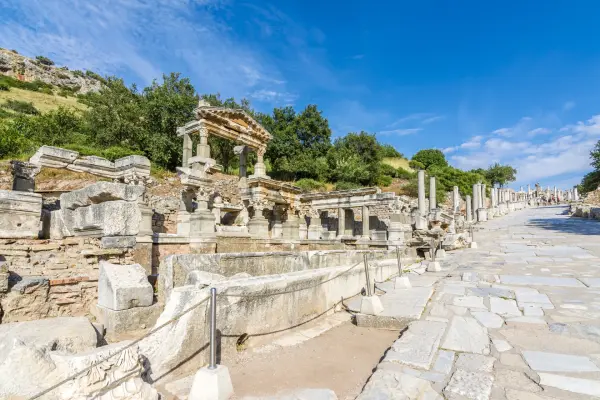
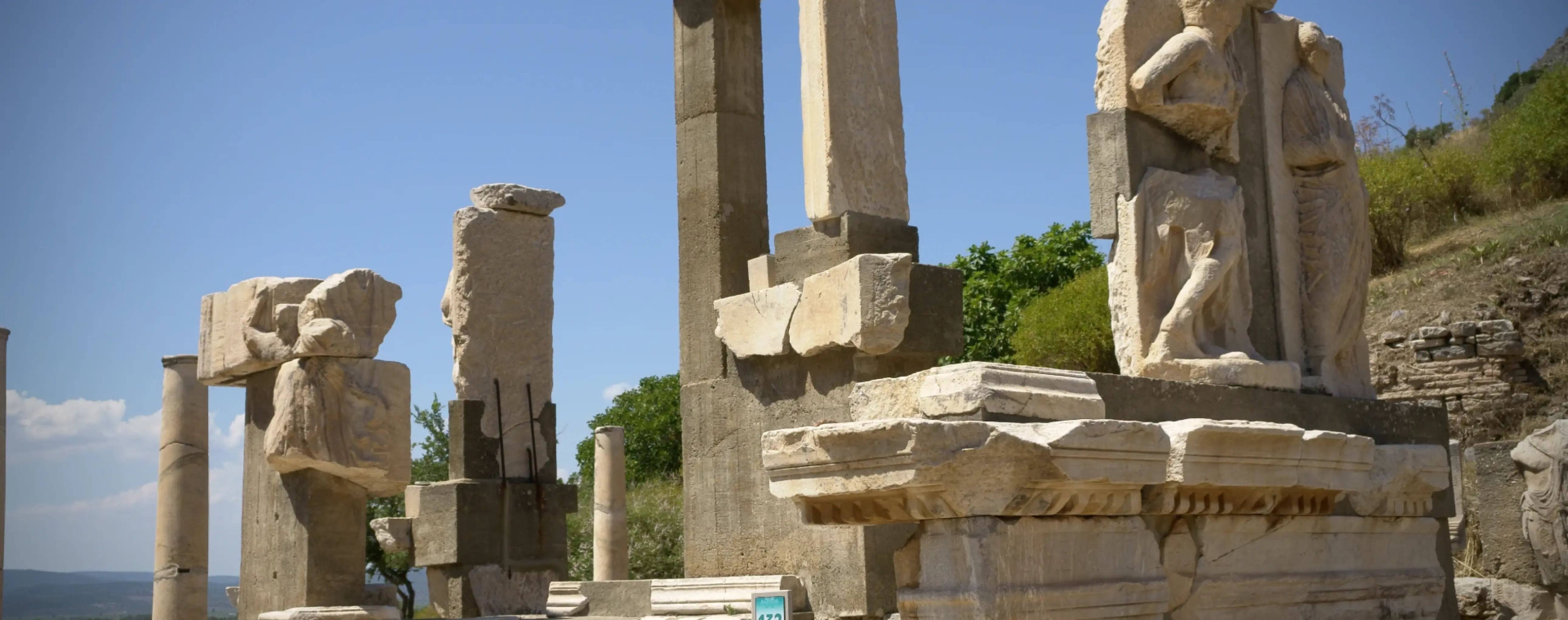
Monument of Memmius on Curetes Street in Ephesus
It helps reveal the Roman stage of Ephesus's history.
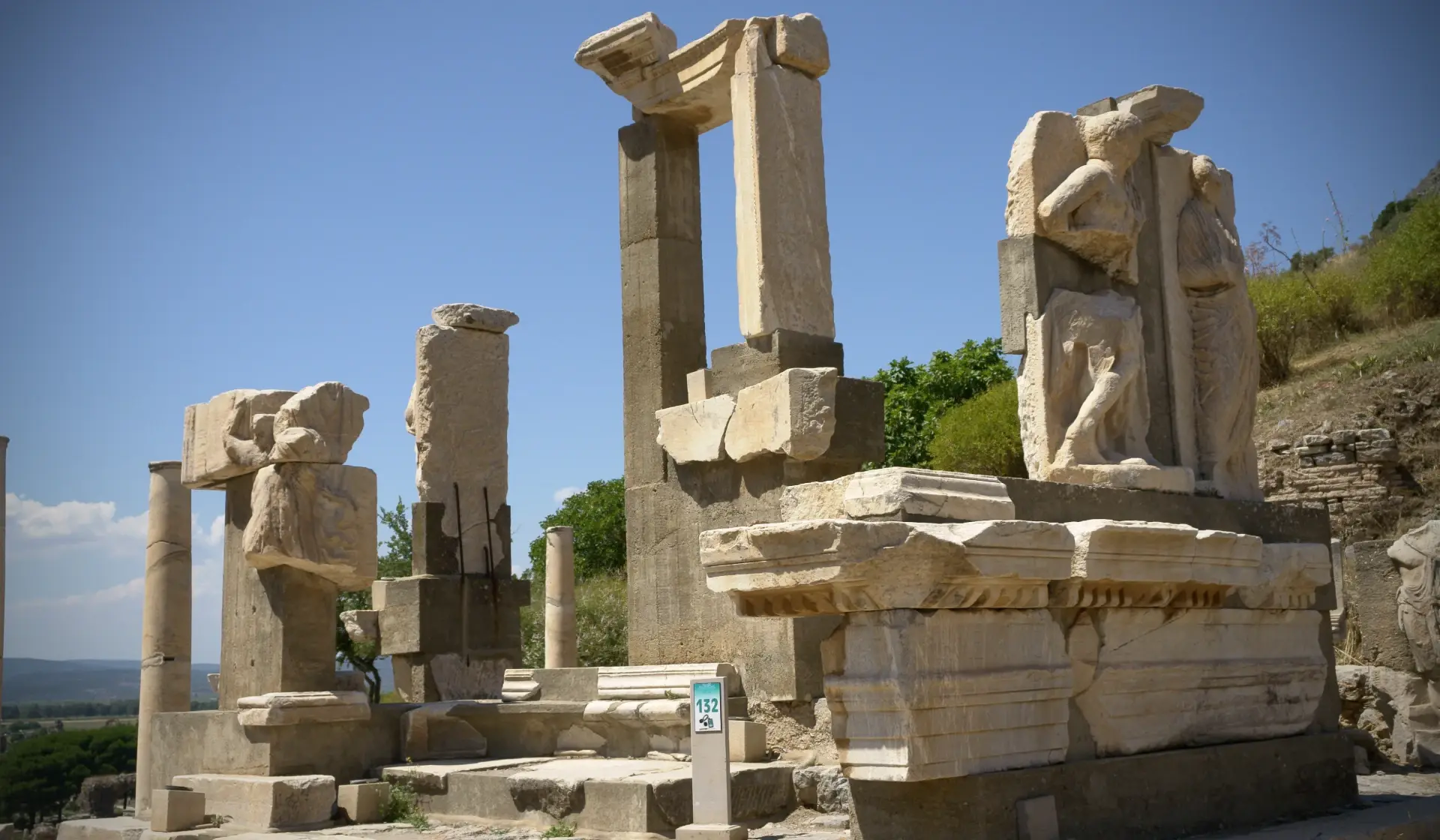
Fragments of a Roman memorial structure on Curetes Street
Today, visitors can see the base and preserved architectural elements of the monument, integrated into the overall ensemble of Curetes Street. The monument is best appreciated not up close as a separate ruin, but in the context of the surrounding development, where its position on the slope and its connection to the urban layout of Ephesus can be noticed.
During the visit, it is worth paying attention to the stonework, decorative details, and the position of the monument in relation to the nearby street. Such sites help explain that Ephesus was not only a commercial and religious center, but also a space where Roman power and the memory of influential people were expressed through monumental architecture.
Nearby are the Gate of Hercules, the Terrace Houses, the Library of Celsus, and the Great Theatre, so the area with the monument is usually considered part of a long walking route through the excavations. The most convenient way to come here is as part of a general visit to Ephesus, allowing time for a calm exploration of Curetes Street and the neighboring structures.
Visitors reach this site through the entrances to the archaeological complex of Ephesus from the Selcuk side, after which they walk to the monument along the main экскурсионному route. There is no separate museum or interior space to visit on site, so the acquaintance with the monument takes place directly in the open air.
Best tours and travel experiences across the continent

Photos of Ephesus
Guided tours, popular attractions, and top-rated hotels across the continent


