
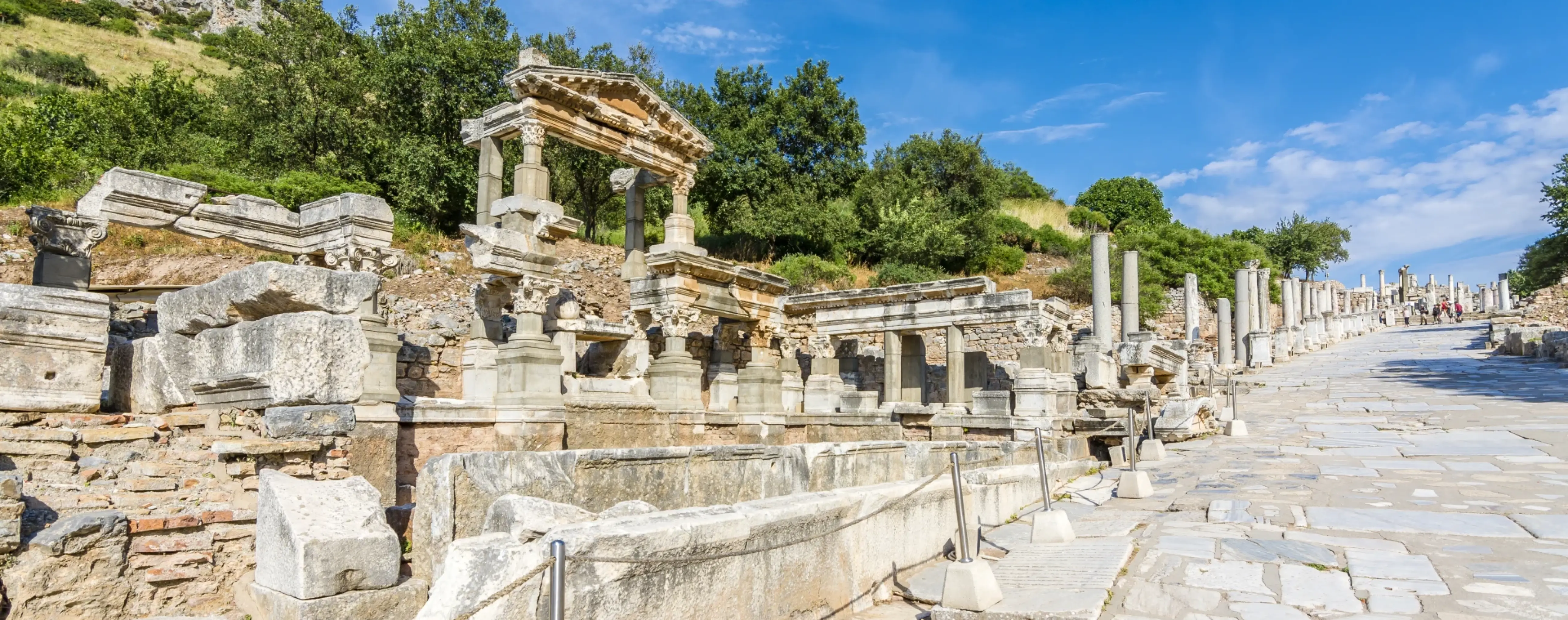
Trajan Fountain
Trajan Fountain in Kusadasi, Turkey
Trajan Fountain is located within the ancient city of Ephesus, which many travelers visit during a trip from Kusadasi. It is one of the notable monuments from the Roman period in the city’s archaeological zone. The structure is dated to the early 2nd century AD and is associated with Emperor Trajan, as indicated by a dedicatory inscription.
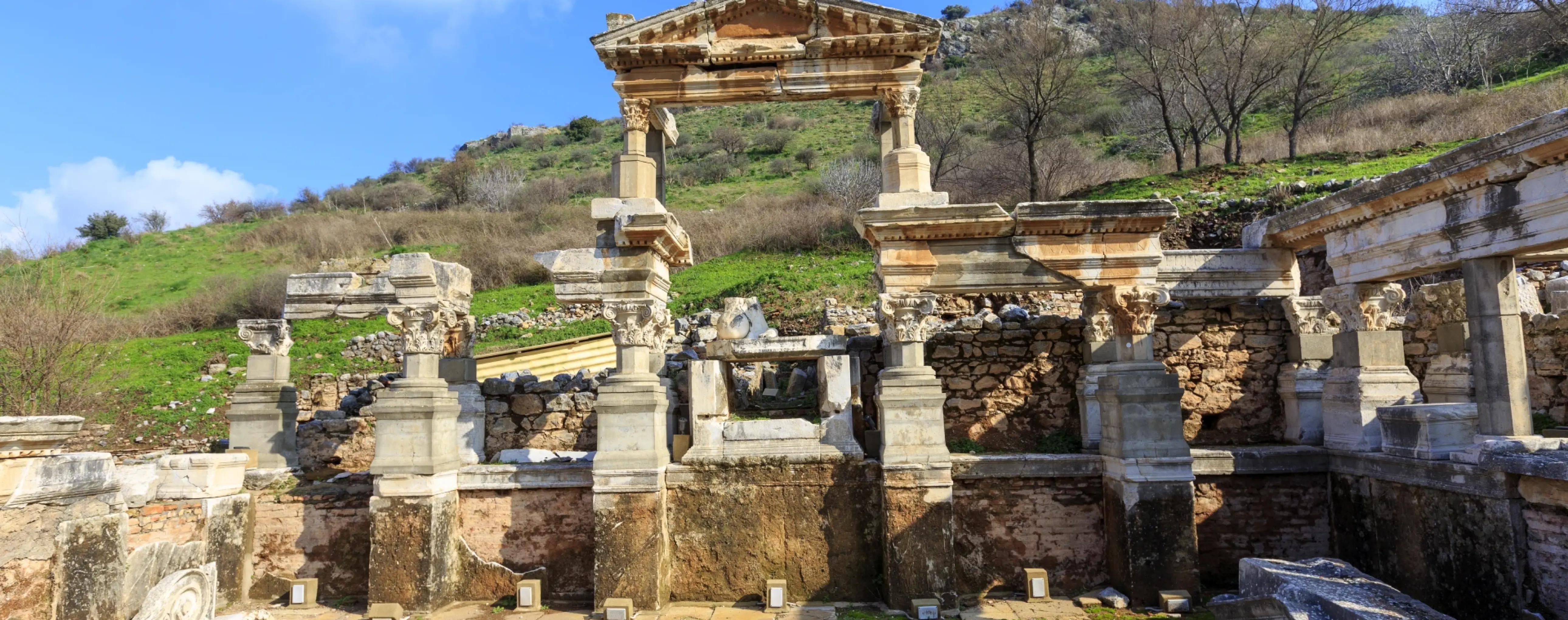
Originally, the fountain was a two-tiered monumental structure about 12 meters high. Its facade was decorated with columns, niches, and sculptural ornamentation, emphasizing the importance of water and urban architecture in Roman Ephesus. In the center, there was presumably a statue of Trajan, of which only separate fragments have survived.
Excavations here also uncovered other sculptural elements, including figures of satyrs and a statue of Aphrodite. Some of the finds are now kept in the Ephesus Museum, while at the site visitors can see the preserved architectural details and the overall layout of the monument. Even in its ruined state, the fountain helps illustrate how richly the ancient city was decorated.
For tourists, Trajan Fountain is interesting as part of a walking route through Ephesus. It is usually viewed together with the Library of Celsus, temples, streets, and other public buildings. This place will suit those who want to better understand the layout of a Roman city and see important elements of its urban environment.
Trajan Fountain on the map
Izmir, Ephesus: Monuments and memorials
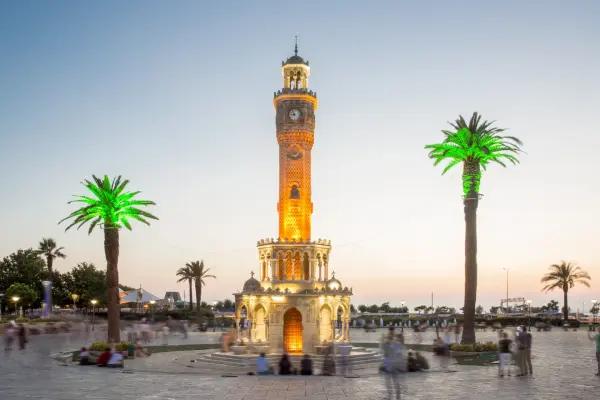
Clock Tower, Monument of Memmius
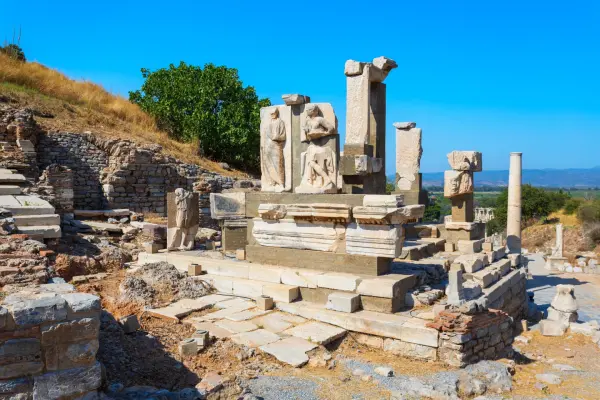
Trajan Fountain in Ephesus and its Roman remains
The monument helps illustrate the urban appearance of ancient Ephesus.
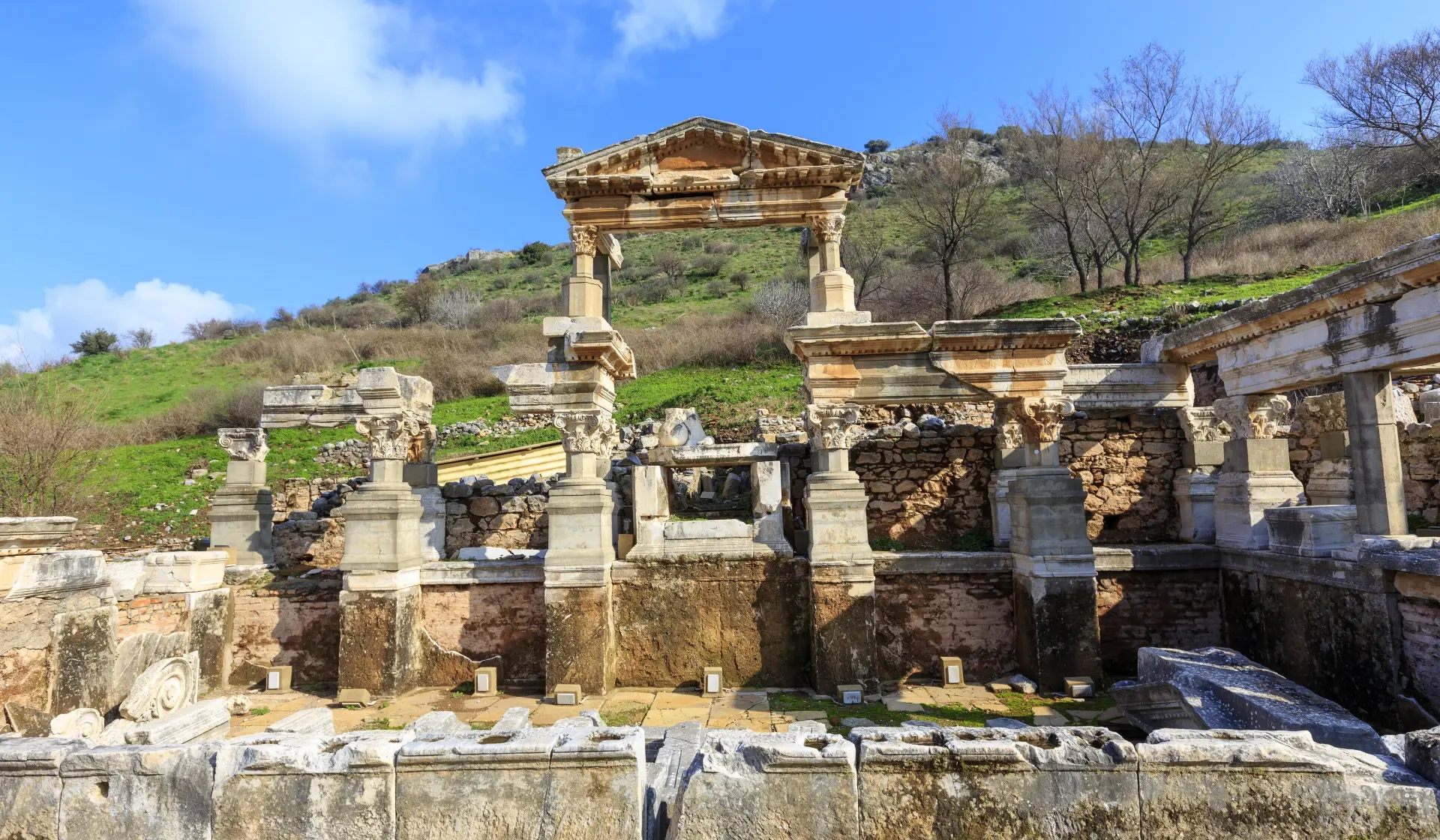
Roman monumental fountain with preserved sculptural fragments
Today, visitors see the remains of the facade, the base of the structure, and elements of the decorative ornamentation, which make it possible to judge the fountain’s original appearance. The monument is best understood not as a separate object, but as part of the carefully planned urban development of Ephesus, where fountains served not only a practical but also a representative function.
During the visit, it is worth paying attention to the niches, architectural blocks, and preserved parts of the sculptural decoration. These are what help to imagine what the central composition with the figure of the emperor looked like and how water was incorporated into the overall design of the structure. There is no complete reconstruction on site, so much must be interpreted through the surviving stone details and the archaeological context.
The fountain is usually visited during a walking route through Ephesus, so it is more convenient to allow time for the entire archaeological complex. Nearby are the Library of Celsus, the Temple of Hadrian, the Great Theatre, and ancient streets, which make it possible to see different aspects of life in the ancient city.
People usually get here from Kusadasi by excursion transport, taxi, or car to the entrance of the Ephesus archaeological zone, after which they continue on foot. For the visit, it is better to choose comfortable footwear, as the route passes along stone paths and sections with uneven surfaces.
Best tours and travel experiences across the continent



Photos of the fountain
Guided tours, popular attractions, and top-rated hotels across the continent


