
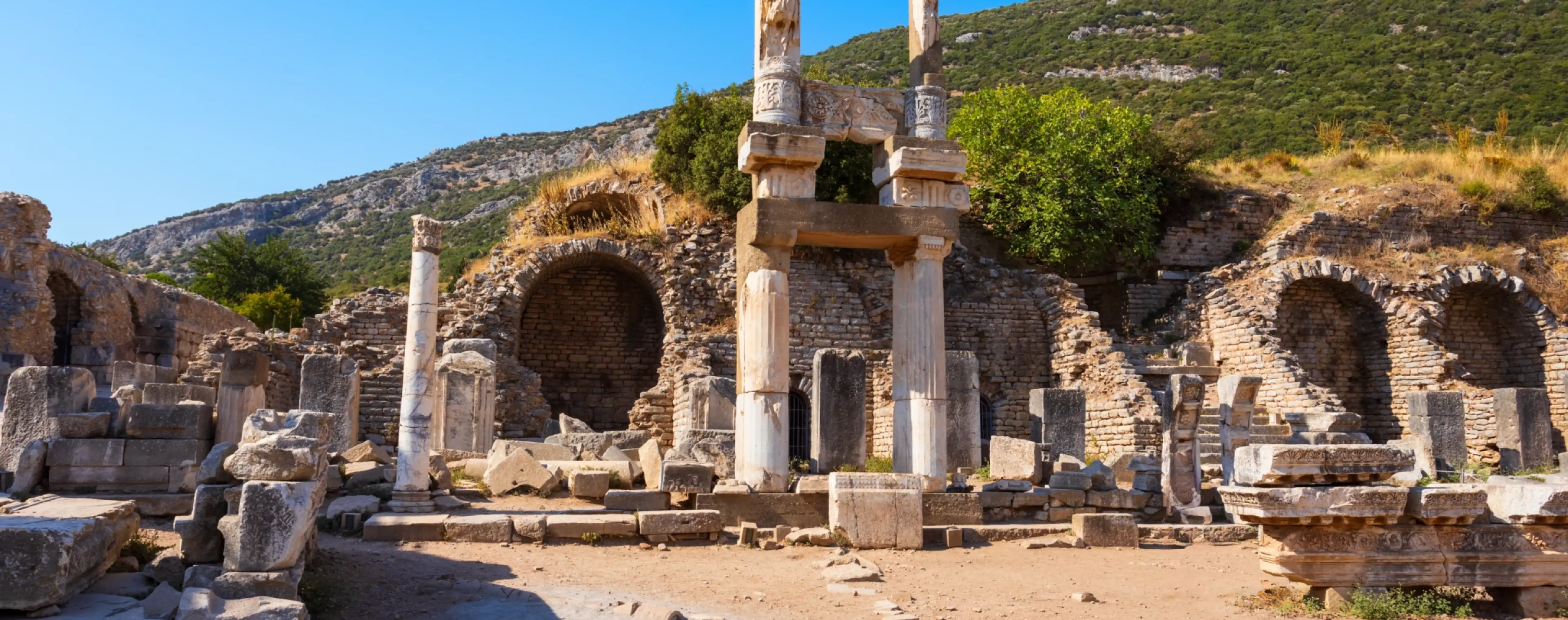
Temple of Domitian
Temple of Domitian in Izmir, Turkey
The Temple of Domitian is located within the archaeological complex of Ephesus, near modern-day Selcuk in Izmir Province. It dates to the Roman period and is considered one of the early temples of the imperial cult in the city. The sanctuary was dedicated to Emperor Domitian, although after his death the dedication was likely changed.
The temple stood on a high artificial terrace by the square now known as Domitian Square. This location emphasized its role in the urban setting: the structure was clearly visible and connected to an important public area of ancient Ephesus. From the surviving foundations, it is known that this was a large peripteral temple with columns around the perimeter and a cella in the center.
The monument has survived only in fragments. Visitors mainly see the foundation, part of the podium, and отдельные restored architectural elements found during excavations. Despite its state of preservation, the ruins help convey the scale of Roman construction in Ephesus and the design of monumental temple complexes of that time.
This site is usually of interest to those who want to see not only the most famous landmarks of Ephesus, but also gain a better sense of the layout of the ancient city. The Temple of Domitian is best viewed as part of a walk through the archaeological zone, where it is especially clear how religious and public spaces were integrated into the everyday life of the ancient city.
Temple of Domitian on the map
Izmir, Ephesus: Sanctuaries and temples
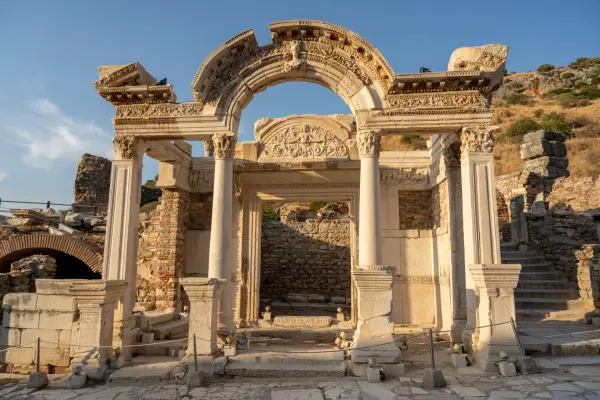
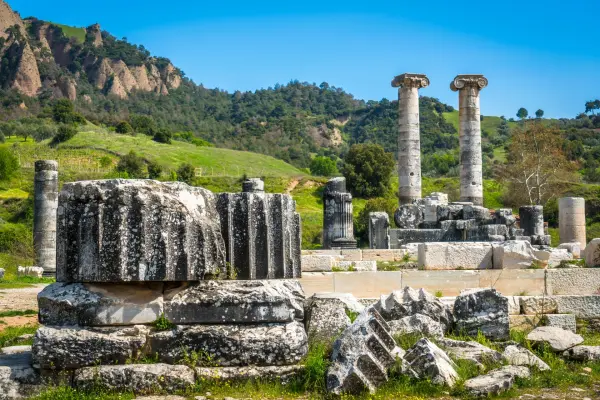
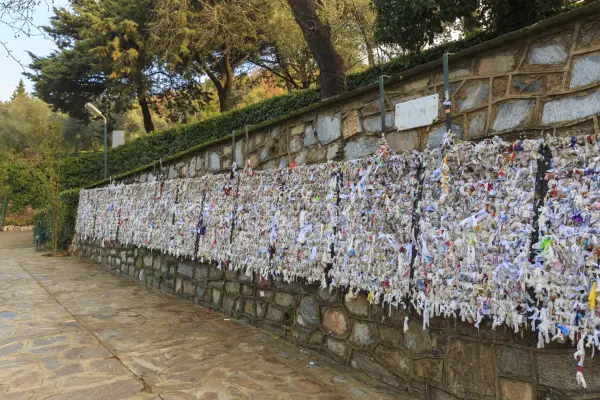
Temple of Hadrian, Temple of Artemis at Ephesus, Wishing Wall at the House of the Virgin Mary
The Temple of Domitian and its ruins on the terrace of Ephesus
The ruins help explain the layout of ancient Ephesus.
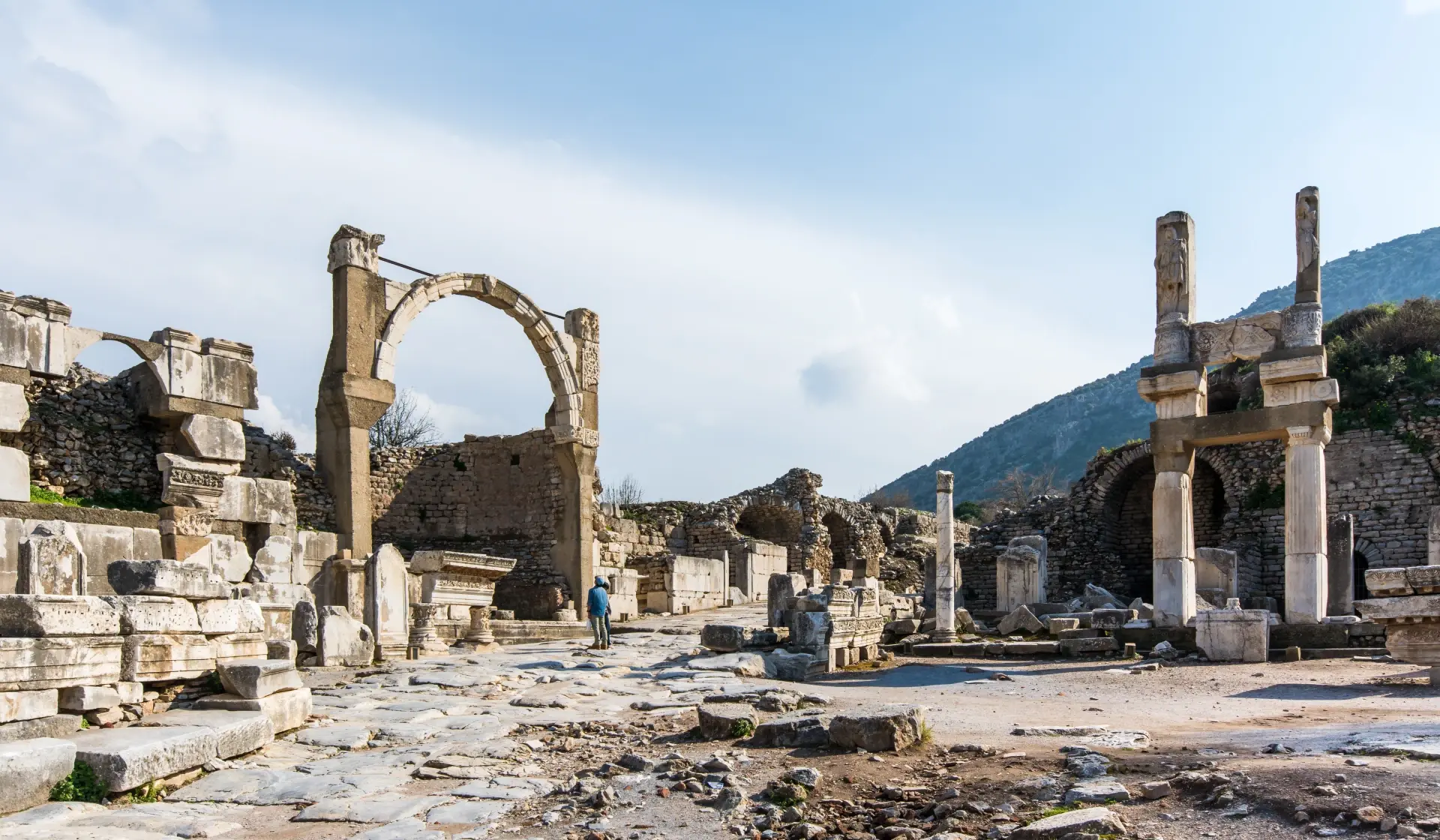
Ruins of a Roman sanctuary on a high terrace in Ephesus
At the site of the temple, its architectural foundation is the most clearly visible: the podium, the outline of the platform, and fragments of decorative ornamentation. These make it possible to imagine the size of the building and understand how access to the sanctuary was organized. A visit usually takes little time, but it is especially useful for those who want to see Ephesus not just as a set of separate ruins, but as a thoughtfully planned ancient city.
It is worth paying attention to the terrace itself, which is significantly larger than the base of the temple. It shows that the complex included not only the main cult building, but also auxiliary spaces. The discovered architectural details and relief fragments suggest that the decoration was quite ceremonial, although most of it has been lost.
Visitors can conveniently include this area in a route between other monuments of Ephesus: the State Agora, the Fountain of Pollio, the Temple of Hadrian, and the Library of Celsus are nearby. It is best to view the ruins in good daylight, when it is easier to distinguish the plan of the structure and the levels of the terrace.
You can get here through the main entrance to the Ephesus archaeological zone from the Selcuk side, and then continue on foot along the main visitor route. It is advisable to wear comfortable shoes, as the surface throughout the complex is rocky and uneven in places.
Best tours and travel experiences across the continent


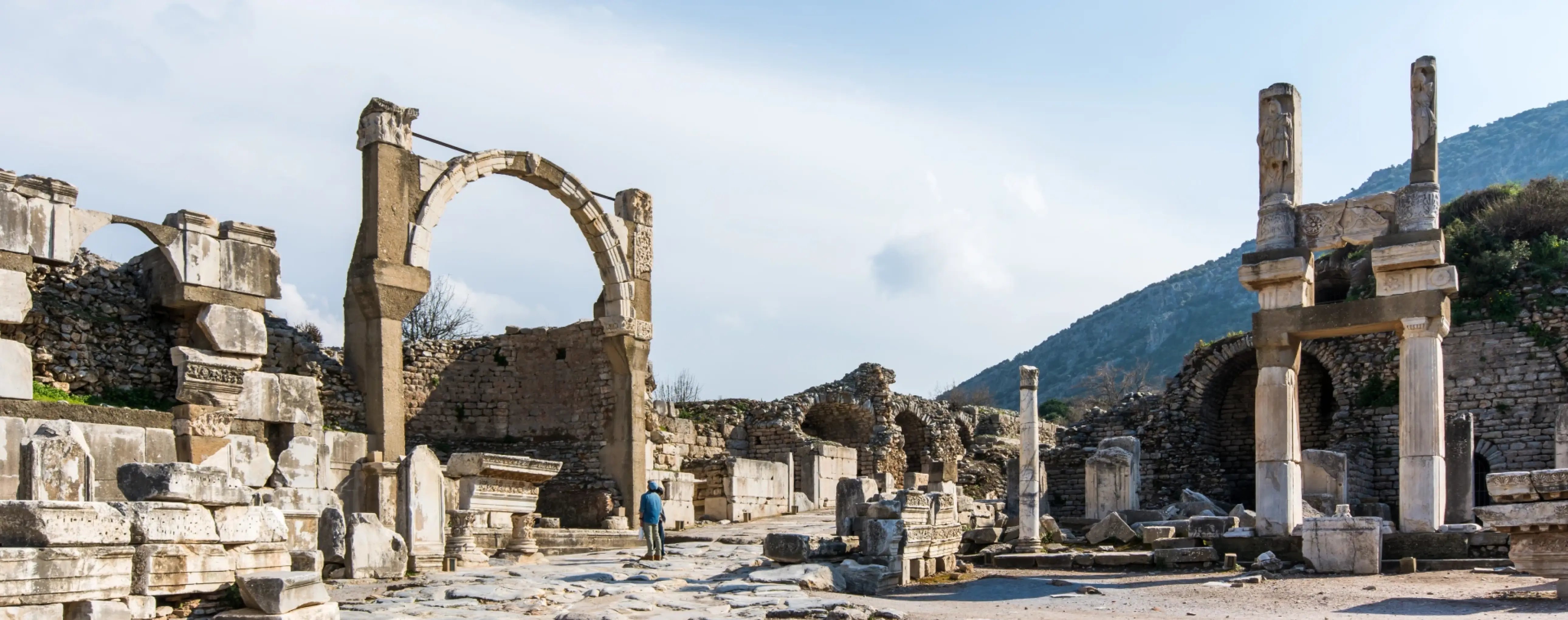
Photos of the temple
Guided tours, popular attractions, and top-rated hotels across the continent


