
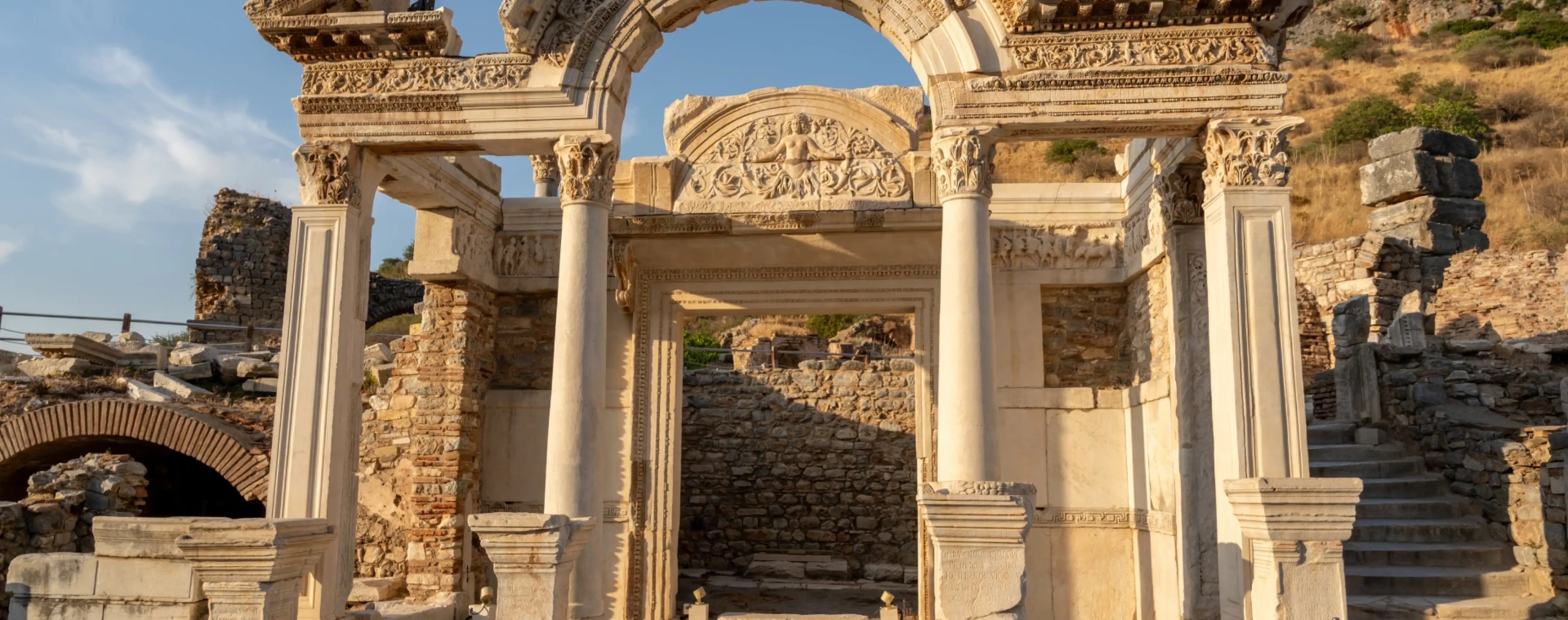
Temple of Hadrian
Temple of Hadrian in Izmir, Turkey
The Temple of Hadrian is located in the archaeological zone of Ephesus, near Selcuk in Izmir Province, on the ancient Curetes Street. It is one of the most recognizable Roman monuments in the city, built in the 2nd century AD during the period associated with the name of Emperor Hadrian. Small in size, the structure clearly shows what the decorative style of Roman architecture was like in one of the largest cities of Asia Minor.
The main part of the monument is the facade with columns and an arch, decorated with delicate carvings. Floral ornaments are visible in the decoration, and above the entrance there is a relief depicting Medusa. In front of the temple, pedestals have been preserved on which statues of rulers from the Tetrarchy period stood in late Roman times, adding another historical layer to the monument.
The temple has not survived in its entirety to the present day, and some of the visible details were restored during archaeological research and restoration work. Nevertheless, its appearance remains expressive enough to imagine the character of urban development in Roman Ephesus. Visitors are interested in it not because of its size, but because of the detailed facade, its convenient location on one of the main routes through the excavations, and its connection to the history of the imperial cult.
Temple of Hadrian on the map
Izmir, Ephesus: Sanctuaries and temples
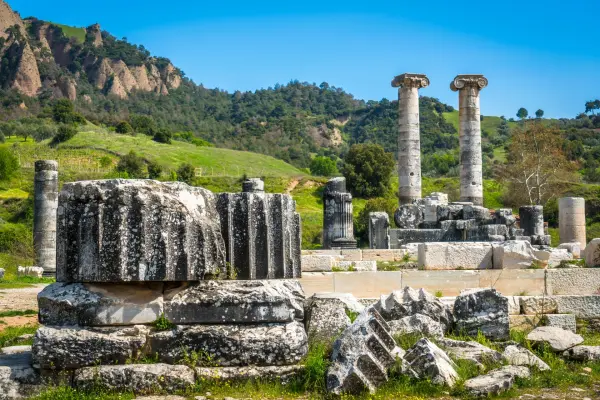
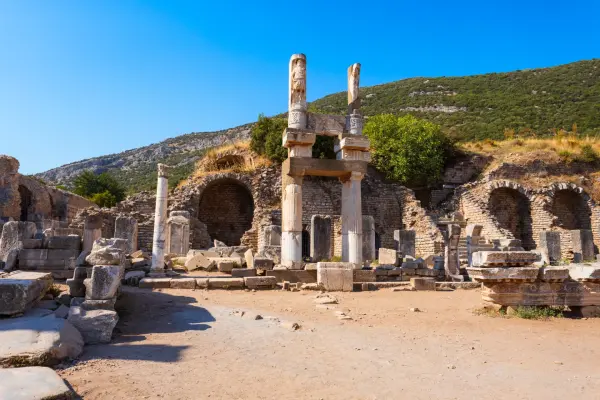
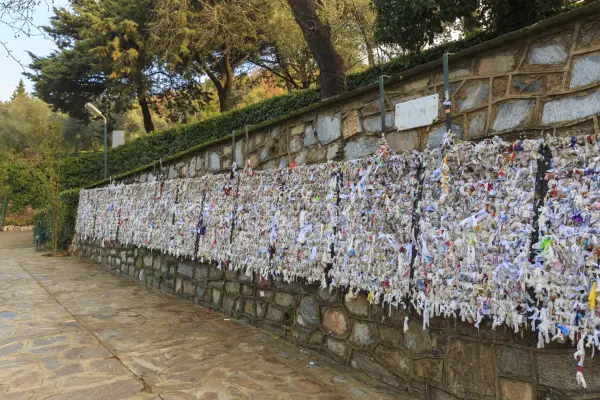
Temple of Artemis at Ephesus, Temple of Domitian, Wishing Wall at the House of the Virgin Mary
Temple of Hadrian on Curetes Street in Ephesus
The monument shows Roman decoration and the history of late antiquity.
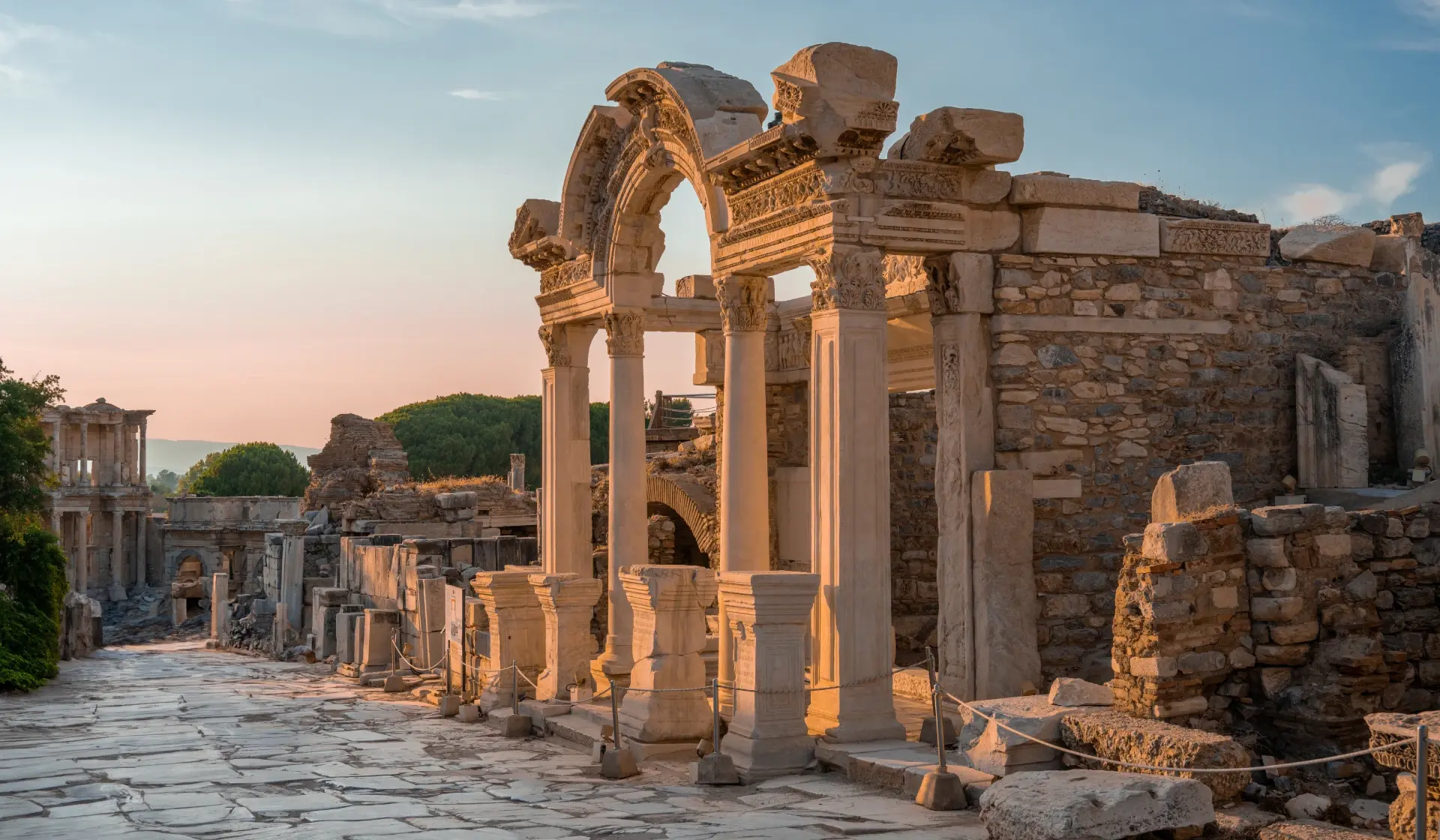
Carved Facade on Curetes Street
The front part of the temple is the best preserved, so attention is usually focused on the architectural details. Here you can see the Corinthian columns, the arch above the entrance, and the relief decoration, which is especially clear in side light. The interior space is small, and the monument is perceived above all as a carefully designed street facade built into the overall line of development of the ancient city.
During the visit, it is worth noting that the monument's current appearance is partly the result of anastylosis and restoration work. This is common practice in Ephesus: individual fragments were assembled and reinstalled based on archaeological data. Therefore, the temple is interesting not only as an ancient structure, but also as an example of how modern specialists preserve and present ruins to visitors.
The temple is easy to visit during a walk through the central part of the excavations: the Library of Celsus, the terrace houses, and the Great Theatre are nearby. Ephesus is usually reached via Selcuk, from where you can get to the entrances of the archaeological zone by taxi, bus, or on foot if you are staying nearby.
Best tours and travel experiences across the continent



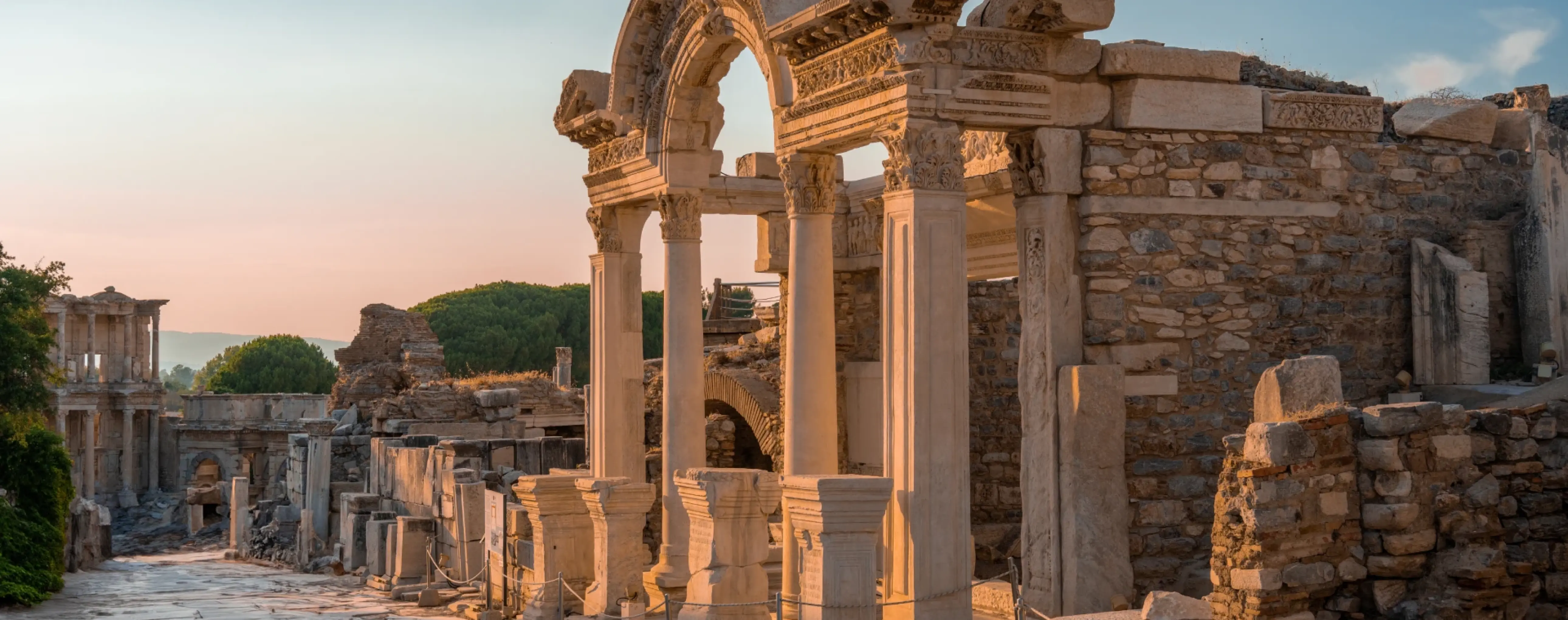
Photos of the temple
Guided tours, popular attractions, and top-rated hotels across the continent


