
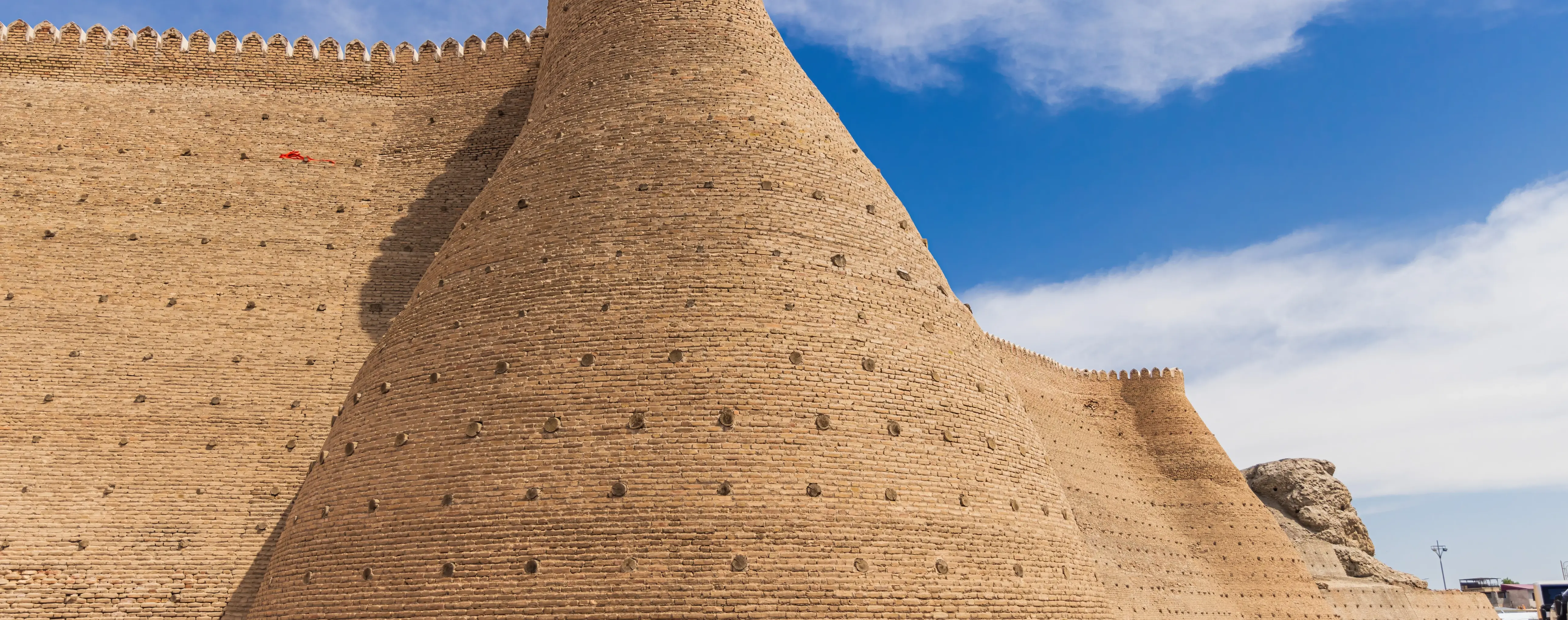
The Bukhara Fortress Walls
The Bukhara Fortress Walls in Bukhara, Uzbekistan
The Bukhara Fortress Walls are preserved sections of the city’s defensive line that surrounded historic Bukhara in different periods. They can be seen in the old part of the city, near the Samanid Park, the Chashma-Ayub Mausoleum, and other landmarks in central Bukhara. These fragments help visitors imagine how the medieval city was organized and how access to it was controlled.
Originally, Bukhara’s defensive system included walls, towers, and gates connected to the main roads and trade routes. Over the centuries, the fortifications were rebuilt and repaired many times, so the sections that have survived to our time belong to different stages in the city’s history. Today they are not fully preserved, but even the remaining fragments give an idea of the scale of the former fortifications.
For tourists, the fortress walls are primarily interesting as part of Bukhara’s historic landscape. Here, you can notice the massive masonry, the shape of the earthen and brick sections, as well as the connection of the walls to the overall layout of the old city. A visit to the walls is usually included in a walk through the historic center, especially if the route passes through the northwestern part of old Bukhara.
The historic center of Bukhara is included in the UNESCO World Heritage List, and the remains of the fortress fortifications are part of this protected ensemble. Visiting this site is well suited to those who want to see not only the famous mausoleums and madrasahs, but also elements of the urban infrastructure that shaped life and security in Bukhara over many centuries.
The Bukhara Fortress Walls on the map
Bukhara, Ark Citadel Zone: Fortresses and castles
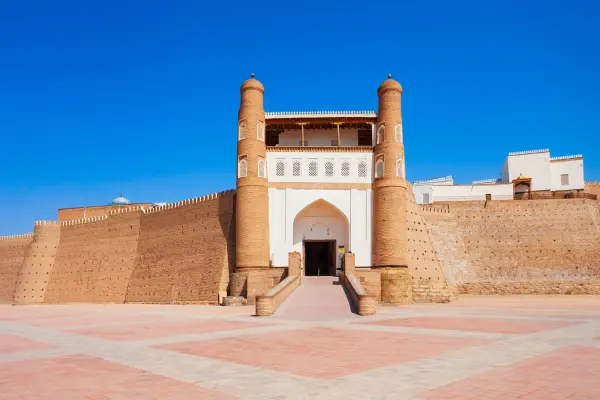
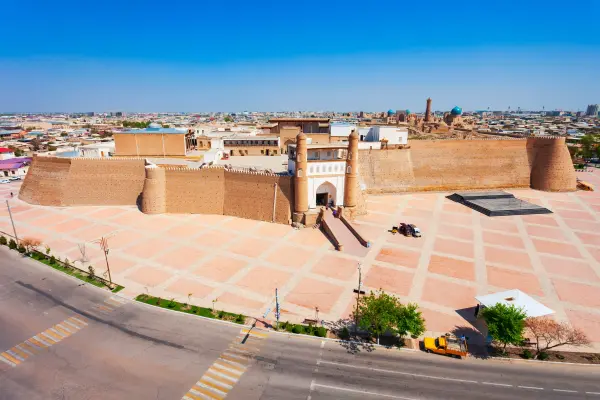
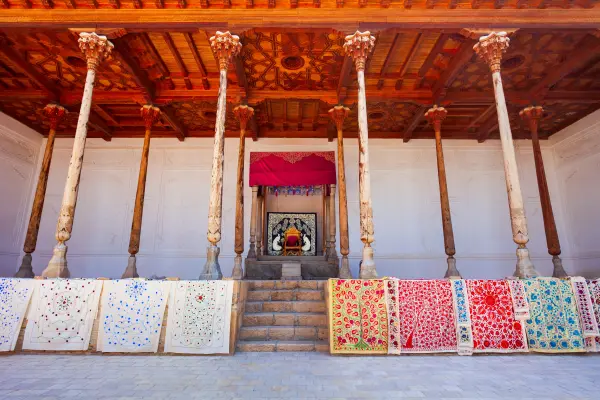
Main Entrance to the Ark Fortress, Ark City Citadel, Throne Courtyard of the Ark Fortress
The Bukhara Fortress Walls and Their Place in the Old City
Fragments of the fortifications show the boundaries of medieval Bukhara.
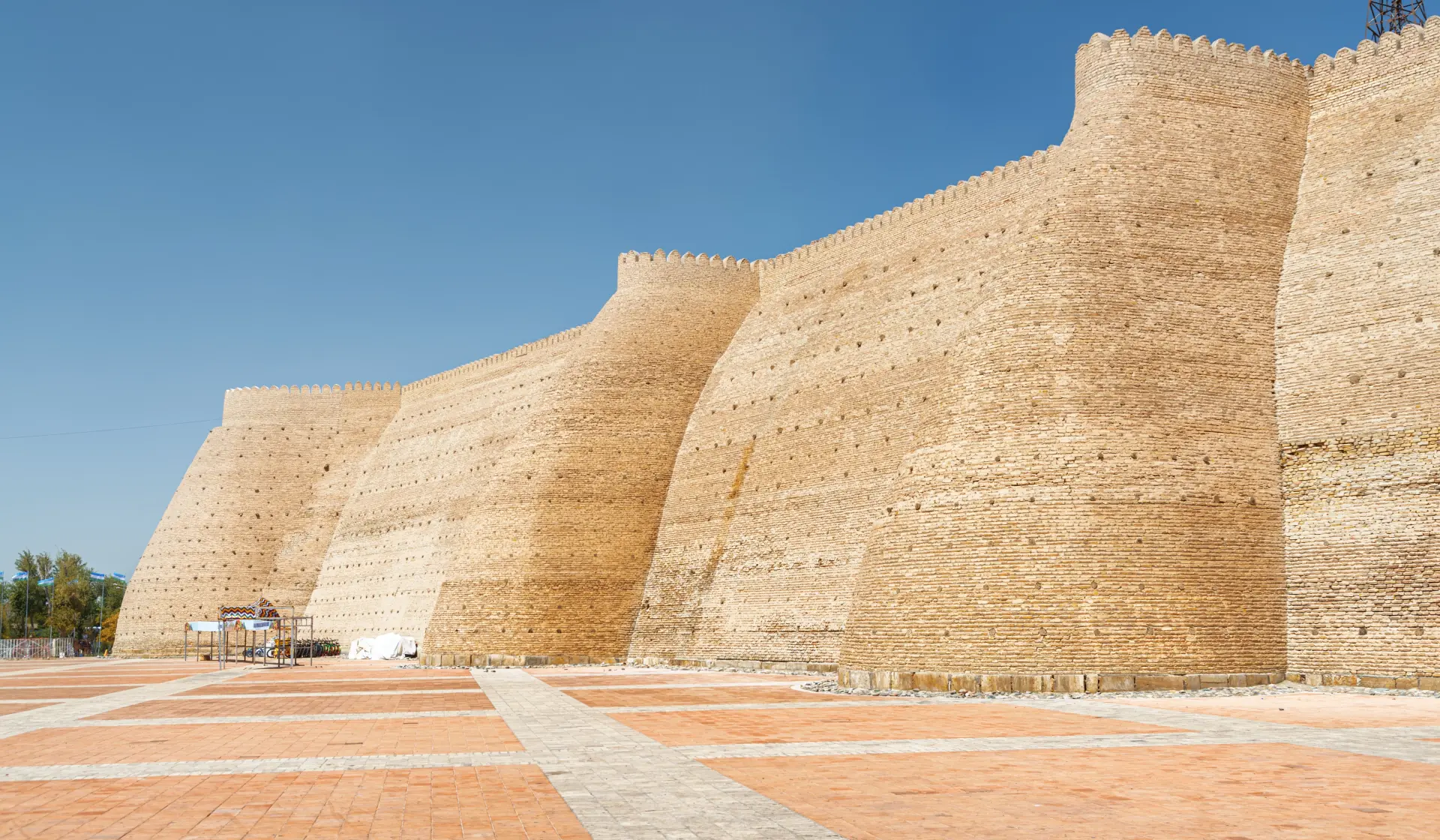
Fragments of the city’s defenses near the monuments of old Bukhara
The preserved sections of the walls make it possible to examine the structure of the old defensive сооружений up close. They are best understood not as a separate monument, but as part of the urban environment: they show where the defensive line ran, how the boundaries of the old city were formed, and what the relationship was between open space and dense historic development.
During your walk, it is worth paying attention to the thickness of the walls, the surface relief, and the differences between restored and older sections. In some stretches, it is especially clear that the fortifications were designed for prolonged defense and control of the approaches to the city. This place is better suited for a calm inspection, a short stop, and photographs than for a long separate visit.
Nearby are the Chashma-Ayub Mausoleum, the Samanid Mausoleum, and Samanid Park, so it is convenient to combine a visit to the walls with these places in a single route. This format is especially convenient for those exploring Bukhara’s history on foot and wishing to see not only religious and memorial monuments, but also elements of the old urban structure.
The fortress walls are usually reached on foot or by taxi from the center of Bukhara, as the historic part of the city is compact and convenient for walking. Before visiting, it is worth considering the time of day: in soft daylight, the texture of the masonry and the overall outline of the fortifications are more noticeable.
Best tours and travel experiences across the continent



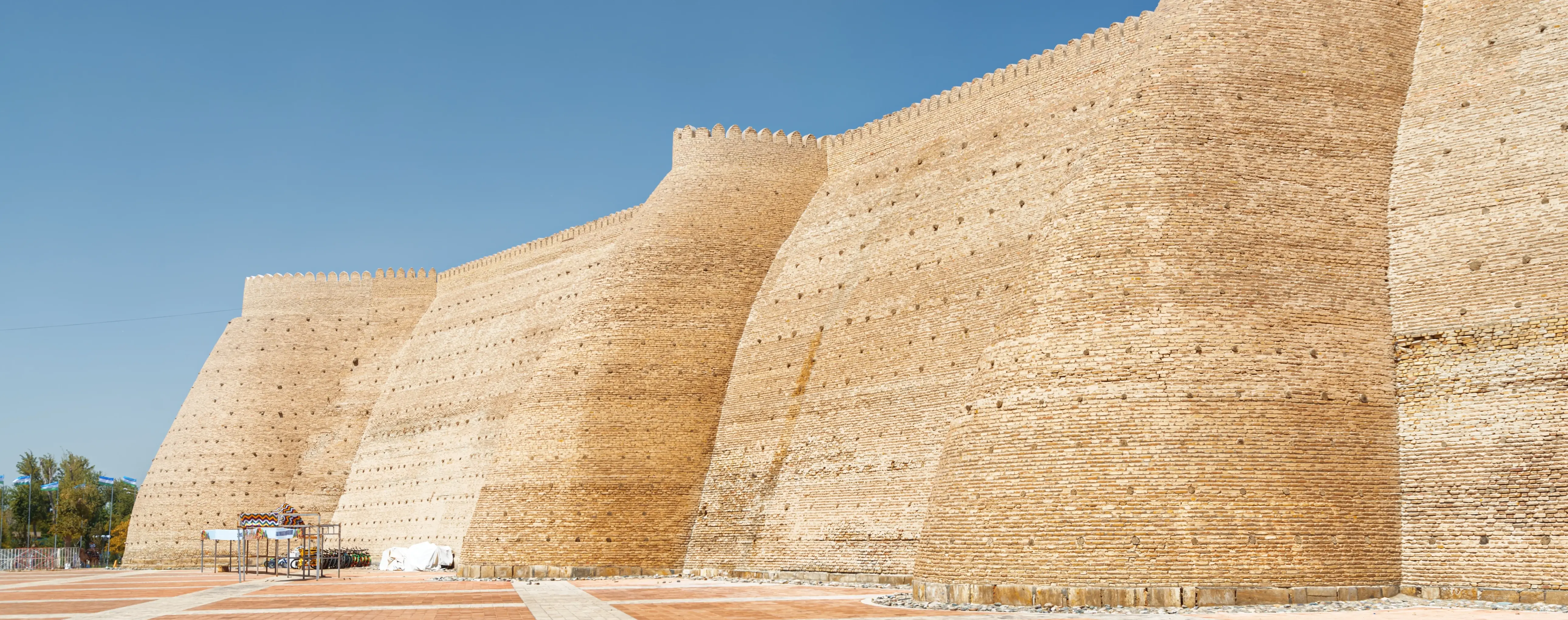
Photos of the walls
Guided tours, popular attractions, and top-rated hotels across the continent


