

Mount Hasan
Mount Hasan, Cappadocia, Turkey
Mount Hasan, or Hasandag, is located in the southern part of Cappadocia, between Aksaray and Nigde. It is a large stratovolcano with two main peaks - Greater Hasan at 3,268 meters and Lesser Hasan at about 3,069 meters. Its massif is clearly visible from different parts of the region and stands out sharply against the Central Anatolian plateau.
Hasan belongs to the Central Anatolian volcanic province and is linked to the same geological processes that shaped much of Cappadocia’s landscapes. The volcano is composed mainly of andesitic and dacitic rocks, and lava domes are found in the upper sections. In scientific literature, it is usually considered a potentially active or dormant volcano, although the exact date of its last eruption remains a matter of debate.
For travelers, Hasan is of interest primarily as a natural landmark of the region and a destination for mountain ascents. From here, wide views open over the plains of Central Anatolia and neighboring volcanic massifs. The volcano is also connected with the ancient history of human settlement in these places: obsidian from nearby areas was used as early as prehistoric times, and the image from Catalhoyuk is sometimes associated specifically with Hasandag, although this assumption remains disputed.
A trip here is suitable for those who want to see a lesser-known side of Cappadocia beyond the valleys, rock-cut monasteries, and popular viewpoints. In the warm season, people come here for trekking and panoramic views, while in the colder months conditions become more challenging because of snow and ice on the upper slopes.
Mount Hasan on the map
Mount Hasan - routes, climate, and nearby attractions
Panoramic views are available in clear weather and with proper hiking preparation.
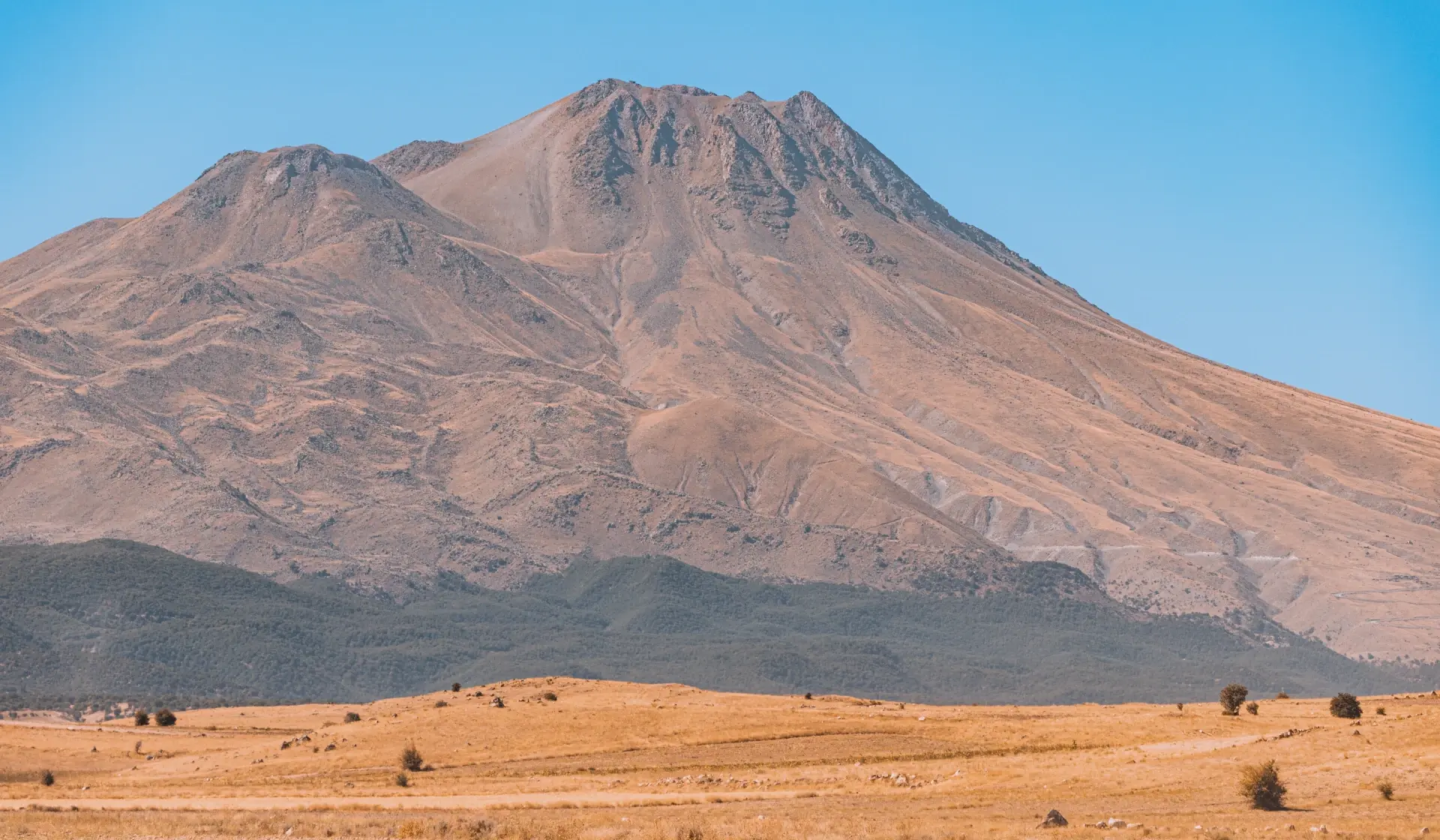
A twin-peaked massif with routes rising above 3,000 meters
The best-known route to the summit of Greater Hasan starts from the side of the village of Helvadere at the foot of the massif. The ascent is usually chosen in stable weather, most often in the warm season, when snow cover on the upper sections is minimal. Depending on the condition of the trail, pace, and level of preparation, the ascent and descent often take about 6-8 hours, but this route should be treated as a полноценный mountain outing rather than an ordinary walk.
During the ascent, the changing relief and volcanic forms of the massif are clearly visible: broad slopes, scree sections, rocky ridges, and a harsher upper zone. From the height, there are views over the plains around Aksaray, part of Cappadocia, and neighboring mountain massifs of Central Anatolia. Even those who do not plan to climb may find the views of Hasan from nearby roads and rural areas interesting, especially in clear weather.
In winter, early spring, and sometimes late autumn, conditions change sharply: snow and ice remain on the upper slopes, and strong winds are possible. At this time, suitable equipment, experience, and an understanding of mountain conditions are needed for a safe ascent. Before the trip, it is best to check the route conditions and weather forecast, especially if the goal is to reach the summit.
Nearby are the Ihlara Valley, the Selime monastic complex, and the Melendiz volcanic area, so a trip to Hasan can be combined with visits to the natural and historical sites of southern Cappadocia. People usually get here by car from Aksaray or Nigde, and the route starting points are located in villages at the foot of the massif.
Best tours and travel experiences across the continent



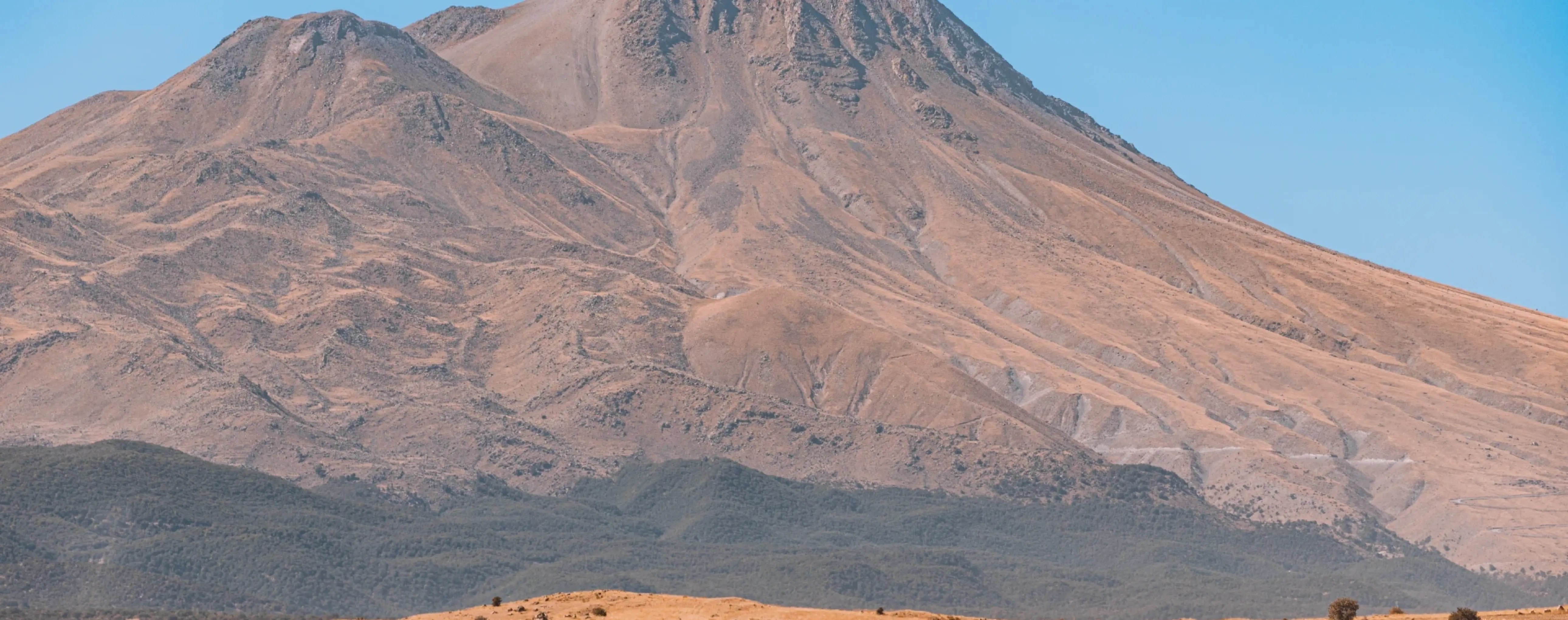
Photos of Mount Hasan
Guided tours, popular attractions, and top-rated hotels across the continent


