
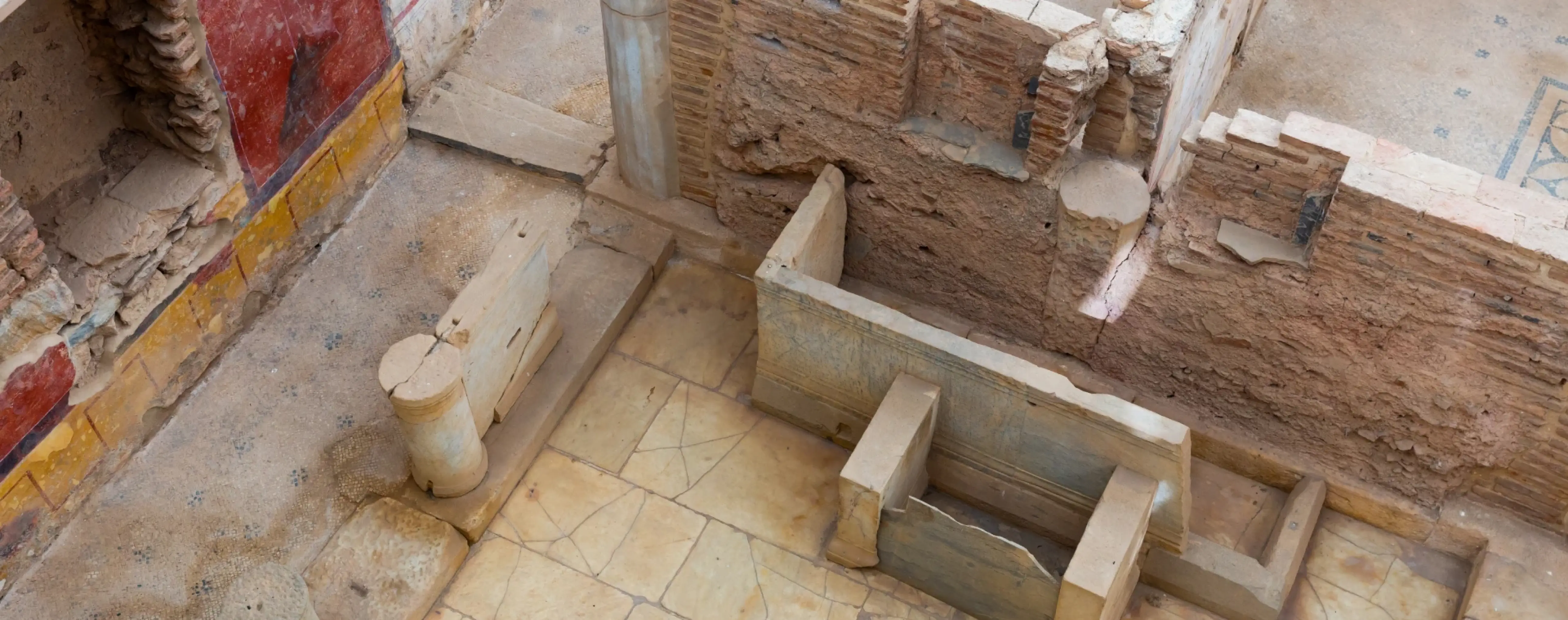
Houses on the Hillside in Ephesus
Houses on the Hillside in Ephesus, Izmir, Turkey
The Houses on the Hillside in Ephesus are located within the archaeological complex of ancient Ephesus, near Curetes Street and opposite the Temple of Hadrian. This is a group of Roman residential houses built on terraces along the hillside. Thanks to this layout, the quarter rises in tiers and clearly shows how residential development was organized in the affluent part of the city.
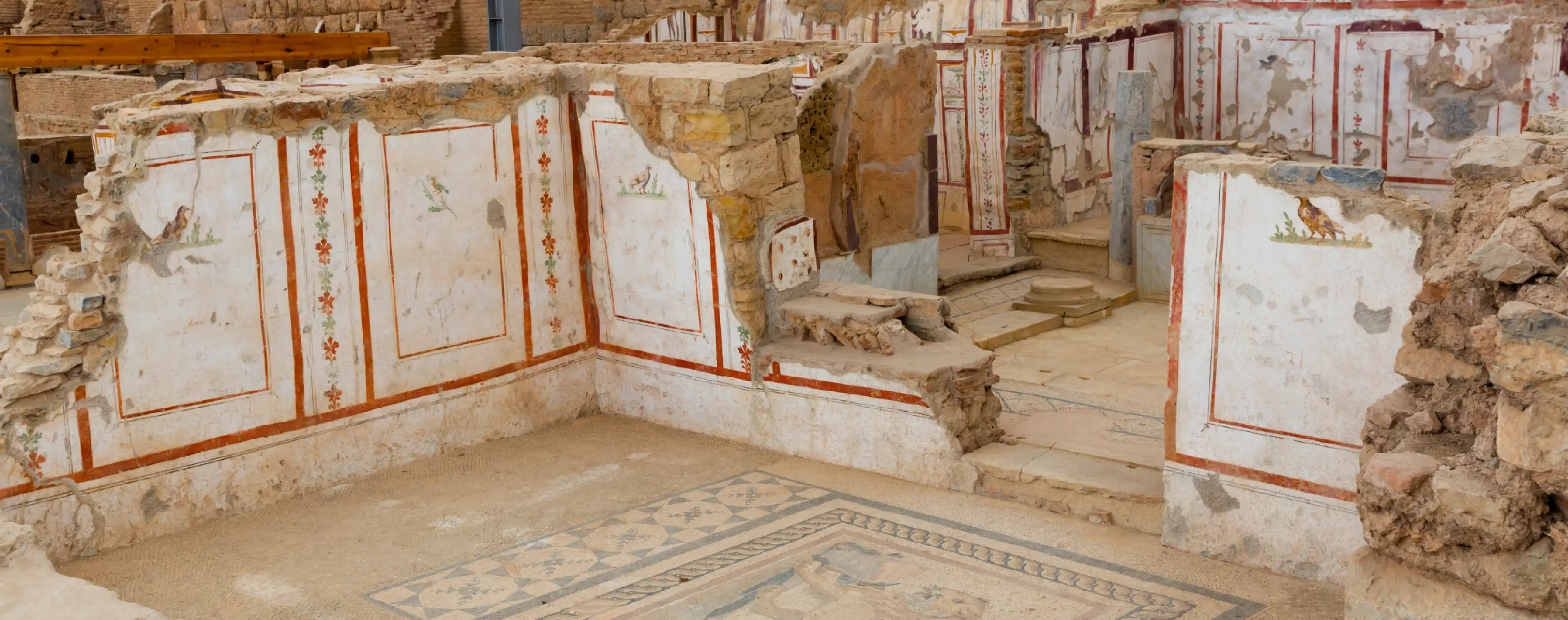
The complex took shape and was rebuilt over several centuries during the Roman era. Here you can see the layout of ancient houses with inner courtyards, residential and service rooms, as well as elements of engineering infrastructure - water supply, sewage, and heating systems. Particularly notable are the mosaic floors, remains of wall paintings, and decorative finishes, which give an idea of the lifestyle and tastes of the inhabitants of Ephesus.
This site is valued for its high degree of preservation and for showing not grand public buildings, but the private space of the ancient city. A protective cover has been installed over the excavation, so many interior details are better protected and accessible for viewing. For tourists, the Houses on the Hillside are interesting as a rare opportunity to see the conditions in which the urban elite of Roman times lived.
A visit to this place complements a walk through the main monuments of Ephesus very well. After the theater, the Library of Celsus, and the temples, it is here that the ancient city is perceived more vividly and concretely - not only as a collection of monumental ruins, but also as a space of everyday life.
Houses on the Hillside in Ephesus on the map
Izmir: Archaeological monuments
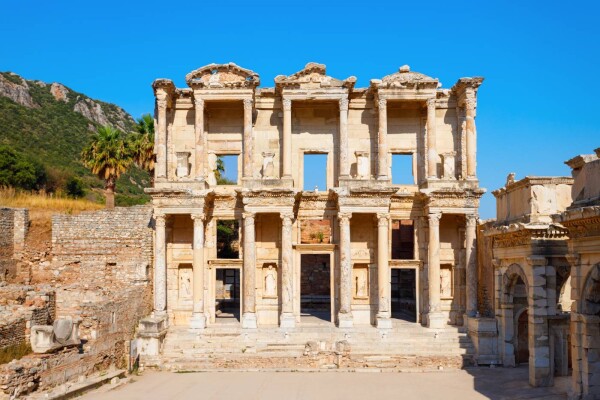
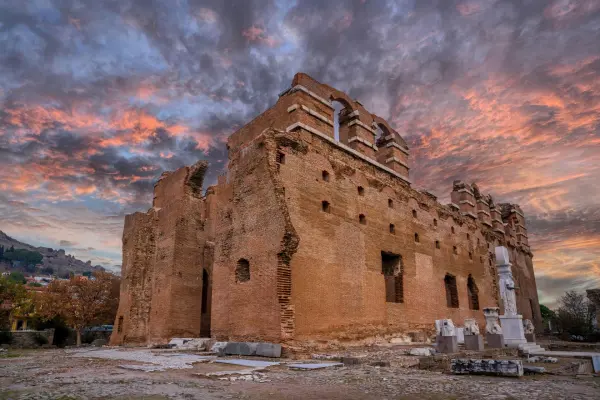
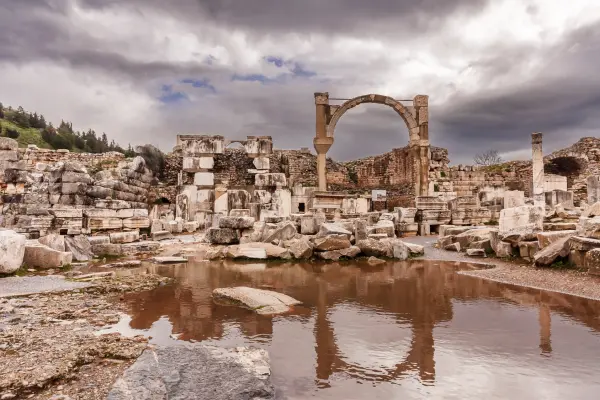
Library of Celsus, Red Basilica, Pollio Fountain, Agora of Ephesus
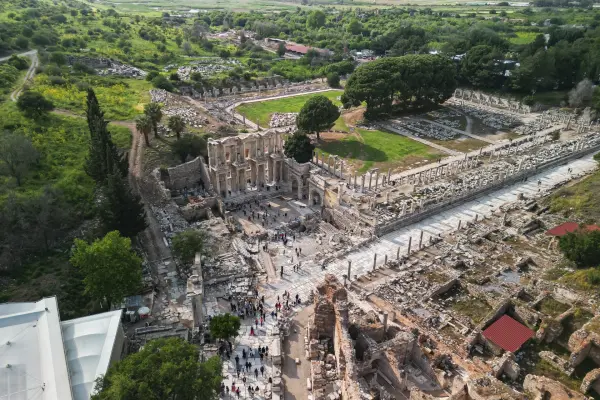
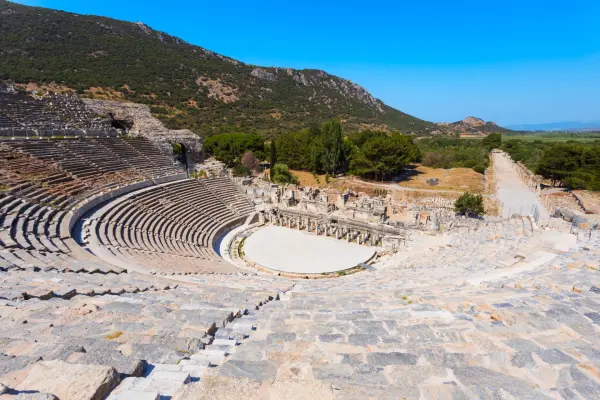
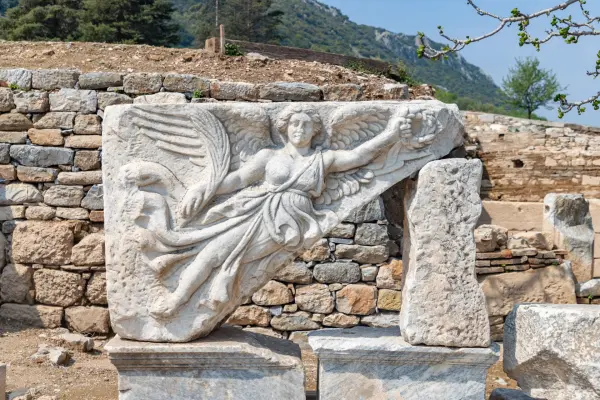
Houses on the Hillside in Ephesus: Layout and Interiors
Here you can see the residential development of Roman Ephesus and the daily life of its inhabitants.
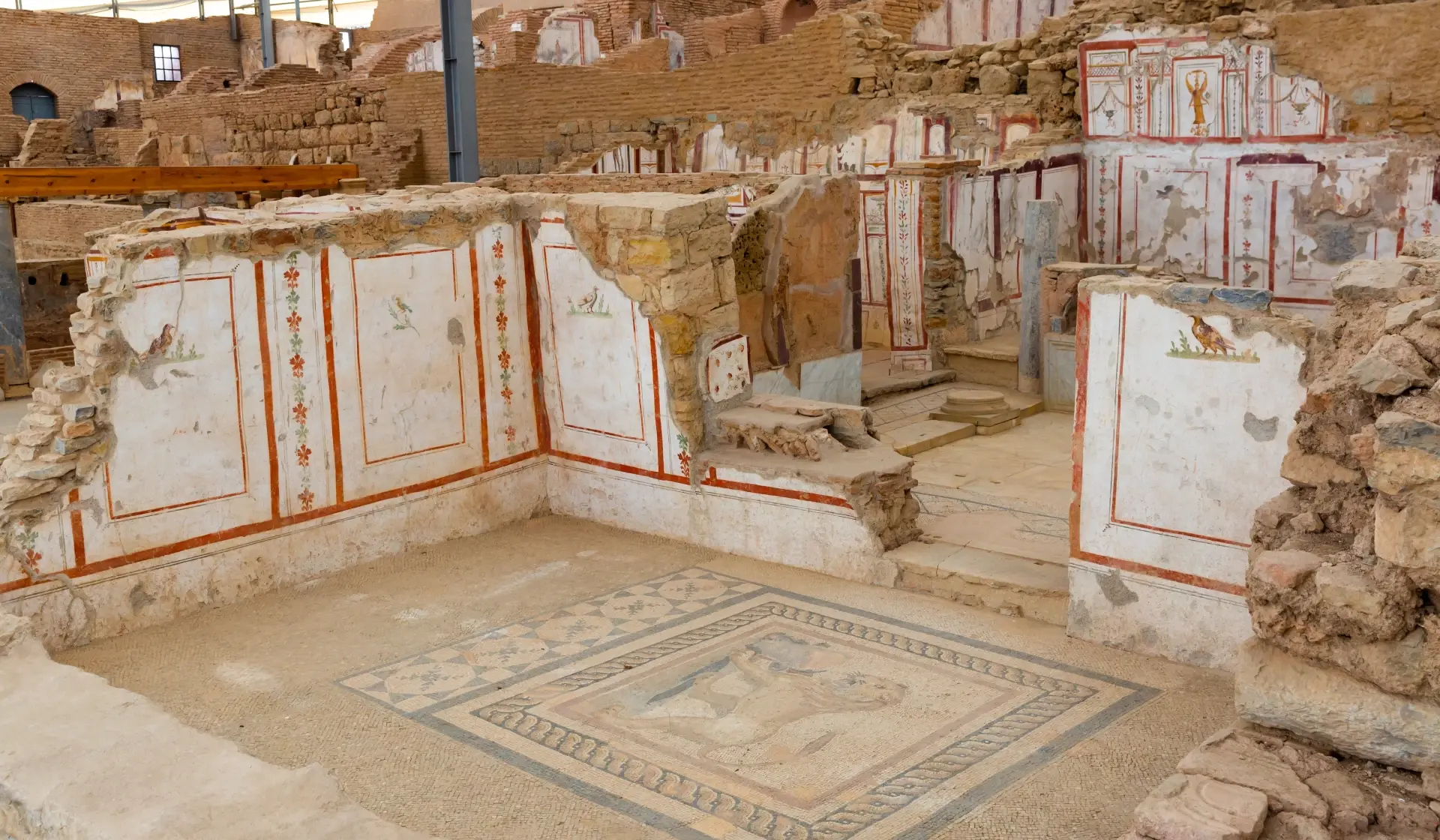
Mosaics, paintings, and the layout of a Roman house
For visitors, the details here are especially important, as they are rarely preserved in ancient cities. In different houses, you can see mosaic floors with geometric and figurative compositions, fragments of colorful frescoes, wall cladding, and the remains of columned courtyards. All this helps to imagine the level of comfort that was available to the wealthy residents of Ephesus.
The visit follows a specially organized route inside the protected excavation. From the upper and side walkways, it is convenient to observe the layout of the rooms, transitions between spaces, staircases, inner courtyards, and utility areas. It is important to keep in mind that the site includes fragile archaeological remains, so movement is only allowed along the designated paths.
Nearby are Curetes Street, the Temple of Hadrian, the Library of Celsus, and the Great Theatre of Ephesus, so a visit to this section is usually included in the overall route through the ancient city. The most convenient way to get here is via the Selcuk area to the archaeological zone of Ephesus, and then walk to the house quarter within the main excavation route.
It is worth allowing extra time for the visit compared to a regular walk among the ruins, as attention naturally lingers here on the small decorative elements and the layout of the rooms. This place is especially interesting for those who want to see in Ephesus not only the major monuments, but also a well-preserved setting of everyday urban life.
Best tours and travel experiences across the continent




Photos of the houses
Guided tours, popular attractions, and top-rated hotels across the continent


