
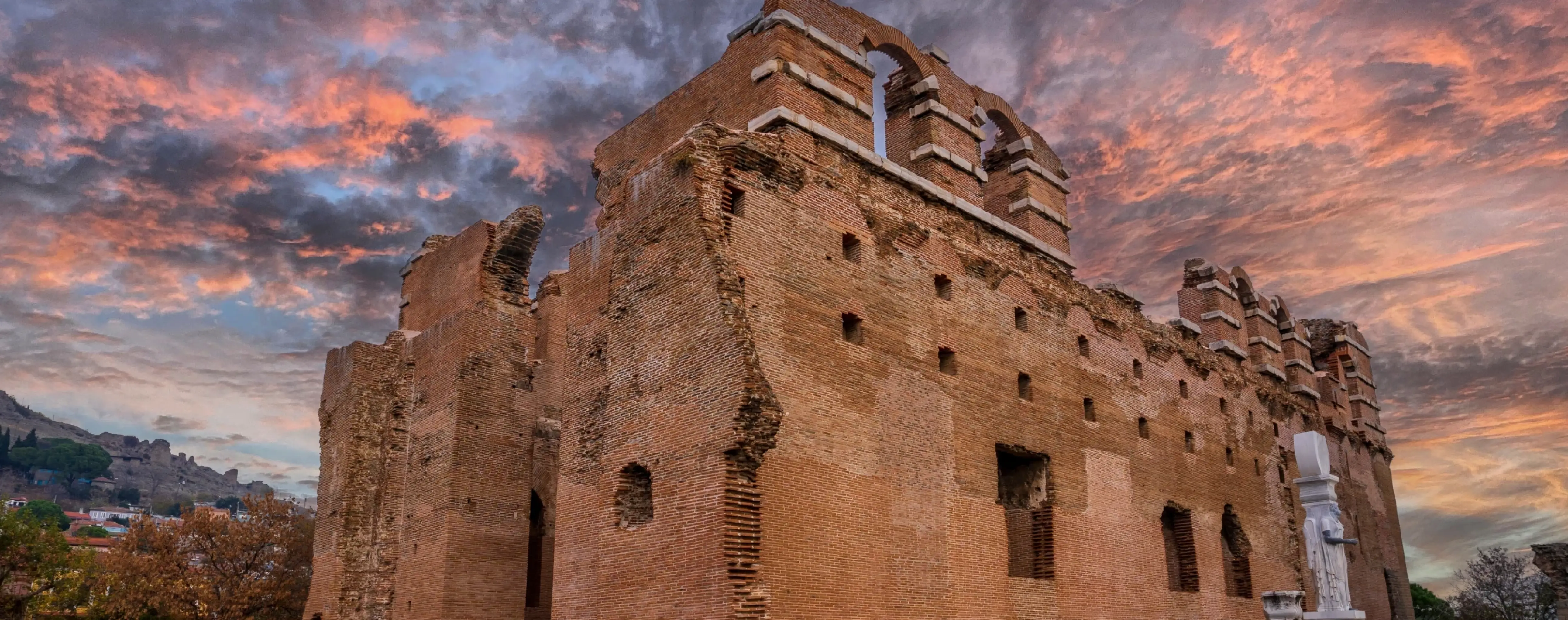
Red Basilica
Red Basilica in Bergama, Izmir, Turkey
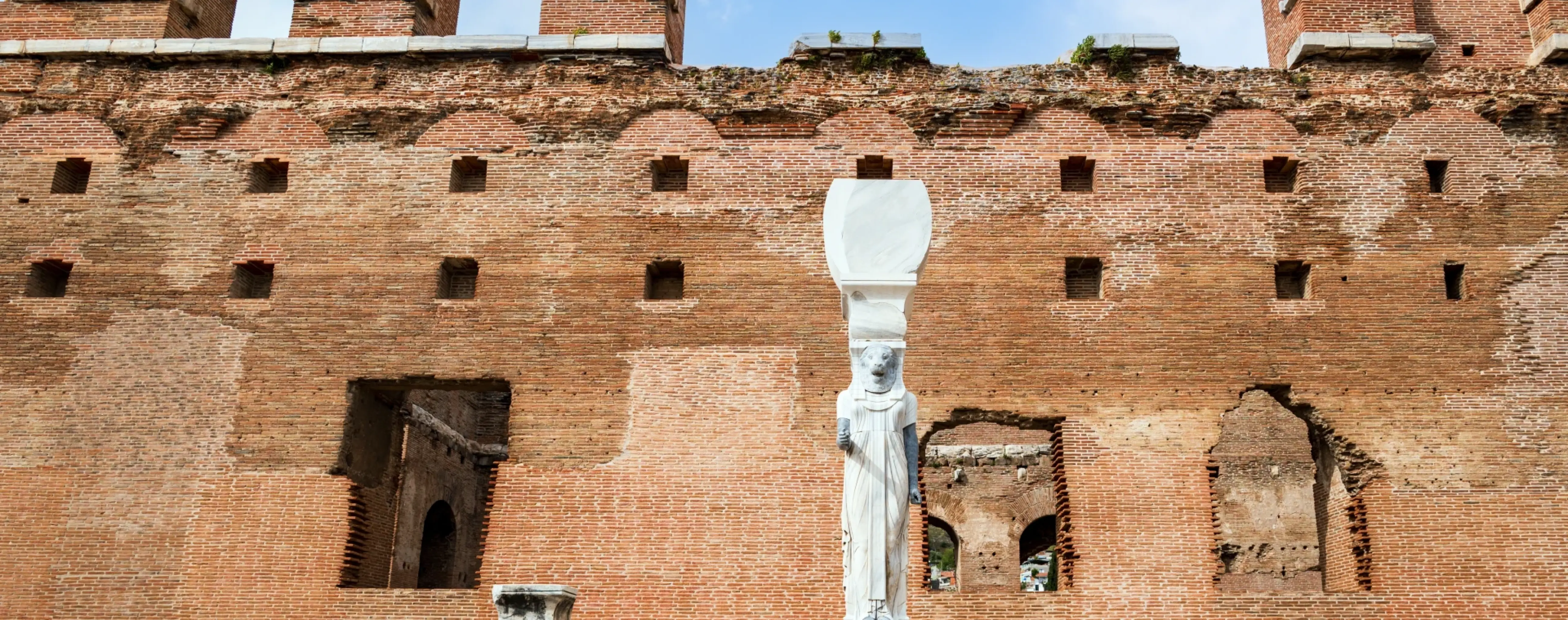
The Red Basilica is located in Bergama, in the urban part of this district of Izmir Province, near the center and at the foot of the acropolis of ancient Pergamon. It is one of the most prominent monuments of the Roman era in the city, also known as the Temple of Serapis. The complex received its modern name because of its massive red brick walls, which stand out clearly among the surrounding buildings.
The structure dates to the 2nd century AD, probably to the reign of Emperor Hadrian. It was among the largest cult buildings of ancient Pergamon and, according to the most widespread version, was associated with the worship of Serapis and other deities of the Egyptian circle. The layout of the complex is unusual: it included a large main hall, a spacious courtyard, and two round side towers, which makes the monument easily recognizable.
During the Byzantine period, part of the building was used as a Christian basilica, and it is this later function that became fixed in the modern name. Therefore, the site is interesting not only as a Roman temple, but also as a monument of the region's early Christian history. In the architecture and surviving fragments, one can see traces of several eras layered one over another.
Today, the Red Basilica is part of the historic landscape of ancient Pergamon, which is included in the UNESCO World Heritage List. People come here to imagine the scale of the ancient city, to observe the rare combination of Roman engineering and later alterations, and also to combine a visit to the monument with a walk through Bergama and an ascent to the acropolis.
Red Basilica on the map
Izmir, Bergama: Archaeological monuments
Ephesus Theatre, Ancient Public Toilet in Ephesus, Pollio Fountain, Agora of Ephesus
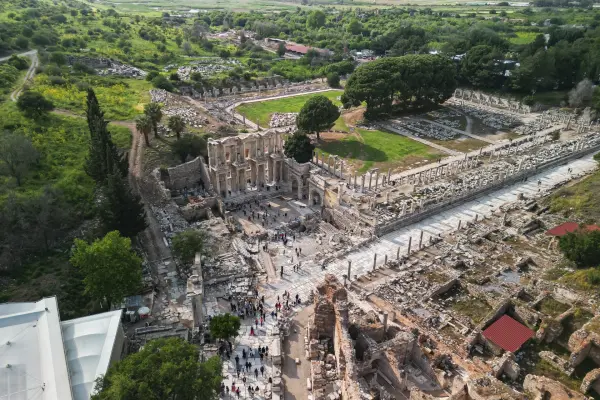
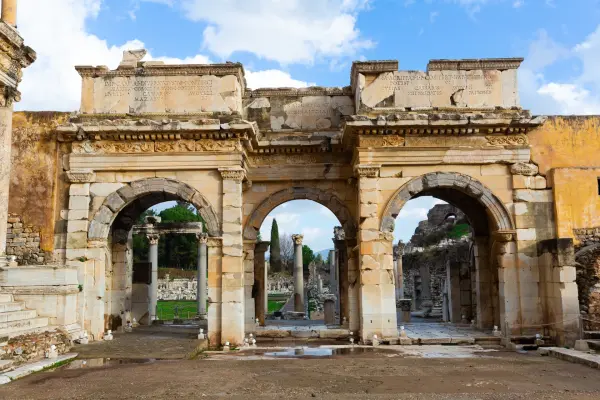
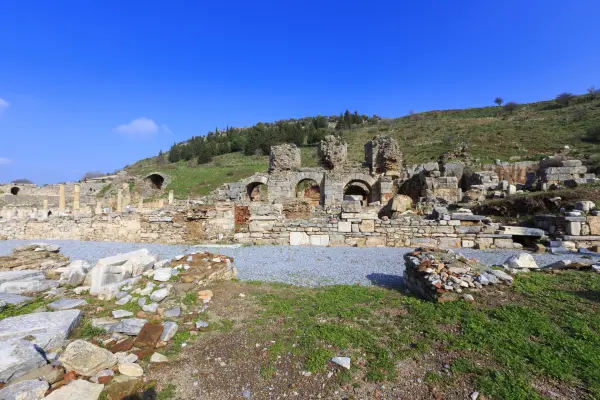
The Red Basilica and its architectural features
The complex preserves traces of the Roman and Byzantine periods.
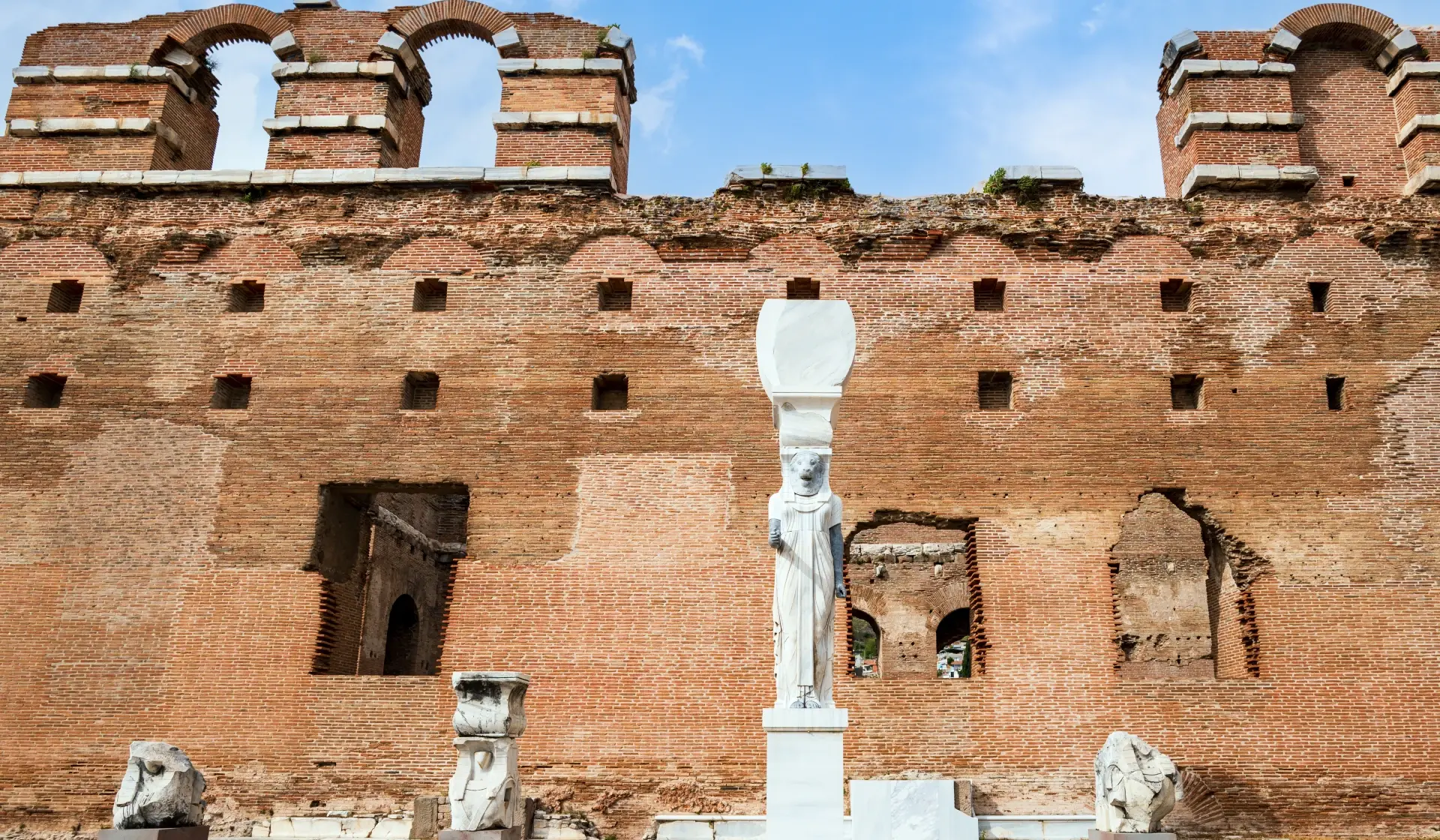
Roman temple complex with brick walls and round towers
At the site, you can see the enormous volume of the main building, the remains of the interior space, and the characteristic round towers on the sides of the complex. Even in its ruined state, the monument makes it possible to understand how large the structure was and how it was integrated into the urban environment of ancient Pergamon. The massive brick walls that gave the monument its modern name are especially easy to discern.
A visit is usually of interest to those who want to examine the details of ancient construction techniques and trace how the function of the complex changed over time. During the visit, it is worth paying attention to the combination of brick, stone elements, and later Byzantine modifications. The space is perceived not as a separate building, but as part of a large archaeological site connected with the history of the city over several centuries.
Nearby are the Pergamon acropolis, the Bergama Archaeological Museum, and other ancient remains in the central part of the city, so the Red Basilica can easily be included in a single route through the historical sites. The complex itself is located in the urban area of Bergama and is usually easily accessible on foot from the center.
For tourists, this site is suitable both for a short stop and for a more attentive visit linked to the history of Pergamon. It is better to allow time not only for the monument itself, but also for a walk around it in order to see it from different sides and appreciate the scale of the structure in the context of the modern city.
Best tours and travel experiences across the continent

Photos of the basilica
Guided tours, popular attractions, and top-rated hotels across the continent


