
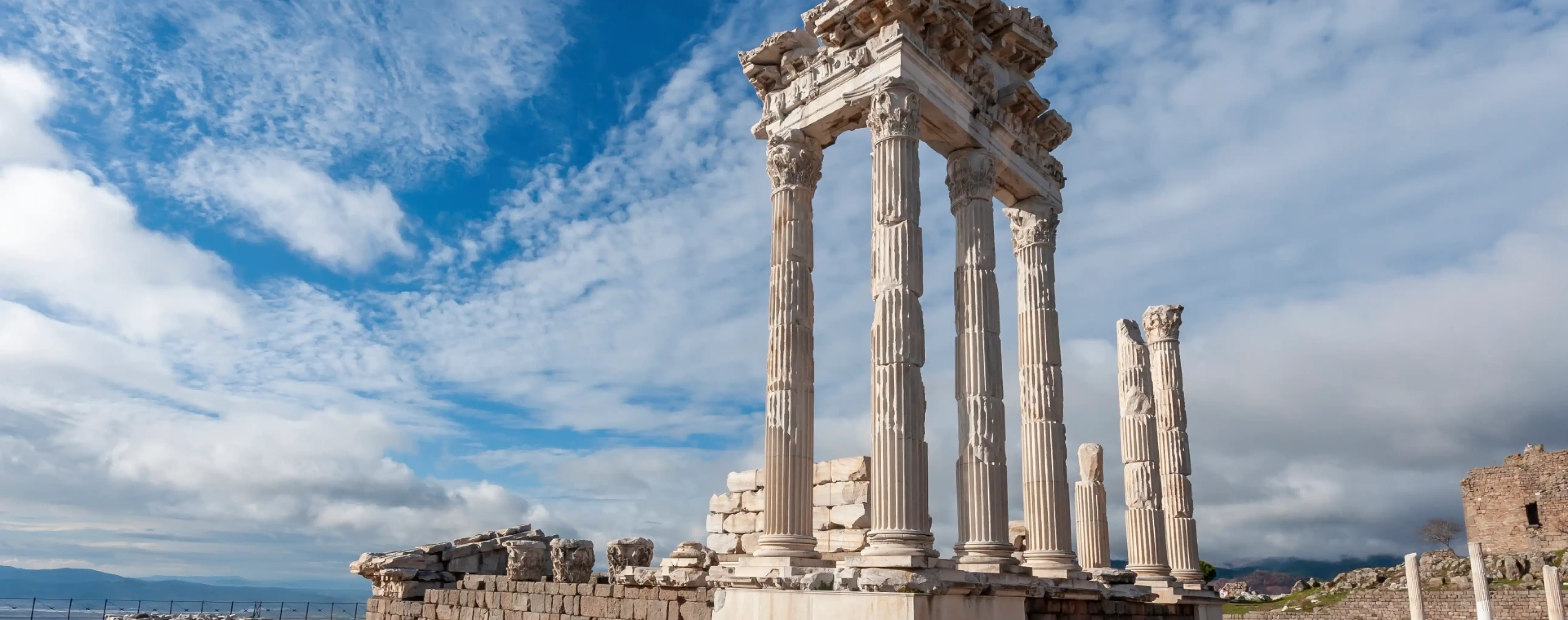
Temple of Trajan
Temple of Trajan in the Pergamon Acropolis, Izmir, Turkey
The Temple of Trajan is located on the acropolis of ancient Pergamon in Bergama, north of Izmir. It is one of the most prominent monuments of the Roman period in the city, which long retained its importance as a major political and religious center after the Hellenistic era. The sanctuary is usually associated with the imperial cult of Trajan and Hadrian.
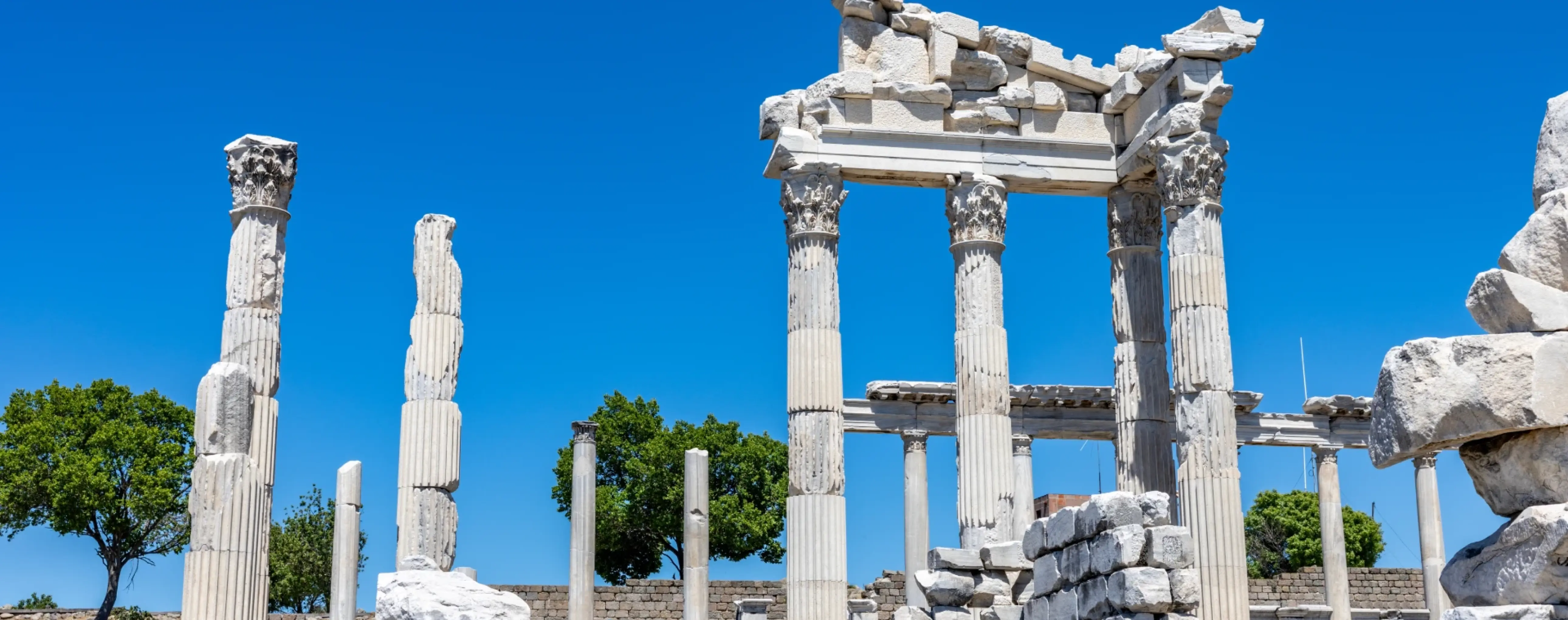
The temple was built on a high terrace, which makes its place in the overall composition of the acropolis easy to understand. The building is characterized by features of Roman temple architecture: a high podium, strict symmetry, and the Corinthian order. According to reconstructions, there were nine columns on the long sides and six on the short sides, which made the structure stand out among other buildings of Pergamon.
Today, visitors can see the ruins and partially restored elements that help convey the original appearance of the sanctuary. Archaeological finds, including architectural details and fragments of sculptural decoration, confirm its connection with imperial symbolism. The Temple of Trajan is part of the archaeological complex of the Pergamon Acropolis, which belongs to the UNESCO World Heritage site “Pergamon and its Multi-Layered Cultural Landscape.”
This place is especially interesting for those who want to see how Hellenistic acropolis planning and Roman building traditions are combined in a single monument. A visit to the temple is usually combined with a walk through the rest of the acropolis, where the ancient theater, the remains of the library, and the foundations of the palace and cult buildings of ancient Pergamon have been preserved.
Temple of Trajan on the map
Izmir, Bergama: Sanctuaries and temples
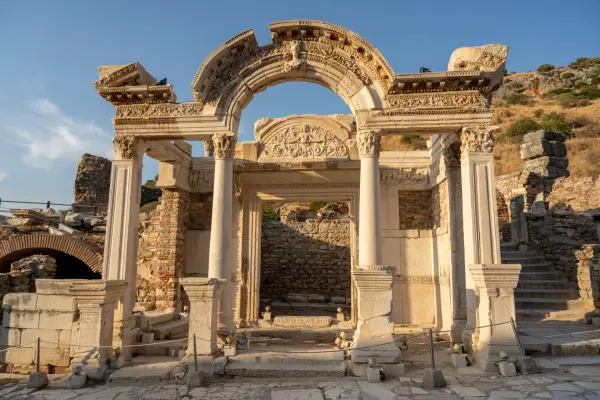
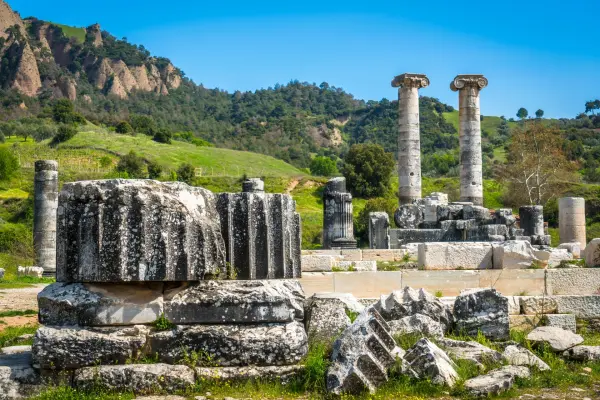
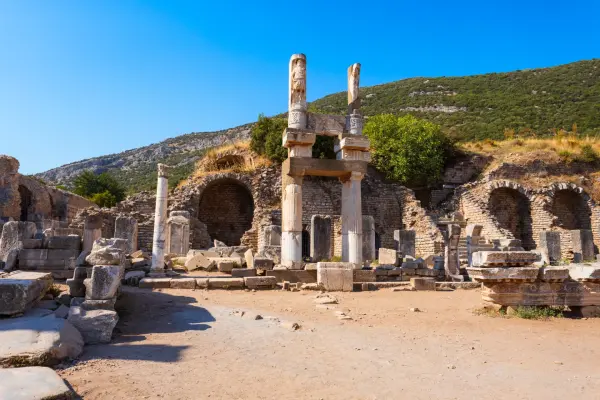
Temple of Hadrian, Temple of Artemis at Ephesus, Temple of Domitian, Wishing Wall at the House of the Virgin Mary
The Temple of Trajan and the Roman architecture of the Pergamon Acropolis
A visit to the temple is conveniently combined with a route through the upper city of Pergamon.
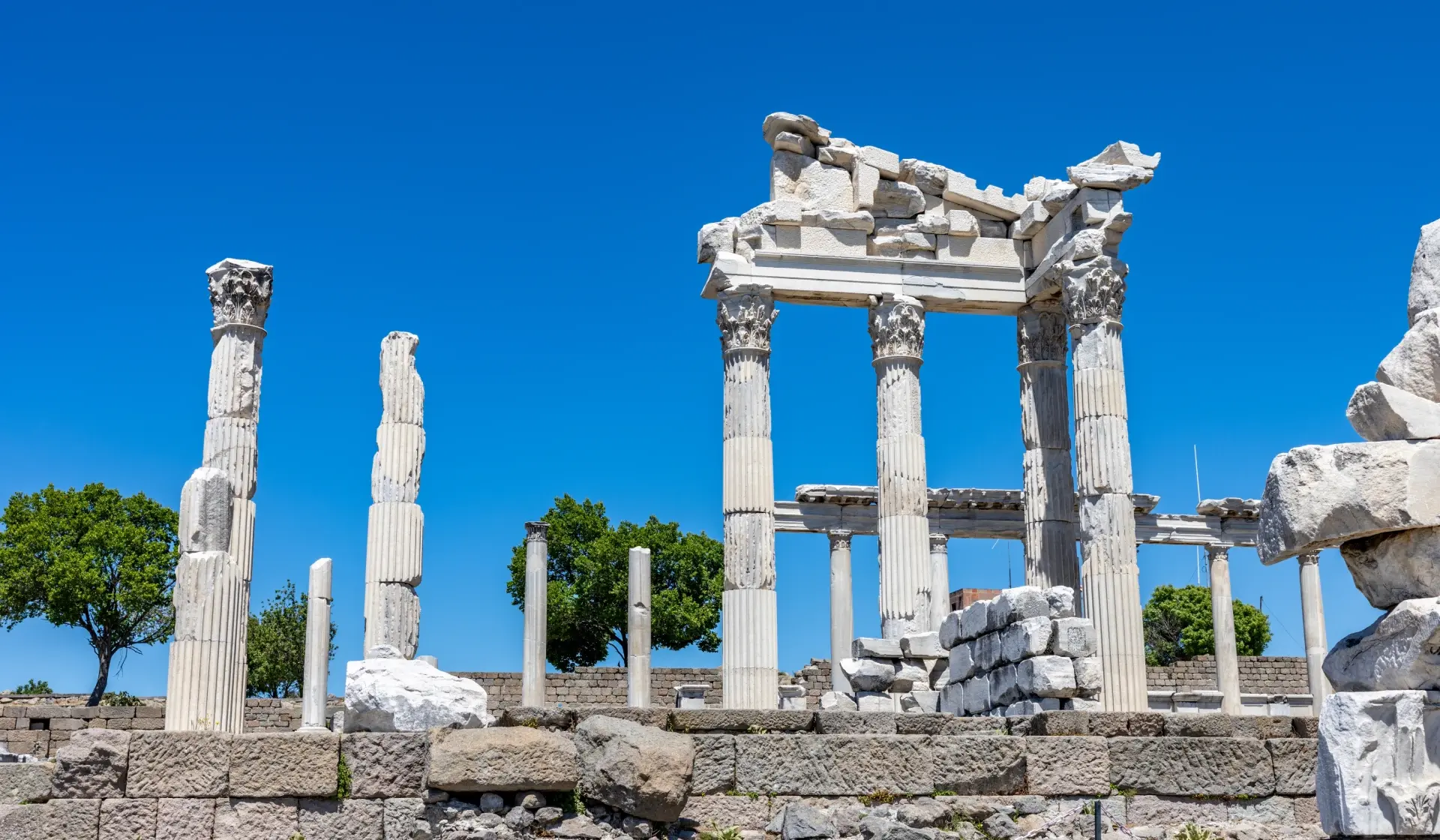
Roman sanctuary on the upper terrace of the Pergamon Acropolis
When visiting the temple, it is worth paying attention not only to the individual columns and the base of the building, but also to the terrace on which it stands. From this point, the structure of the acropolis is clearly visible, and it becomes easier to understand how Roman builders integrated the new sanctuary into the older Hellenistic center. The partially restored columns help convey the scale of the building and its strict composition.
On site, visitors can see the remains of the podium, fragments of order details, and sections of the temple platform. The interiors have not been fully preserved, so the main value of the visit is connected with the architecture, location, and archaeological context. It is best to choose comfortable shoes for the walk: the acropolis area is rocky, with changes in elevation and open sections without shade.
The temple is usually visited as part of a route through the Pergamon Acropolis rather than as a separate site. Nearby are the ancient theater, traces of the library, and other ruins of the upper city, so it is convenient to allow plenty of time for the visit. You can get here from the center of Bergama by cable car or by road leading to the archaeological zone of the acropolis.
Best tours and travel experiences across the continent


Photos of the temple
Guided tours, popular attractions, and top-rated hotels across the continent


