
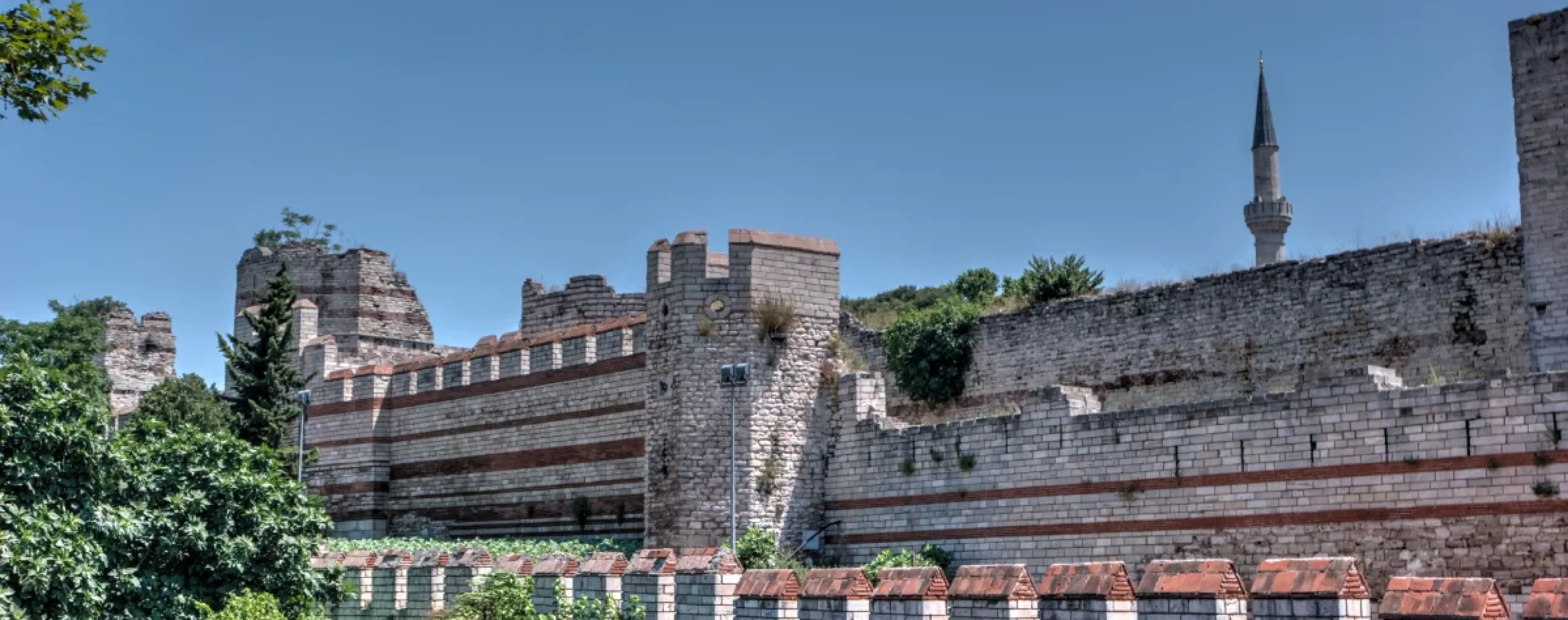
Theodosian Wall
Theodosian Wall in Istanbul, Turkey
The Theodosian Wall is the main line of land defense of Constantinople, stretching across the western part of historic Istanbul from the area by the Sea of Marmara to the Golden Horn. Its main sections were built in the 5th century under Emperor Theodosius II as a development of earlier fortifications. For centuries, this system protected the capital of the Byzantine Empire and played a significant role in the city's history.
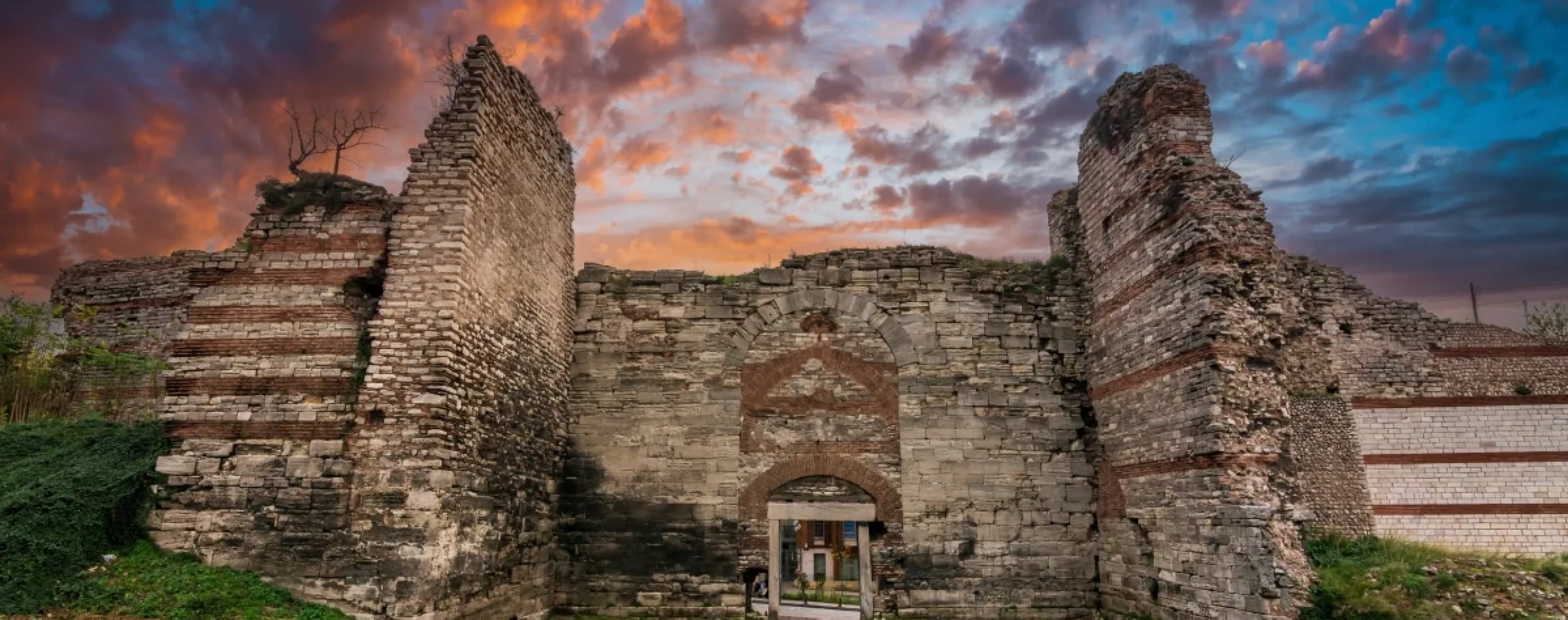
For tourists, the wall is especially interesting because of its design. It is not a single barrier, but a complex defensive system with a moat, an outer wall, an inner wall, and numerous towers. This principle made it possible to create several lines of defense, while individual gates served either for everyday transit or for military and ceremonial purposes. The Golden Gate is particularly famous, associated with triumphal entrances into the city.
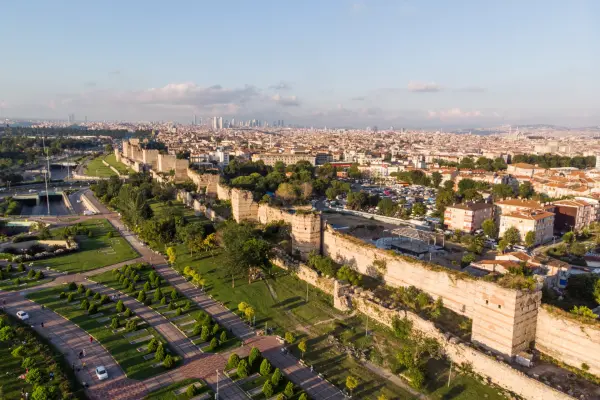
Today, the surviving sections can be seen in the Fatih district and along the city's old land frontiers. The condition of the fragments varies: in some places the towers and passages are clearly visible, while in others only parts of the masonry remain, but even in this form the walls help convey the scale of late antique Constantinople. This is one of the key monuments of Byzantine defensive architecture in Istanbul.
Exploring the wall is usually of interest to those who want to see not only the famous mosques and palaces, but also a rarer layer of the city's history. A walk along the surviving sections offers a better understanding of how medieval Constantinople was organized and how its fortifications changed over different eras. The walls are part of the historic ensemble of Istanbul included in the UNESCO World Heritage List.
Theodosian Wall on the map
Istanbul: Fortresses and castles
Aydos Castle, Anatolian Fortress Anadolu Hisari, The City Walls of Istanbul, Yedikule Fortress
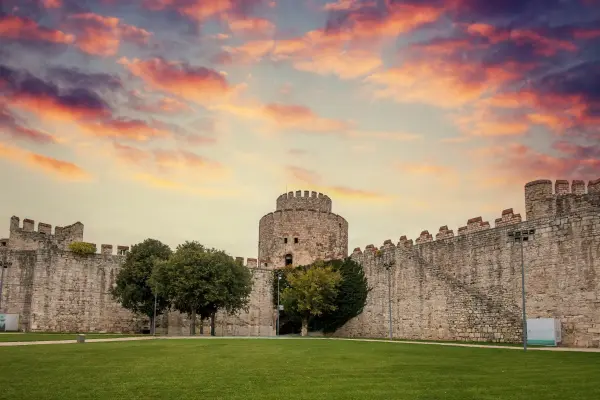
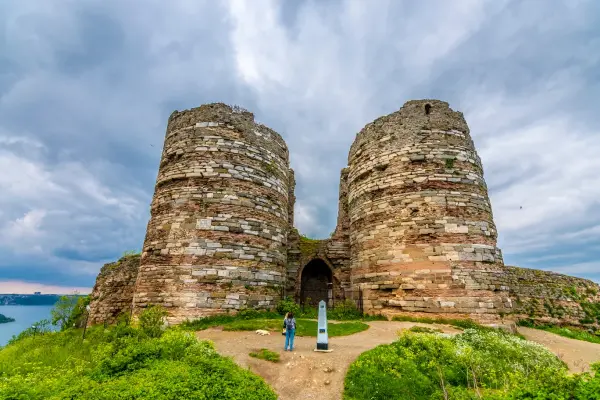
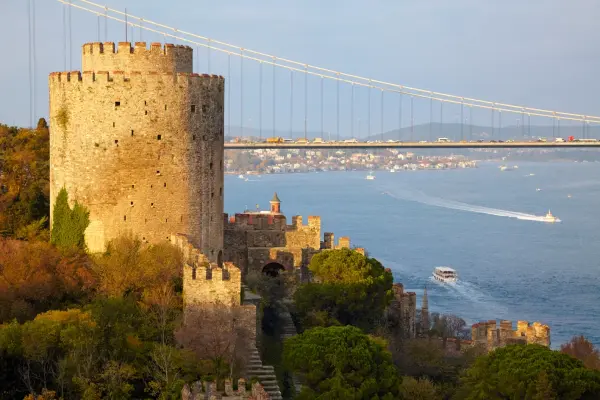
Theodosian Wall - structure, main gates, and surviving sections
A walk along the walls reveals the structure of the city's defenses and traces of different repair phases.
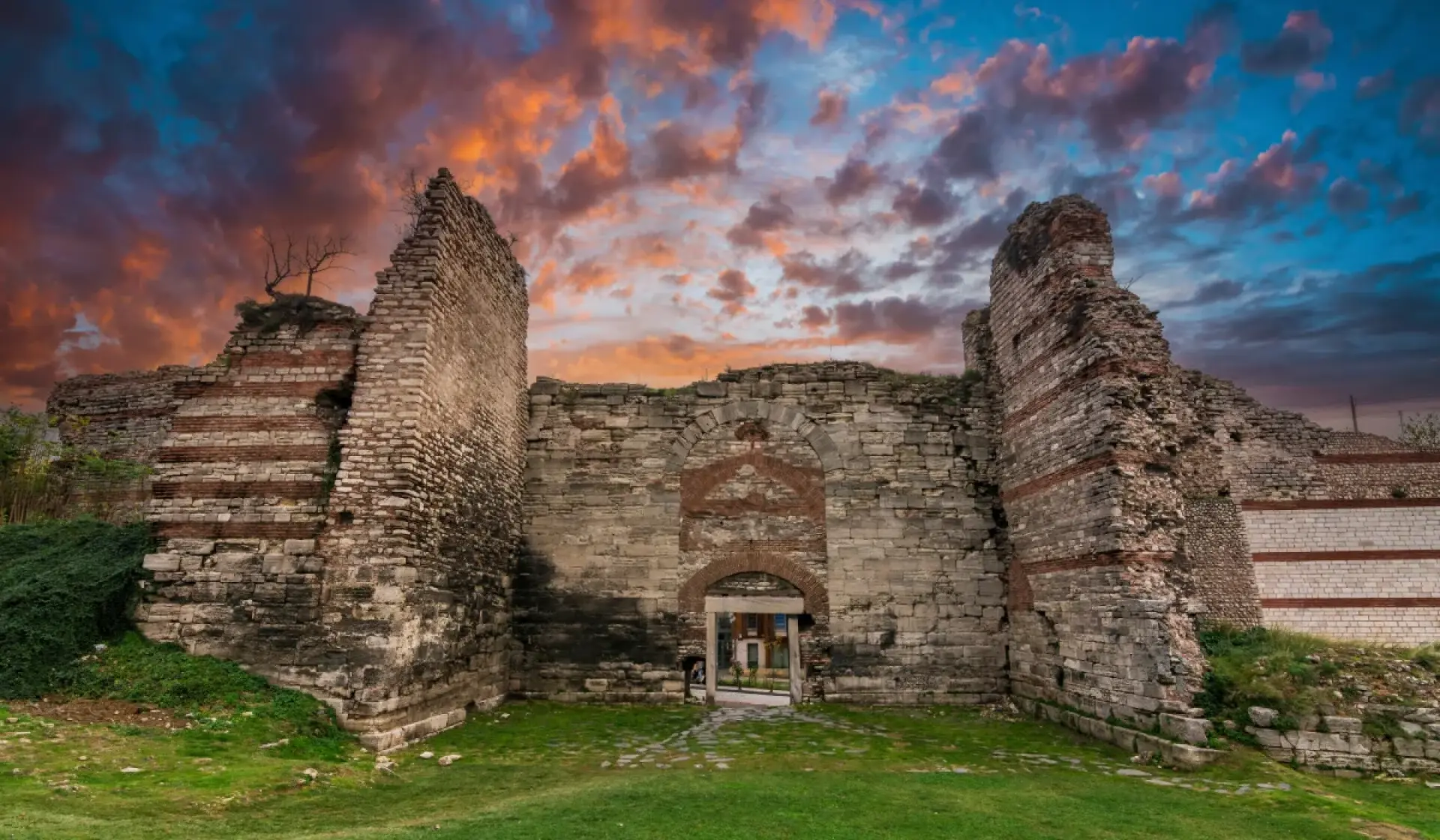
Multi-layered fortifications with towers, a moat, and city gates
When visiting, it is worth paying attention not only to the height of the walls, but also to their structure. In many sections, the lines of the inner and outer defenses, the bases of the towers, traces of passageways, and fragments of masonry from different repair periods are visible. This helps show how the fortifications were maintained and rebuilt after earthquakes and sieges.
One of the best-known points of the complex is the Golden Gate in the southern part of the defensive line. It stands out for its more monumental appearance and is associated with the ceremonial entrances of Byzantine emperors. Elsewhere, less formal gates and passages are of interest, helping visitors understand how the wall was integrated into the everyday life of a great city.
A walk can easily be combined with a visit to Yedikule Fortress, where an important section of the southern fortifications has been preserved, as well as with exploring the Fatih district and other monuments of historic Istanbul. A long route along the wall is well suited to those who enjoy walking and want to see the city beyond the most popular tourist spots.
You can get there by tram, metro, bus, or the Marmaray commuter rail - the most convenient starting point depends on which section of the wall you want to see. Before setting out, it is worth choosing a specific part of the route, as the entire line of fortifications is very extensive.
Best tours and travel experiences across the continent

Photos of the Theodosian Wall
Guided tours, popular attractions, and top-rated hotels across the continent


