
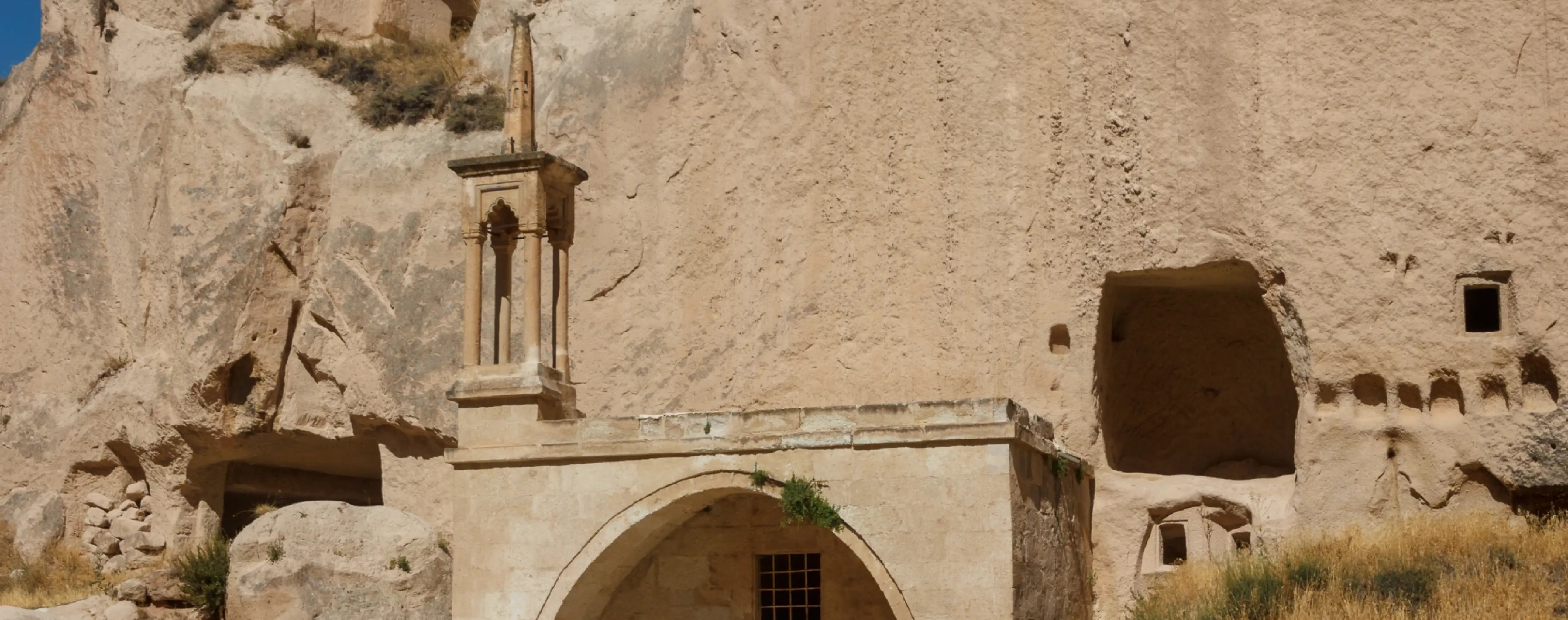
Zelve Monastic Complex
Zelve Monastic Complex in Goreme, Turkey
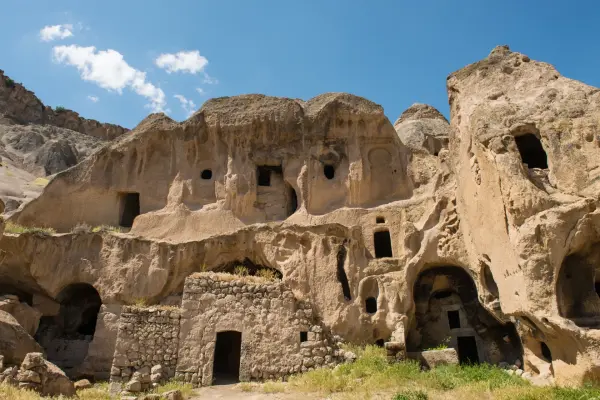
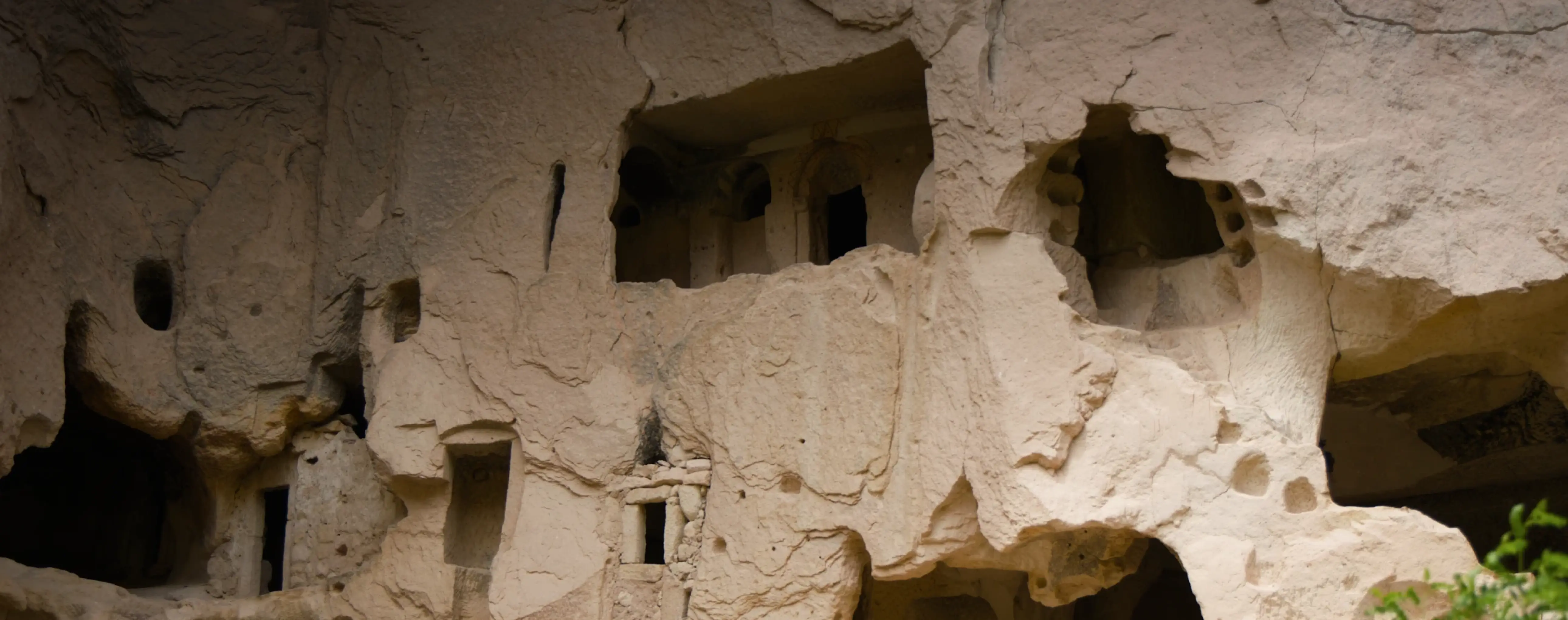
The Zelve Monastic Complex is located in Cappadocia, not far from Goreme and Avanos, within a system of three connected valleys. It is one of the region’s most striking rock-cut cave ensembles, where churches, cells, living quarters, utility rooms, and dovecotes were carved into the soft volcanic tuff. Zelve helps visitors imagine what the monastic and rural settlements of Cappadocia looked like over many centuries.
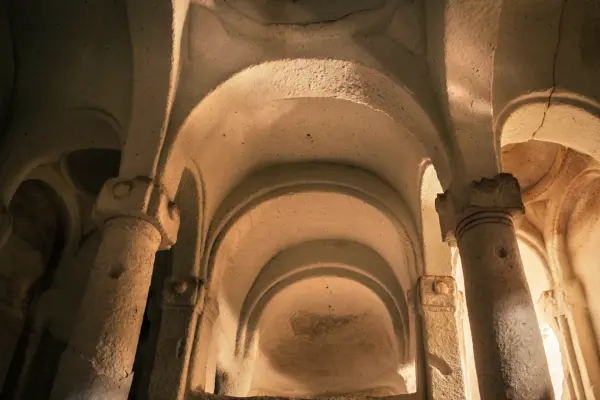
The complex developed most actively during the Byzantine period, when Zelve was an important center of monastic life. A distinctive feature of the local churches is linked to the iconoclastic era and later phases of decoration: many interiors preserve not frescoes, but carved crosses, simple ornaments, and architectural details hewn from stone. In some churches, traces of wall paintings can also be seen.
Zelve is interesting not only as a monastic ensemble, but also as a former residential settlement. A local community lived here for a long time, and the cave houses remained in use until the 20th century. After the residents were relocated and due to the natural erosion of the rocks, the area was turned into an open-air museum.
Today, visitors come here to walk through the valleys, explore the rooms carved into the rocks, and experience a calmer, less densely built-up part of Cappadocia compared with central Goreme. The complex lies within the protected area of Goreme National Park and is associated with the landscape of rock monuments included on the UNESCO World Heritage List.
Zelve Monastic Complex on the map
Cappadocia, Goreme: Monasteries and churches
Direkli Church, Selime Monastery, Eskigumus Monastery, Church of Nikephoros Phokas
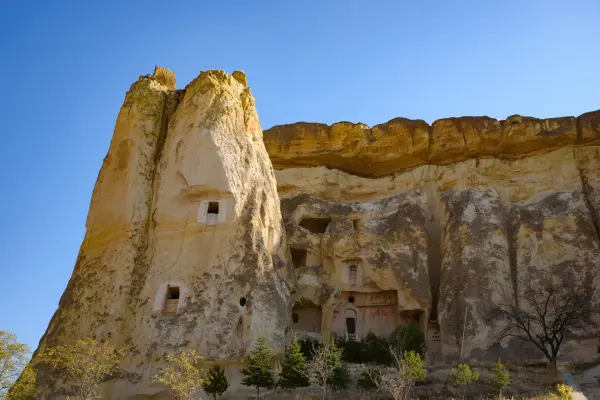
Visit and route through the Zelve Monastic Complex
Walks along the trails reveal the structure of the monastic and residential settlement.
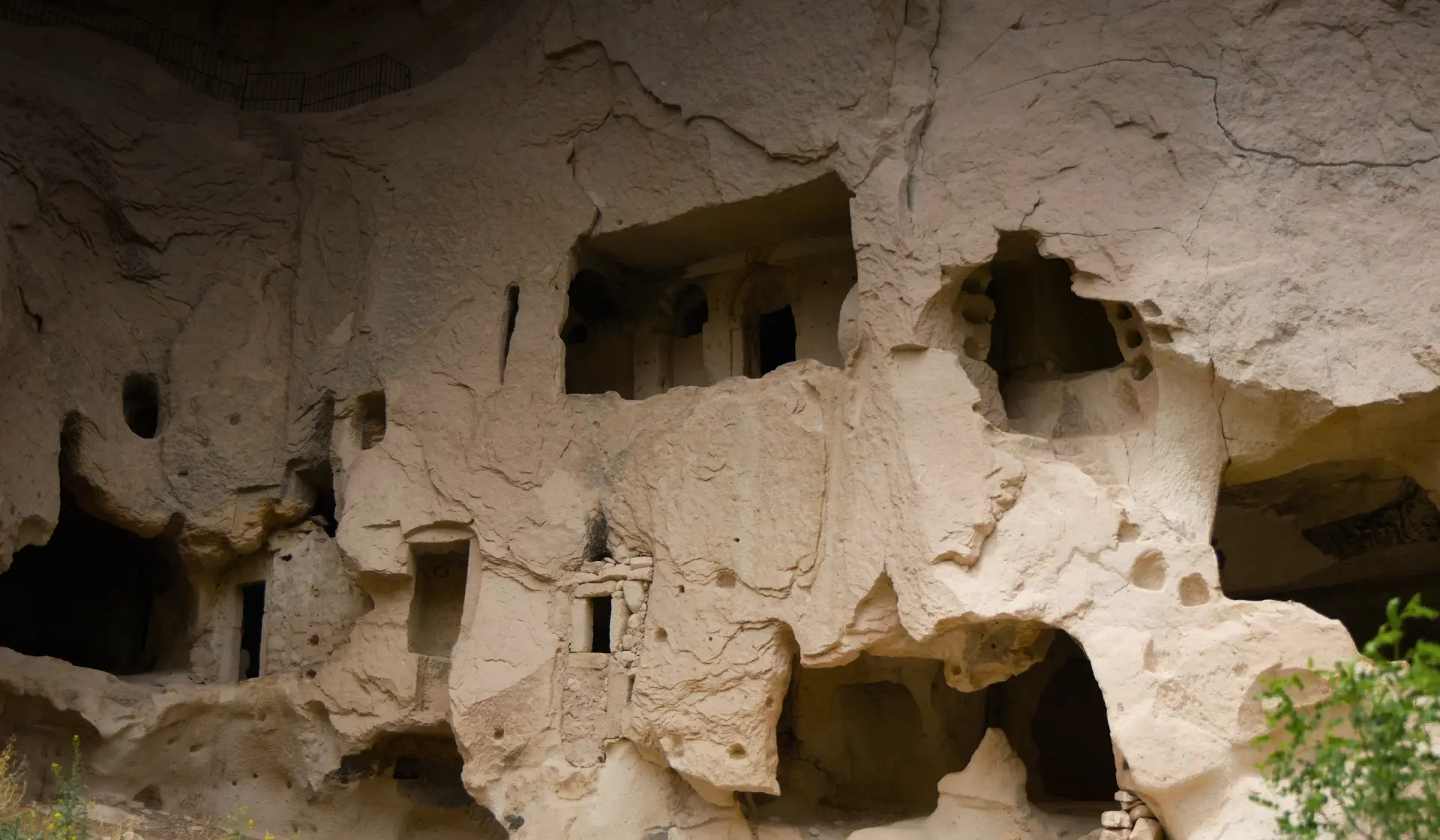
Cave churches, living rooms, and trails across three valleys
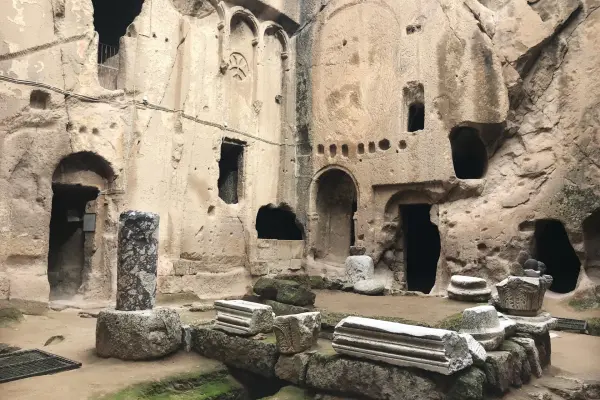
The route through Zelve passes through several valleys, with transitions between groups of cave structures. During the walk, visitors can see churches from different periods, refectories, cells, tunnels, utility rooms, and old dovecotes. The terrain here is uneven: in places, the paths climb along the slopes, follow stone steps, and lead to viewpoints overlooking the entire complex.
Among the best-known structures are the Balikli, Uzumlu, and Direkli churches, where fragments of paintings and carved elements characteristic of Cappadocia have been preserved. There is also a small cave mosque on the site, recalling a later stage in the settlement’s history. Some cavities are closed or have restricted access for safety reasons, as the tuff rock is subject to weathering and collapse.
For the visit, it is worth choosing comfortable footwear and allowing time specifically for walking, rather than only for a short stop. Unlike more compact sites, Zelve is perceived as an extended historical space, where what matters is not a single structure, but the entire system of rooms carved into the rock and the paths between them. Nearby are the Pasabag Valley, with its characteristic rock pillars, and the ceramics museum in Avanos.
The complex is located about 10–15 minutes by car from the center of Goreme in Cappadocia; it is usually reached by car, taxi, or as part of a local tour. Before visiting, it is useful to check opening hours and entry conditions, as they may vary by season.
Best tours and travel experiences across the continent

Zelve Gallery
Guided tours, popular attractions, and top-rated hotels across the continent


