
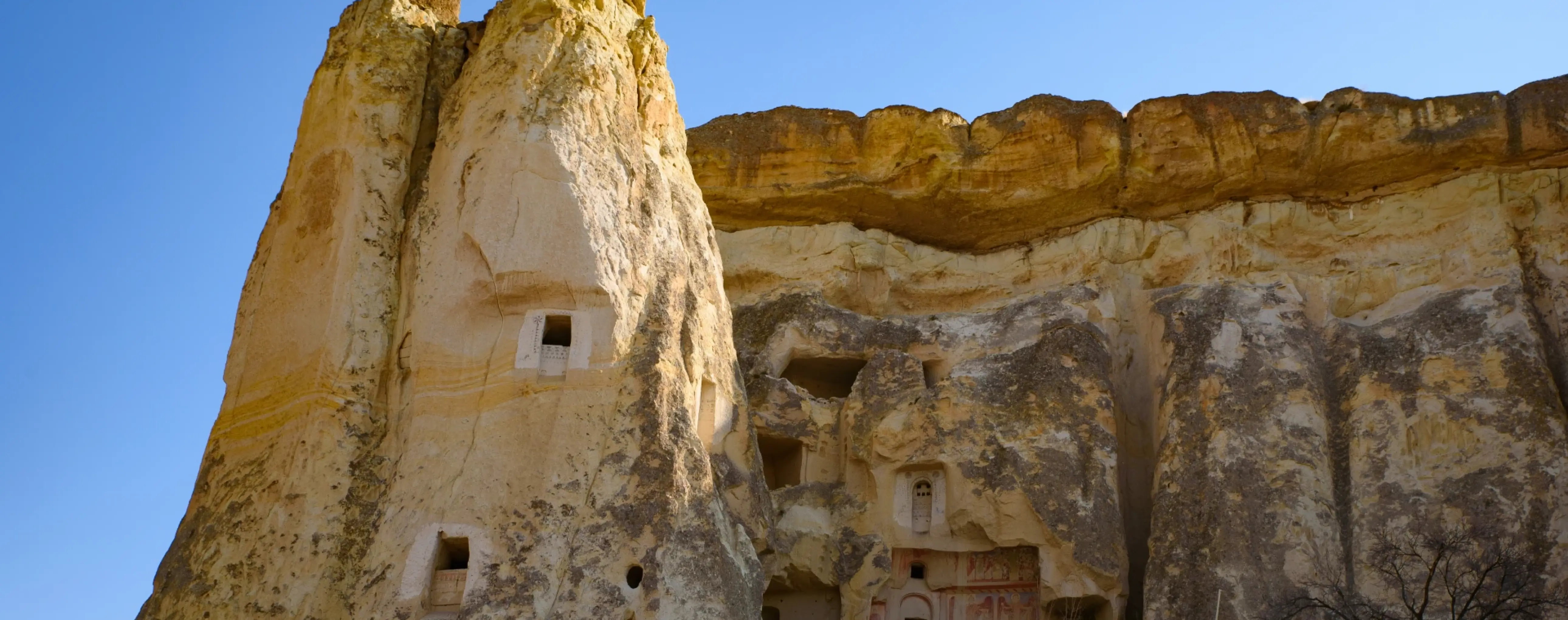
Church of Nikephoros Phokas
Church of Nikephoros Phokas in Cavusin, Cappadocia, Turkey
The Church of Nikephoros Phokas is located at the entrance to Cavusin, an ancient settlement in Cappadocia between Goreme and Avanos, in Nevsehir Province. It is a 10th-century Christian rock-cut church carved into soft volcanic tuff. It is usually dated to 964-965, and its association with the Byzantine Emperor Nikephoros II Phokas is explained by Greek inscriptions and local historical tradition.
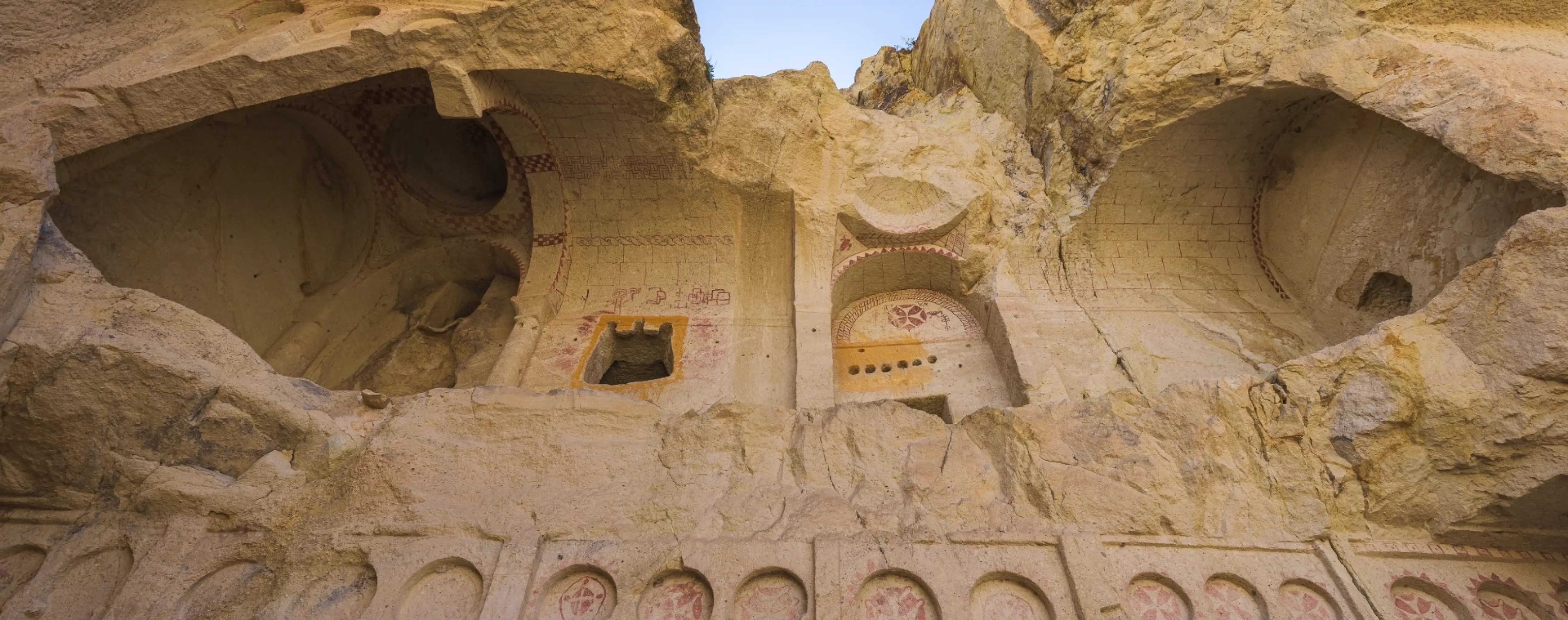
The church belongs to the group of Cappadocian cave churches, where the architecture is literally built into the rock. Inside, the longitudinal nave, vaulted ceiling, apse, and entrance area have been preserved. Nearby, carved niches, passageways, and small chambers can be seen, recalling the multi-level development of old Cavusin.
The main value of the church lies in its wall paintings from the Middle Byzantine period. Scenes from the New Testament have been preserved on the vaults, walls, and in the apse, along with images of Christ, the Virgin Mary, the apostles, archangels, and saints. Greek inscriptions help date the paintings more precisely and connect the monument with an important stage in the development of Cappadocian art.
For tourists, this place is interesting not only as an ancient church, but also as part of the historical landscape of Cavusin. The church makes it possible to see how rock-cut architecture, monastic tradition, and Byzantine painting came together in Cappadocia. A visit is usually combined with a walk through the old village and other rock-cut monuments in the surrounding area.
Church of Nikephoros Phokas on the map
Cappadocia: Monasteries and churches
Eskigumus Monastery, Zelve Monastic Complex, Selime Monastery, Direkli Church
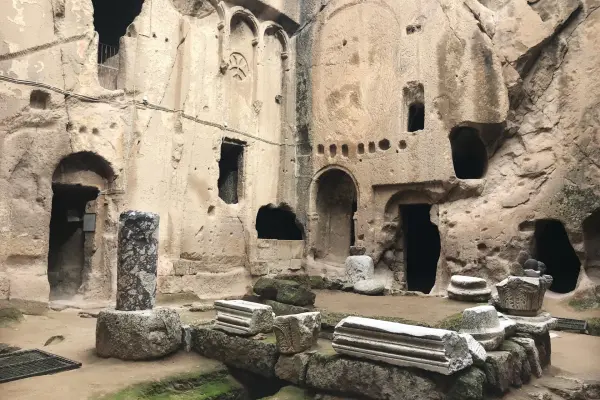
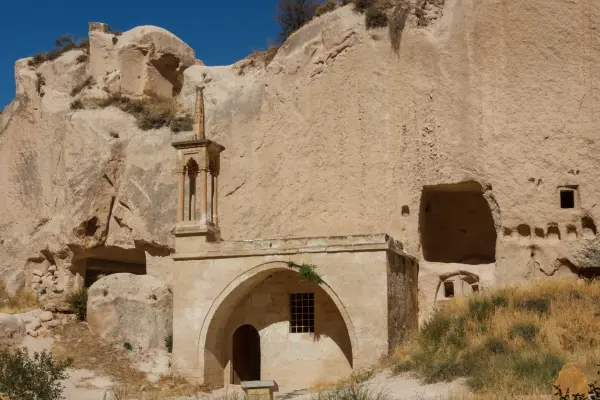
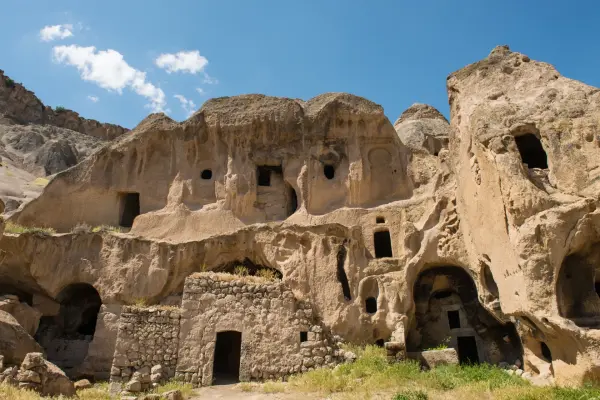
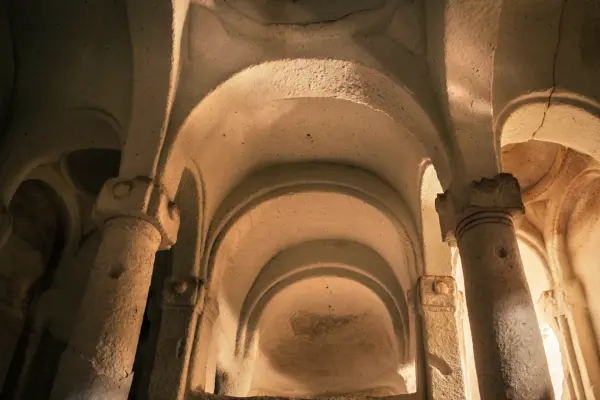
Interior and paintings of the Church of Nikephoros Phokas
A small rock-cut church with fragments of Middle Byzantine frescoes.
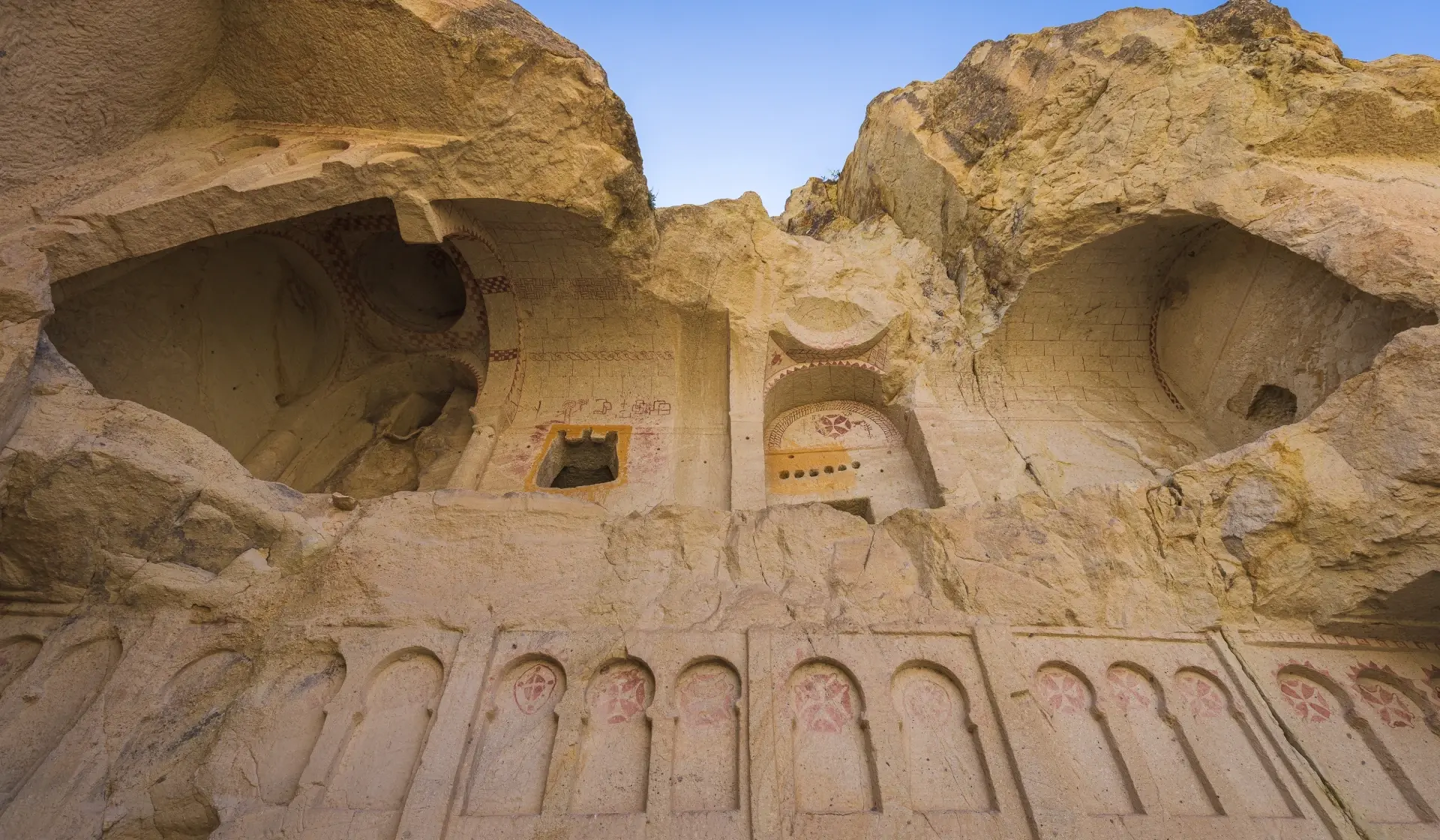
10th-century frescoes in a rock-cut church near old Cavusin
Inside the church, attention is usually drawn to the preserved frescoes located in the apse, on the walls, and on the vaults. Even in their damaged condition, they make it possible to examine Middle Byzantine compositions and understand how the painting program was arranged in a small rock-cut church. It is best to explore the interior calmly and in natural light in order to distinguish individual figures and fragments of inscriptions.
The church interior itself is relatively compact, which helps in noticing the details of the layout: an elongated nave, vault, altar area, and passages carved into the rock. The entrance is located above the level of the path, so it is necessary to climb steps to reach it. Because of the uneven surface and rocky terrain, footwear with good grip is more practical here than ordinary city shoes.
Nearby, visitors can walk through the historic part of Cavusin, where rock-cut dwellings, old passageways, and other carved spaces have been preserved; the famous valleys of Cappadocia and the museum areas of Goreme are also close by. A trip to the church is often included in a route between Goreme, Cavusin, and Avanos.
The easiest way to get here is by car or as part of a Cappadocia tour, since the church is located by the road next to Cavusin, between Goreme and Avanos.
Best tours and travel experiences across the continent


Photos of the church and frescoes
Guided tours, popular attractions, and top-rated hotels across the continent


