
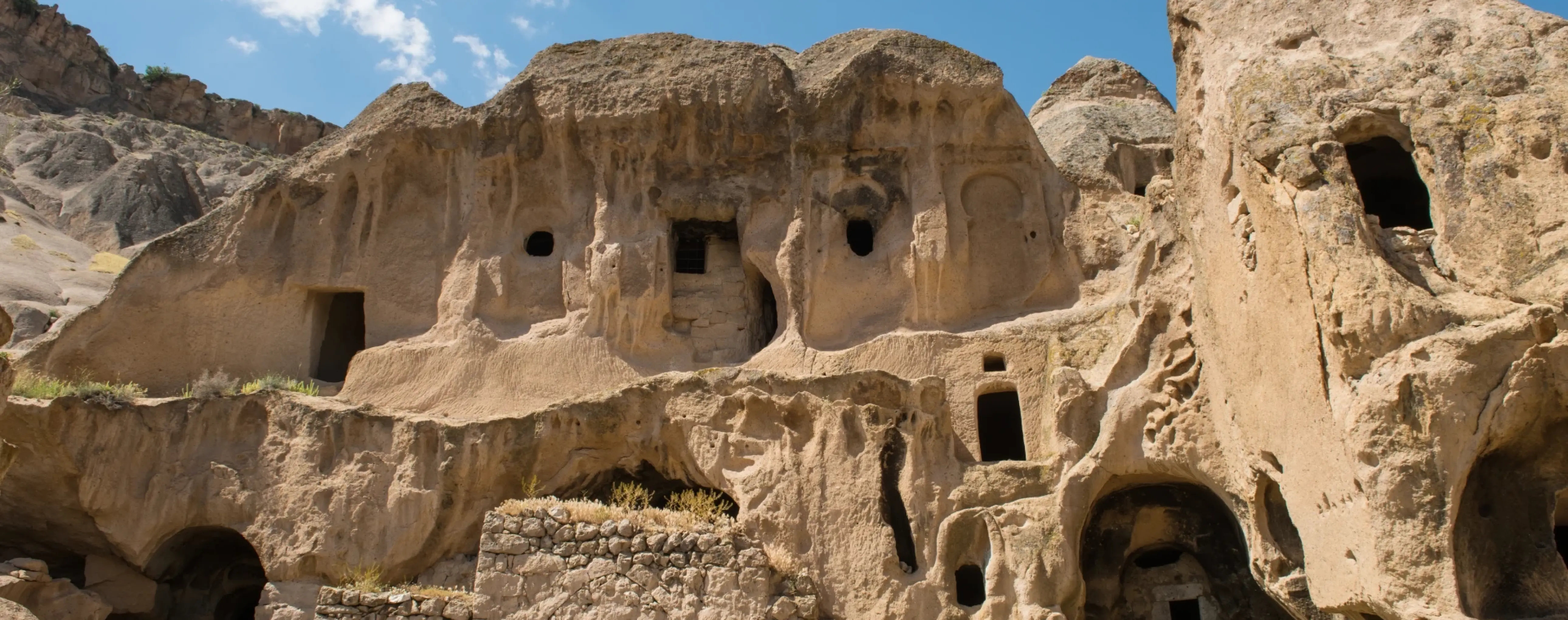
Selime Monastery
Selime Monastery in Cappadocia, Turkey - rock-cut monastic complex
Selime Monastery is located in Cappadocia, at the northern exit of the Ihlara Valley, near the village of Selime in Aksaray Province. It is one of the largest rock-cut monastic complexes in the region, carved into soft volcanic tuff. The main part of the premises dates to the Byzantine period, when cave monasteries and churches were actively developing in Central Anatolia.
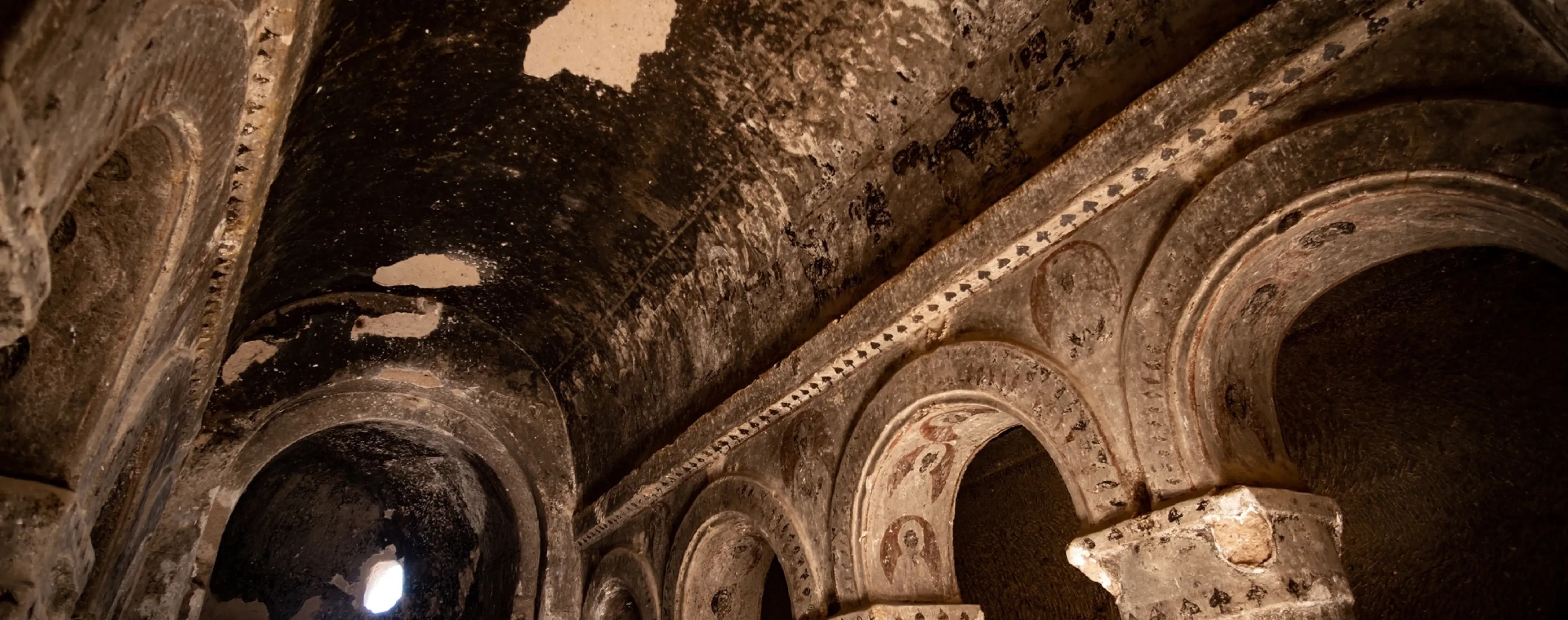
The complex includes cells, refectories, kitchens, utility rooms, and spacious halls connected by passageways, staircases, and open terraces. Particularly notable is a large church-like chamber with an apse, columns, arches, and niches. The preserved structure clearly shows how daily life, prayer, and хозяйственная деятельность were organized in the rock monastery.
Some of the walls and vaults have preserved traces of paintings, although many images have been damaged by time and the later use of the rooms. On some surfaces, soot from fires lit here in later periods is visible. For visitors, the monastery is interesting not only for its history, but also for the opportunity to see a large and complex cave complex where the architecture is literally built into the rock.
From the upper levels, there are views of the Ihlara Valley, the Melendiz River bed, and the surrounding tuff slopes. Visiting involves steep climbs, uneven steps, and narrow passages, so comfortable footwear is especially important. A trip here is often combined with a walk through the Ihlara Valley, since the monastery is located at its northern end.
Selime Monastery on the map
Cappadocia: Monasteries and churches
Eskigumus Monastery, Direkli Church, Zelve Monastic Complex, Church of Nikephoros Phokas
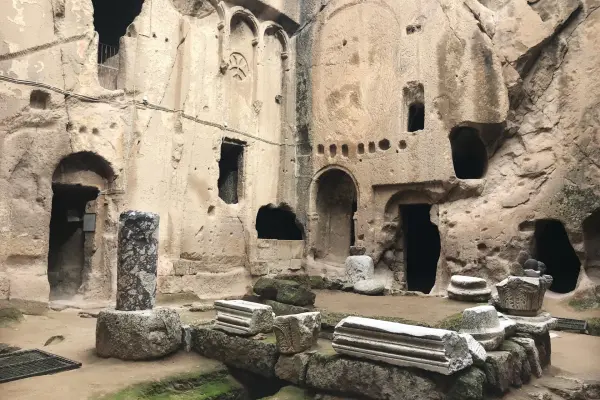
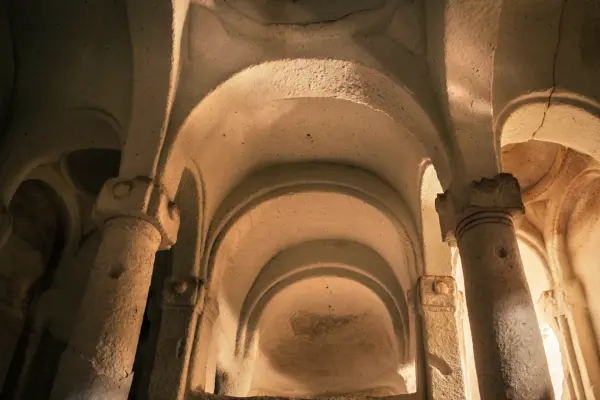
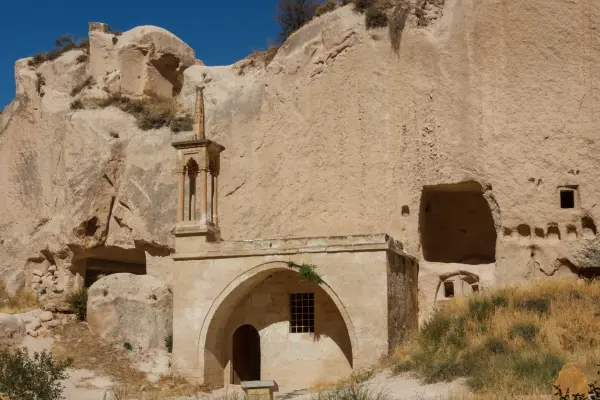
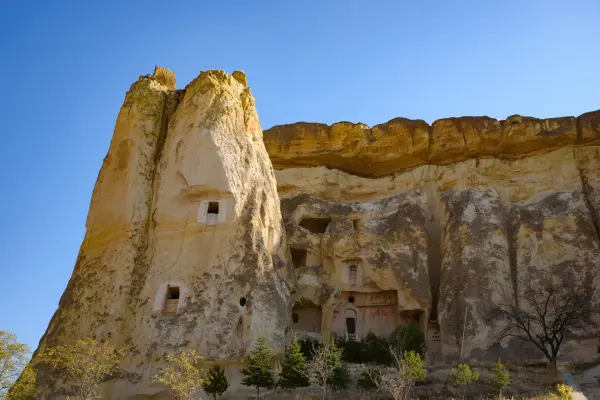
Selime Monastery - levels, halls, and passages in tuff
The visit requires caution due to narrow passages and uneven steps.
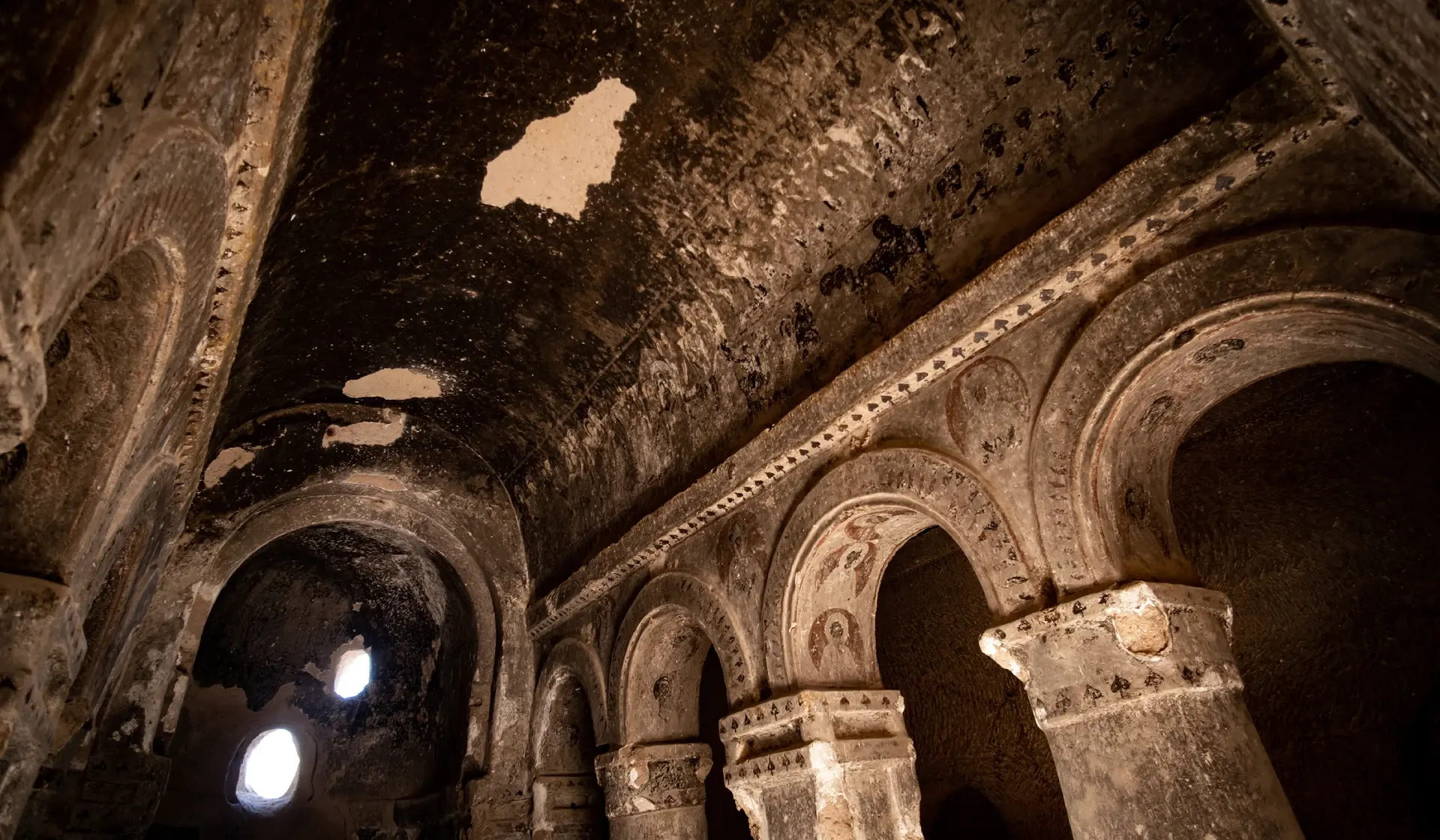
Large rock-cut complex with church halls and terraces
During the visit, you can pass through several levels of rooms carved directly into the rock mass. Inside, living quarters, common halls, storage niches, kitchens with ventilation openings, and spaces that researchers associate with хозяйственными нуждами can be distinguished. The passageways between parts of the complex are narrow in places, and the staircases are carved directly into the tuff, so the route requires caution.
The greatest attention is usually drawn to the large church hall, where characteristic elements of Byzantine rock-cut architecture have been preserved - an apse, supports, arched openings, and recesses carved into the walls. Even where the decoration has been lost, the volume of the space and its purpose remain clearly legible. In some sections, remnants of wall paintings can be seen, but a significant part of the surface has suffered from time, erosion, and soot.
From the platforms and upper terraces, it is convenient to observe the surrounding landscape: the entrance to the Ihlara Valley, the Melendiz River bed, and the pale tuff cliffs characteristic of this part of Cappadocia. Nearby are the Ihlara Valley itself and small settlements with traditional buildings, so the trip is often complemented by a walk through the gorge or a stop at viewpoints.
The monastery is usually reached by car or as part of an excursion from the Cappadocia area and from Aksaray. Before visiting, it is worth considering that some sections may be temporarily closed for safety reasons or during conservation work.
Best tours and travel experiences across the continent


Photos of Selime Monastery
Guided tours, popular attractions, and top-rated hotels across the continent


