
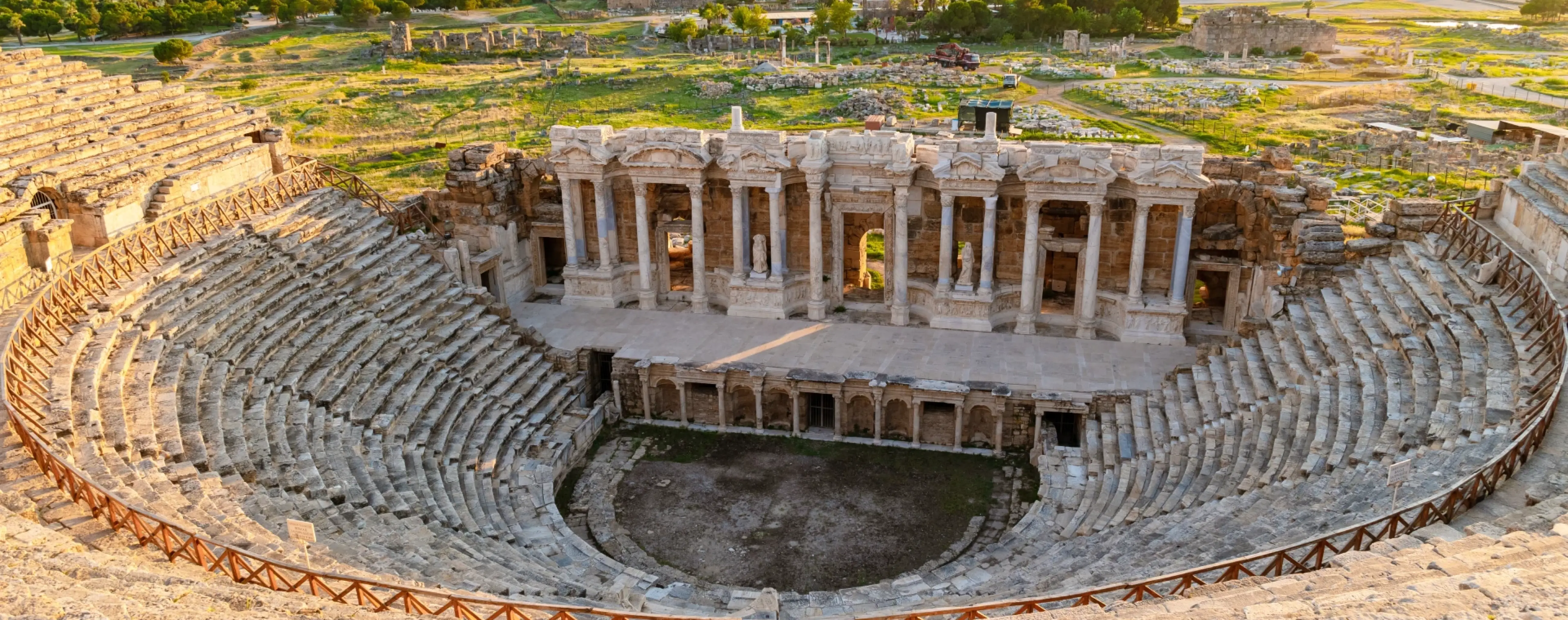
Ancient Theatre of Hierapolis
Ancient Theatre of Hierapolis, Turkey
The Ancient Theatre of Hierapolis is located on a slope within the archaeological zone of the ancient city, next to Pamukkale in southwestern Turkey. It is part of the Hierapolis-Pamukkale complex, included on the UNESCO World Heritage List. The theatre stands above the main streets of the ruins, so it is clearly visible from different parts of the ancient city.
The main construction is dated to the 2nd century AD, during the Roman period, while the decoration of the stage was completed later. The structure reflects the composition typical of Roman theatres: semicircular seating rows, the orchestra, and a high stage building. According to estimates, the theatre could hold about 12,000 people, which shows its important role in the public life of Hierapolis.
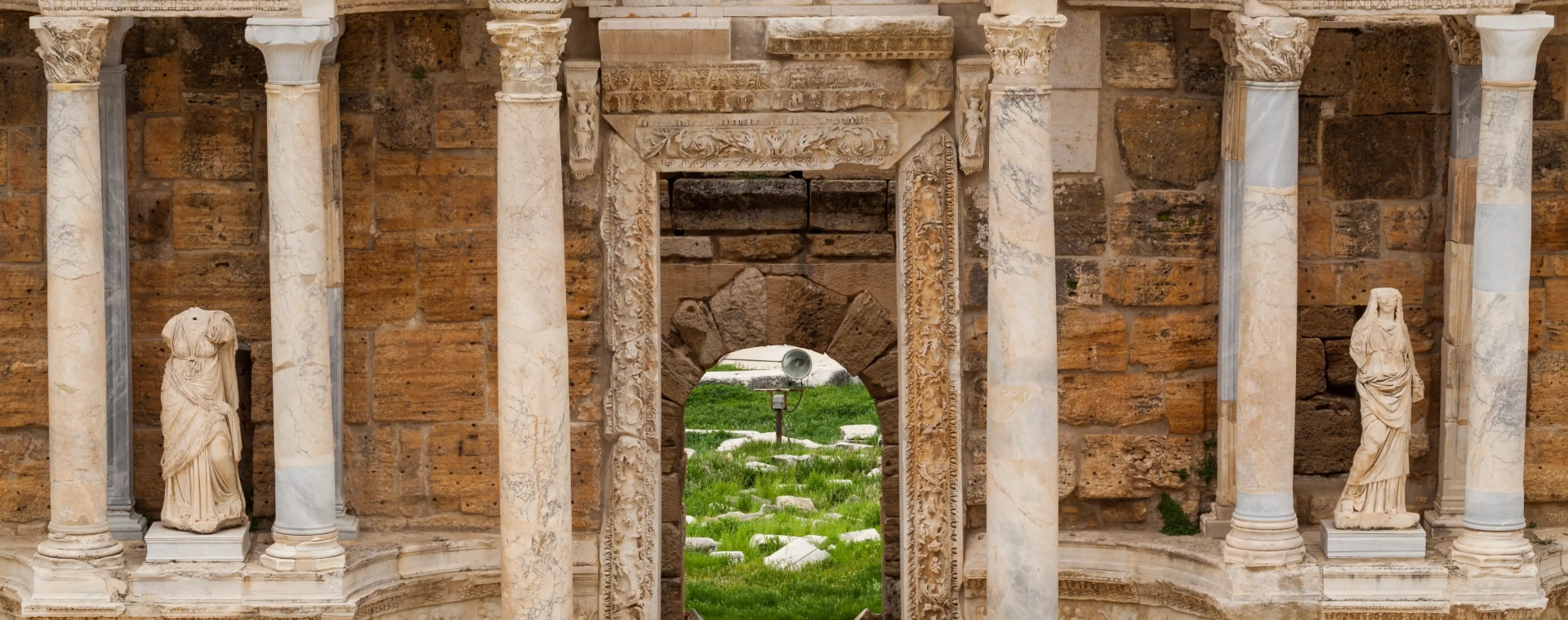
The best-preserved part is the stage, with its architectural decoration and reliefs. In the theatre, it is possible to distinguish the audience sections, stairways, and passageways, and in the lower part, the marble honorary seats. Despite earthquakes, the structure has survived to the present day in good condition thanks to long-term archaeological research and restoration.
For tourists, the theatre is interesting not only for its ancient architecture, but also as a viewpoint. From the upper rows there are views of the ruins of Hierapolis, the white travertine terraces of Pamukkale, and the Buyuk Menderes River valley. It is usually visited together with the necropolis, ancient streets, temples, and Cleopatra's Pool.
Ancient Theatre of Hierapolis on the map
Pamukkale, Hierapolis: Archaeological monuments
Pamukkale Aqueduct, Domitian Arch Gate
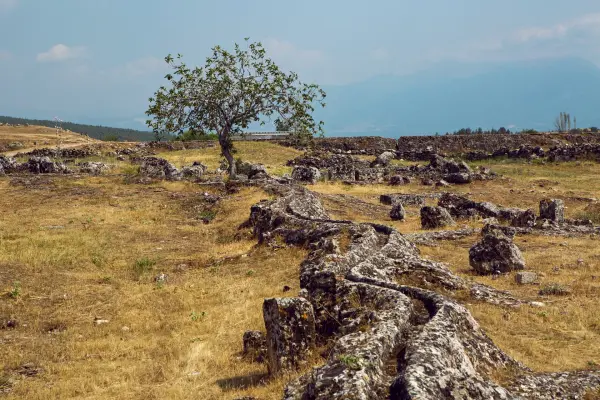
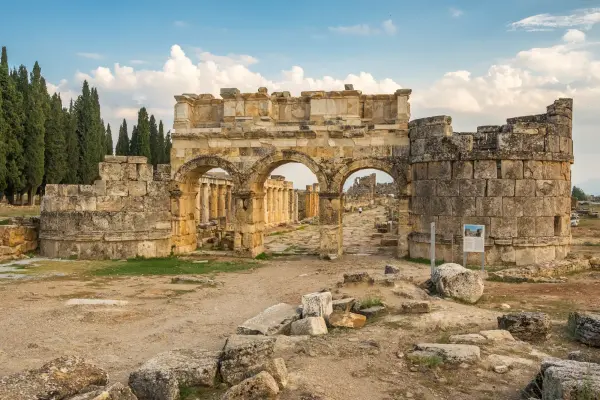
Ancient Theatre of Hierapolis - layout, stage, and viewpoint
The structure combines the architectural details of the stage with a view of the city and the travertines
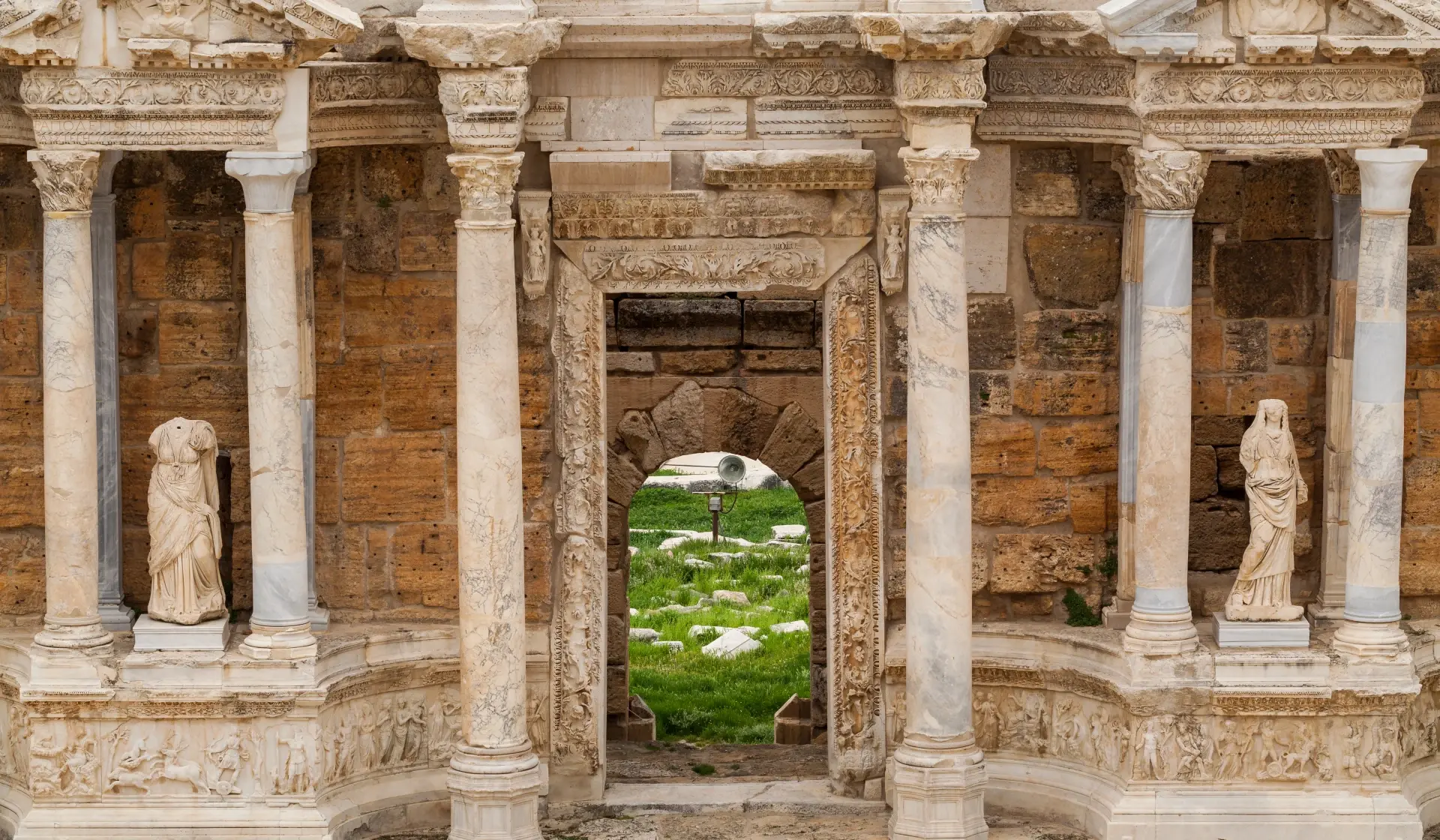
Roman stage with reliefs and a view of the travertines
When visiting the theatre, it is worth paying attention to the stage building, or skene, as it is considered the most expressive part of the monument. Niches, columns, fragments of decorative ornamentation, and reliefs with mythological subjects have been preserved here. Even without full restoration, it is clear how monumental the decoration once was and how the stage separated the performance space from the city landscape.
As you climb the rows of the cavea, you can see how the audience entrance system was arranged and how the seating was divided into sections. In the lower zone, the honorary seats are visible, and higher up there are stairways and passageways by which the public reached their places. The upper rows are especially interesting for those who want to examine the layout of Hierapolis from above and understand how the theatre was built into the slope.
A visit to the theatre is usually combined with a walk around the entire archaeological area. Nearby are the ruins of Hierapolis, the museum in the former Roman baths, Cleopatra's Pool, and access points to the travertine terraces of Pamukkale. It is best to allow time for the ascent and descent, and in hot weather bring water and headwear, as there is little shade here.
The most convenient way to reach the theatre is through the Hierapolis archaeological park from the Pamukkale side, following the main paths of the complex up the slope. The walk takes some time, but the route is straightforward and passes other ancient structures along the way.
Best tours and travel experiences across the continent



Photos of the theatre
Guided tours, popular attractions, and top-rated hotels across the continent


