
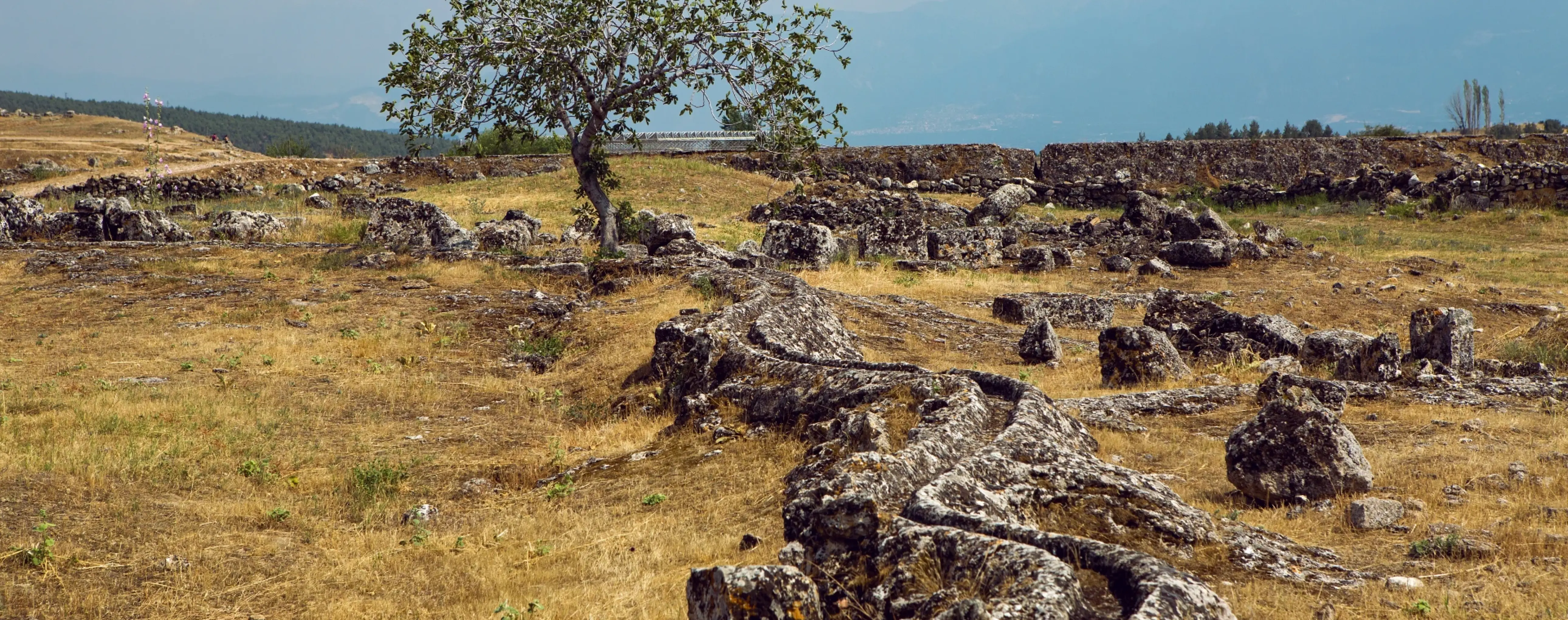
Pamukkale Aqueduct
Pamukkale Aqueduct in the Hierapolis area, Denizli Province
The Pamukkale Aqueduct consists of preserved sections of the ancient water supply system of Hierapolis, an ancient city near modern Pamukkale in Denizli Province. These fragments are located within the Hierapolis-Pamukkale archaeological zone, which is included on the UNESCO World Heritage List. For visitors, this is an opportunity to see not only the famous travertines, but also the engineering infrastructure that supported the life of a large city.
Hierapolis developed during the Hellenistic era, and most of the water supply structures known today date to the Roman period. After earthquakes, the system was repaired and partially rebuilt, so its history reflects the city's long-term use across several eras. The aqueduct is primarily associated with the supply of fresh water, which was necessary for everyday needs separately from the thermal springs of the Pamukkale area.
Water reached the city by gravity through channels and pipes, and was then distributed to baths, fountains, public buildings, and residential quarters. Even in their preserved state, such remains help illustrate the level of ancient urban engineering and the organization of daily life. This place is especially interesting for those who want to understand Hierapolis not only as a complex of ruins, but also as a well-planned ancient city.
Today, the aqueduct survives only in fragments, and it is usually viewed during a walk through the Hierapolis archaeological park. Individual sections of the water system do not form an independent museum site, but they complement a visit to the necropolis, theater, baths, and other ruins very well. Viewing is included with the general admission ticket to the complex, and it is best to follow the open and marked routes.
Pamukkale Aqueduct on the map
Pamukkale: Archaeological monuments
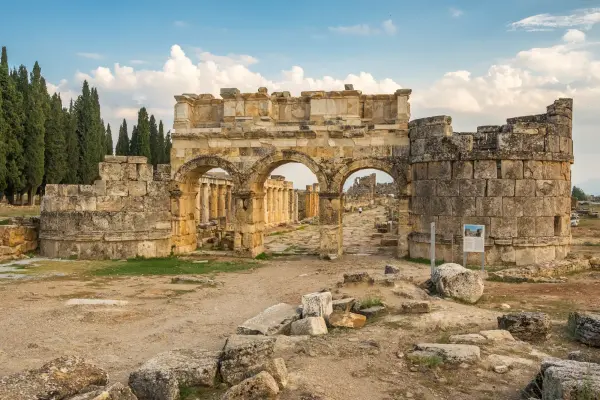
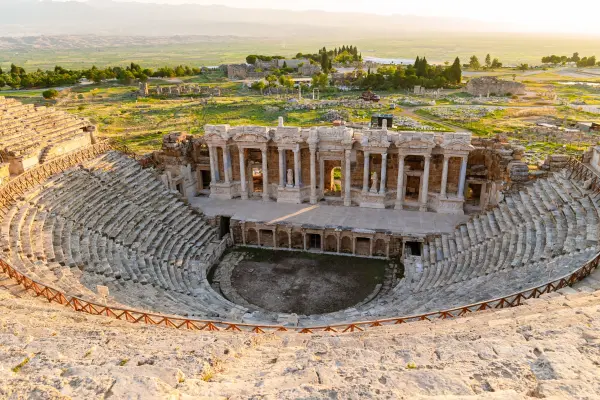
Domitian Arch Gate, Ancient Theatre of Hierapolis
The Pamukkale Aqueduct and its role in the water supply system of Hierapolis
The remains of the water system show the structure and organization of urban life.
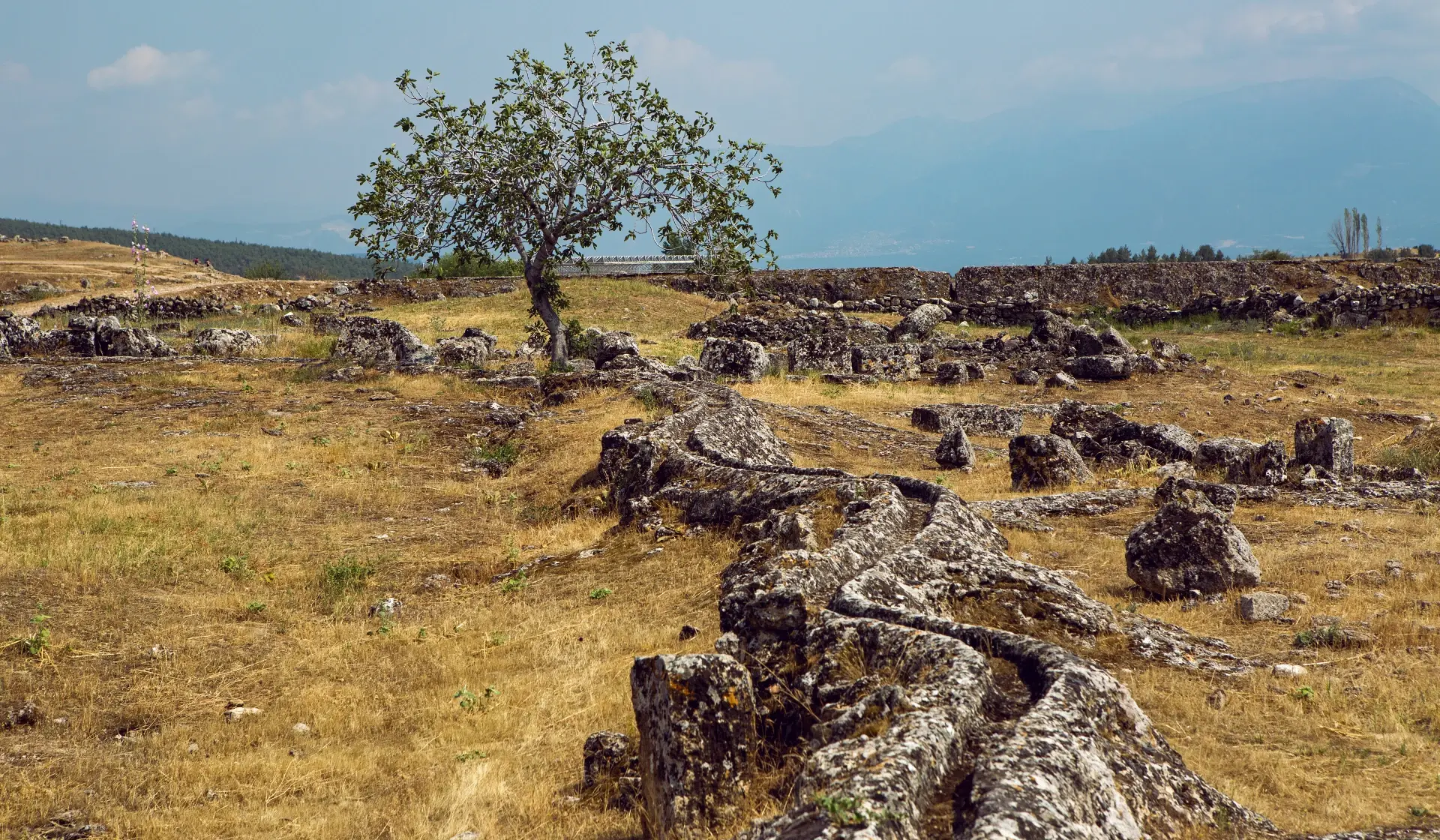
Fragments of the ancient water system among the ruins of Hierapolis
During a visit to the archaeological zone, you can see individual sections of the channel, stone elements of the water system, and traces of engineering solutions related to supplying water to the city. These remains do not always look like the tall arcade usually associated with an aqueduct, so on site it is more important to pay attention to the context and the information panels. They are best understood as part of the overall layout of Hierapolis, where water played a key role in the functioning of baths, fountains, and public spaces.
A visit is usually combined with a walk along the main routes of the archaeological park. It is convenient to consider the aqueduct together with the baths, streets, and other urban structures in order to understand how the supply system was arranged. Regular comfortable shoes are suitable for the visit, since a significant part of the route runs along stone paths and open terrain.
Nearby are the Pamukkale travertine terraces, the ancient theater of Hierapolis, the necropolis, and Cleopatra's Pool, so the visit can easily be combined into one full and varied walk. The easiest way to get here is through the entrances to the Pamukkale archaeological zone from the center of Pamukkale or by transport from Denizli.
Best tours and travel experiences across the continent




Photos of the Pamukkale Aqueduct
Guided tours, popular attractions, and top-rated hotels across the continent


