
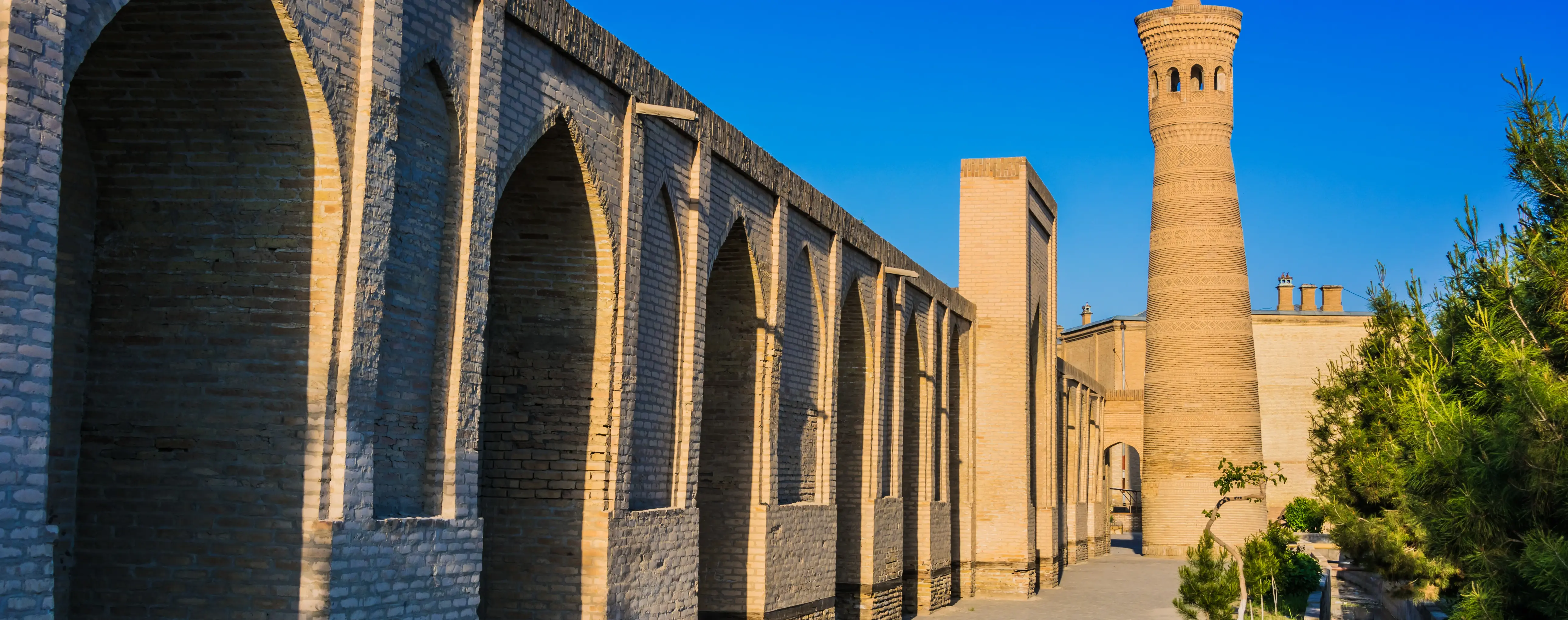
Gaukushon Religious Ensemble
Gaukushon Religious Ensemble in Bukhara, Uzbekistan
The Gaukushon Religious Ensemble is located in the historic center of Bukhara, not far from the Poi-Kalyan complex. It is one of the city's major religious and architectural ensembles, formed in the second half of the 16th century on a site that had previously been used as a slaughterhouse. The name "Gaukushon" is usually associated precisely with this former function of the area.
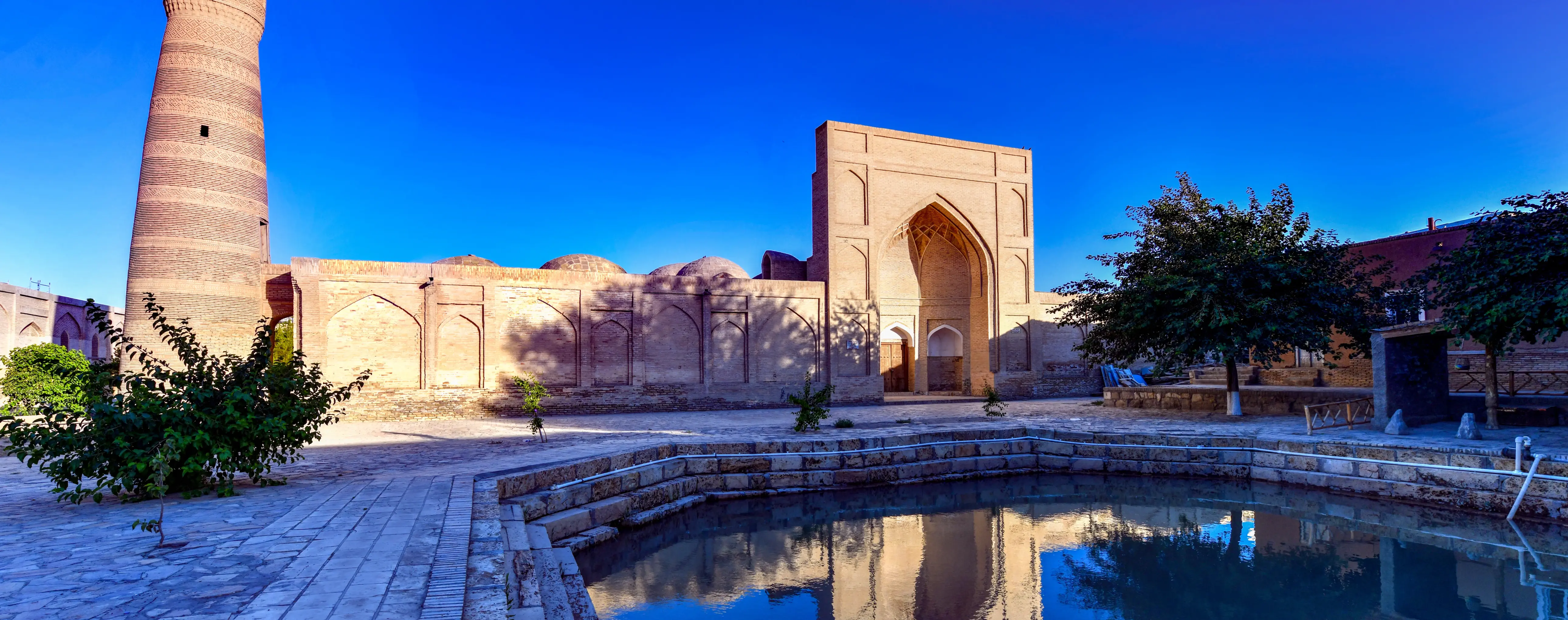
The ensemble took shape during the Shaybanid period and is associated with the name of the Juybari sheikh Khoja Saad, an influential religious figure of that time. It includes a madrasa, the Khoja Mosque, and the Khoja Kalon Minaret. The complex is of interest not only as a monument of Islamic architecture, but also as an example of how large public and religious spaces developed in 16th-century Bukhara.
The madrasa stands out in particular for its unusual trapezoidal plan, rare in Bukhara architecture, where stricter and more symmetrical designs are more common. At the same time, the internal layout preserves the traditional scheme with a courtyard and cells. The ensemble's minaret is also noticeable in the city panorama and is considered one of Bukhara's taller historic minarets.
For tourists, Gaukushon is interesting for the opportunity to see a lesser-known yet significant monument near the main sights of old Bukhara. Here, it is possible to gain a better idea of the structure of a religious ensemble from the Shaybanid era and compare its architecture with that of other complexes in the city center.
Gaukushon Religious Ensemble on the map
Bukhara, Old City of Bukhara: Architectural and historical complexes
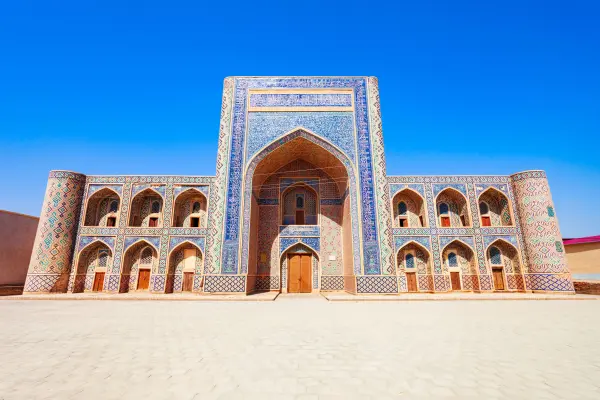
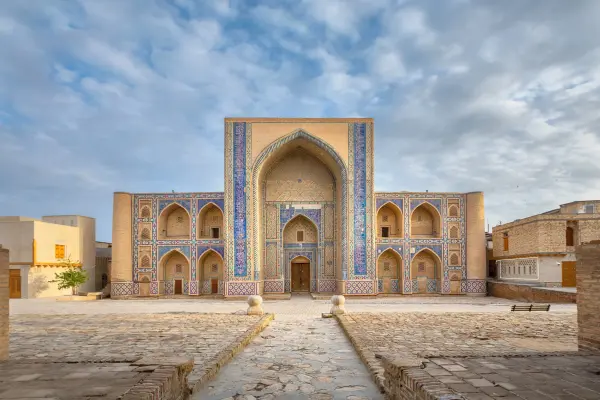
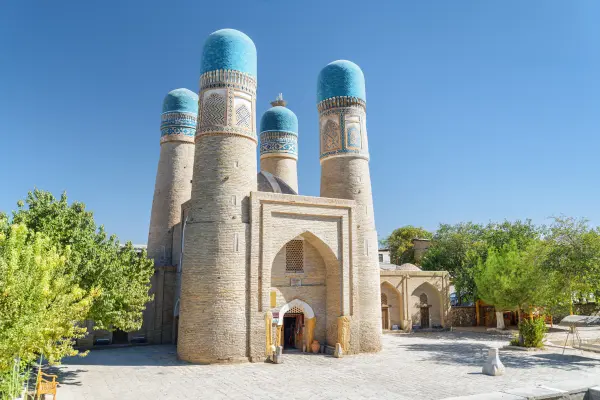
Kosh Madrasah, Ulugh Beg Madrasah in Bukhara, Chor Minor Madrasa, Kukeldash Madrasah
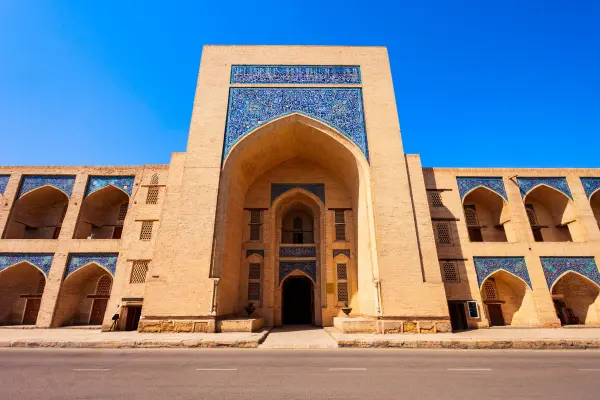
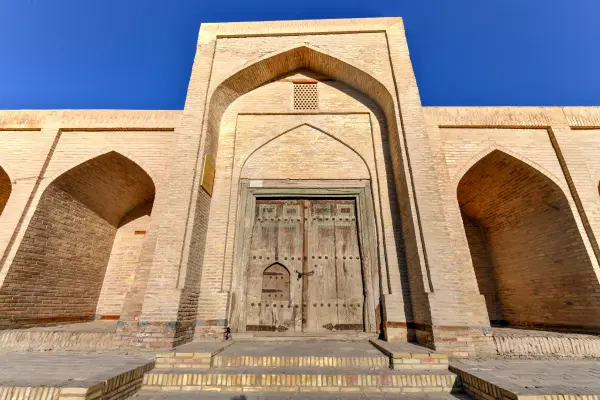
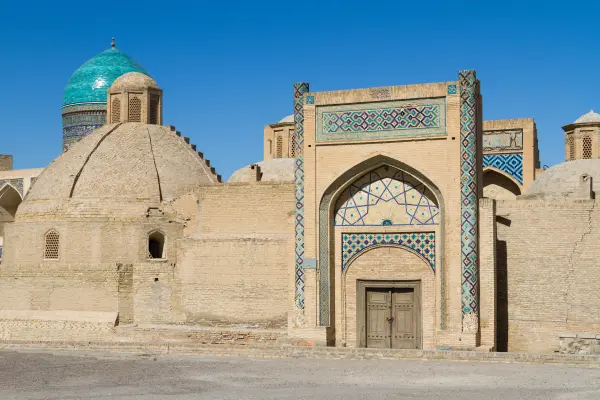
The Gaukushon Religious Ensemble and Its Architectural Features
The ensemble reflects the religious and urban history of 16th-century Bukhara.
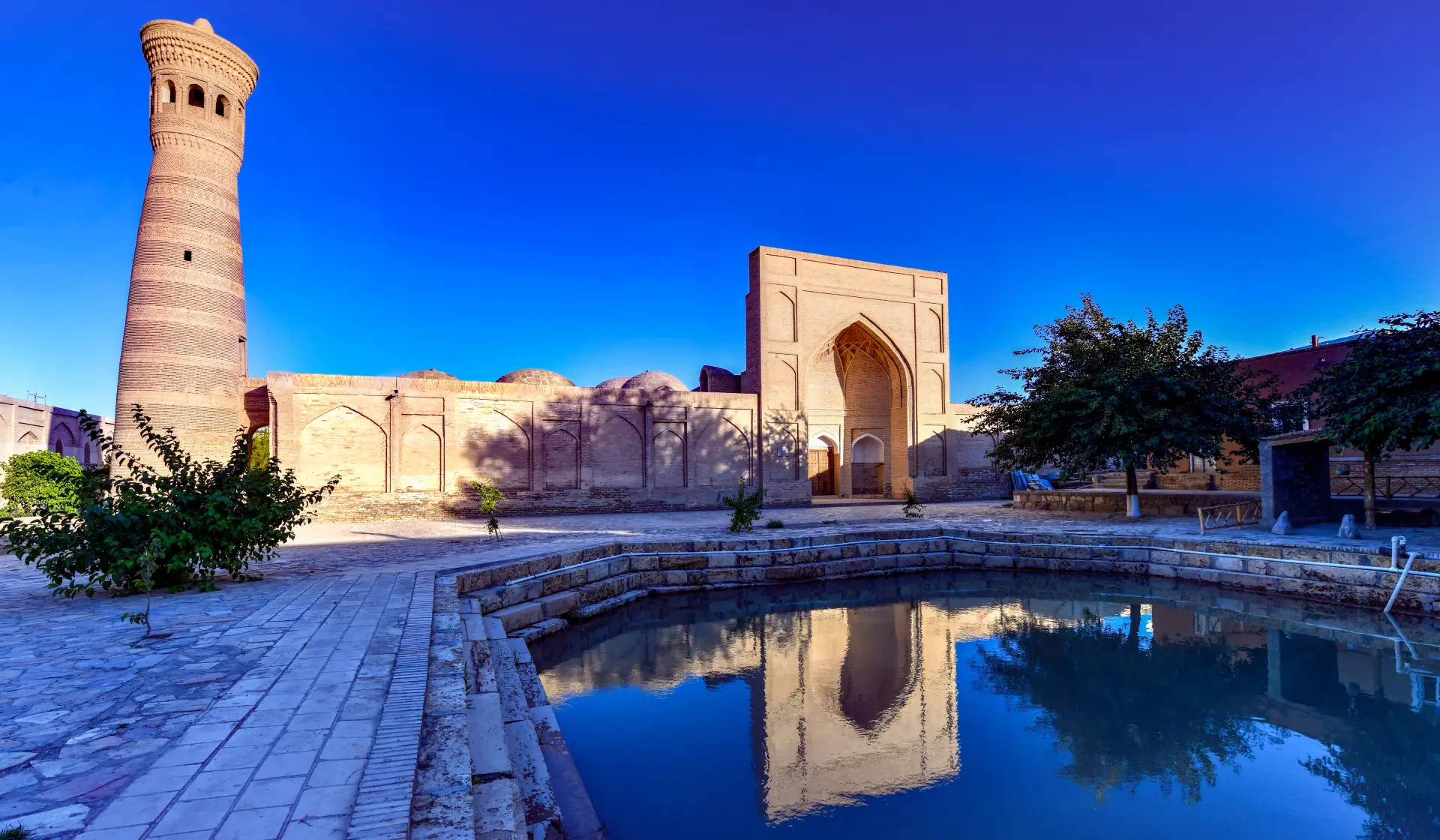
A rare madrasa with a trapezoidal layout and a tall minaret
While exploring the complex, it is worth paying attention to the combination of several structures built for different religious and public needs. The madrasa is notable for its irregular shape, linked to the dense development of old Bukhara. In the courtyard area, you can see the spatial organization typical of such buildings, and outside, the characteristic brickwork and facade decoration.
The ensemble's mosque was intended for collective prayer and complemented the existing composition. The Khoja Kalon Minaret plays an important role in the silhouette of the complex: even against the backdrop of other Bukhara monuments, it appears as a striking vertical accent. It is best to view the ensemble not as a separate building, but as a unified historical space where the features of 16th-century urban planning are visible.
A visit to Gaukushon can easily be combined with a walk through the old city: nearby are Poi-Kalyan, the trading domes, and other monuments of central Bukhara. Visitors usually come here on foot from the central part of the historic district, as the distances between the main sights are short.
Best tours and travel experiences across the continent


Gaukushon Gallery
Guided tours, popular attractions, and top-rated hotels across the continent


