
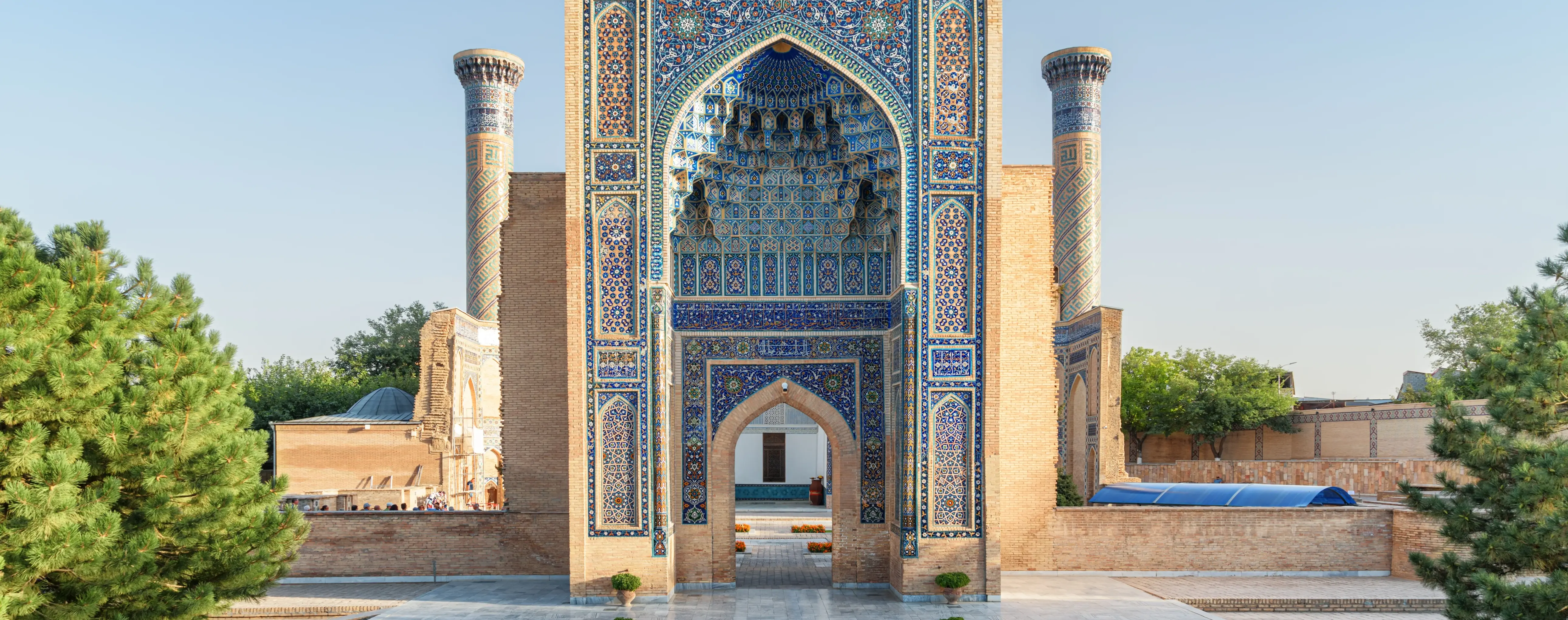
Gur-e-Amir Mausoleum
Gur-e-Amir Mausoleum in Samarkand, Uzbekistan
The Gur-e-Amir Mausoleum is located in Samarkand, not far from the city center, and is considered one of the most famous architectural monuments of the Timurid era in Uzbekistan. It is the burial place of Timur, who was often called Tamerlane in Europe, as well as several members of his family and close associates. Originally, the complex was created as part of an ensemble with a madrasah and a khanqah, but over time the mausoleum itself became its main element.
The history of Gur-e-Amir is connected with Timur's grandson Muhammad Sultan, for whom a burial was first arranged here. After Timur's own death, the mausoleum became a dynastic tomb. Some representatives of the Timurid dynasty and Timur's spiritual mentor Mir Sayyid Baraka are also buried here. Because of this, the site is of interest not only as an architectural monument but also as an important historical necropolis.
The building is easy to recognize by its tall ribbed dome in a deep blue color. The facades are decorated with glazed tiles, mosaics, and geometric ornamentation characteristic of 15th-century Samarkand architecture. Inside is a memorial hall with richly decorated decor, and beneath it is a crypt with the burials. The combination of a strict composition and intricate decorative embellishment makes the mausoleum especially interesting for those who want to see the characteristic features of Timurid art.
For tourists, Gur-e-Amir is of interest as one of the key monuments of old Samarkand, helping visitors better understand the history of the city and its rulers. A visit is usually combined with a walk to other historical sites in Samarkand, since the mausoleum is located relatively close to a number of well-known attractions. This place is suitable for those interested in architecture, the history of Central Asia, and the development of Islamic architecture.
Gur-e-Amir Mausoleum on the map
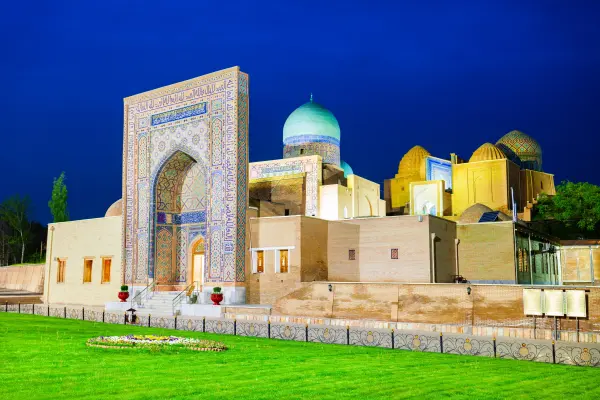
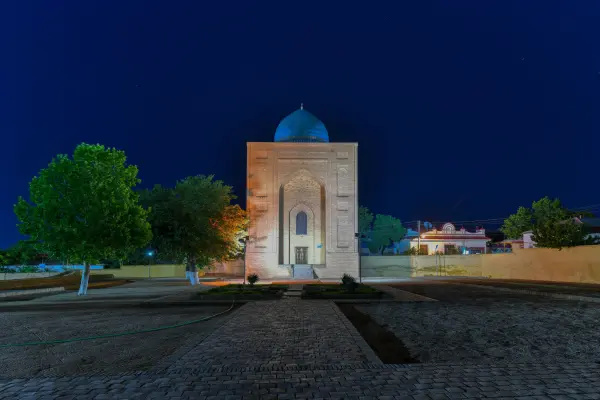
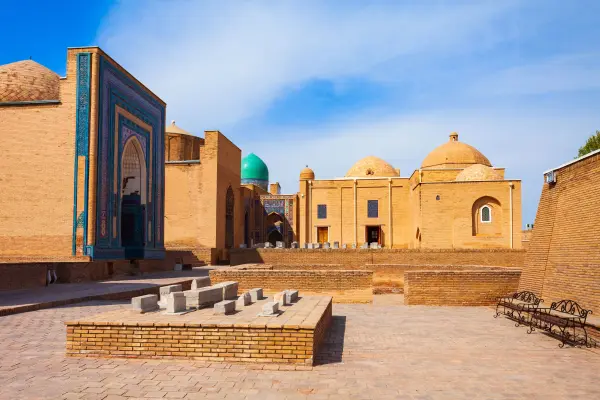
Samarkand, Historic Centre of Samarkand: Mausoleums and tombs
Shah-i-Zinda Mausoleum Ensemble, Bibi-Khanym Mausoleum, Mausoleum of Qusam ibn Abbas, Rukhabad Mausoleum
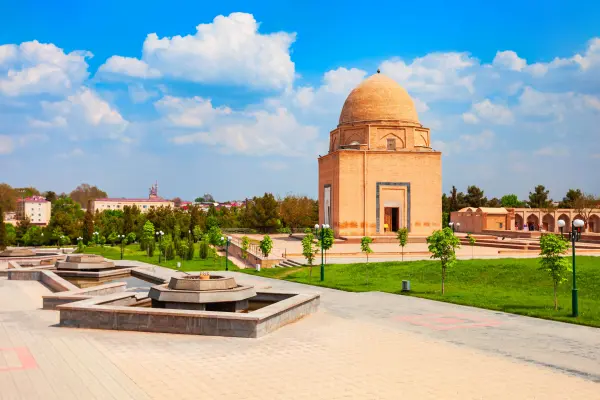
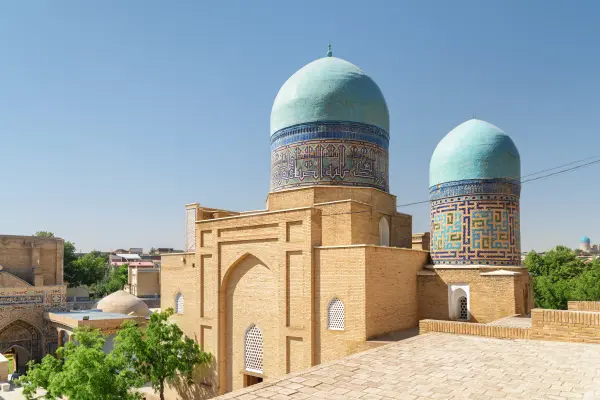
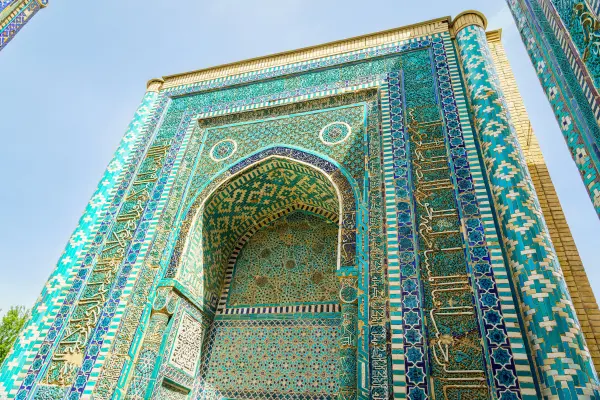
Gur-e-Amir Mausoleum and the Dynastic Burial Place of the Timurids
Here, the history of Samarkand and the architecture of the Timurid era come together.
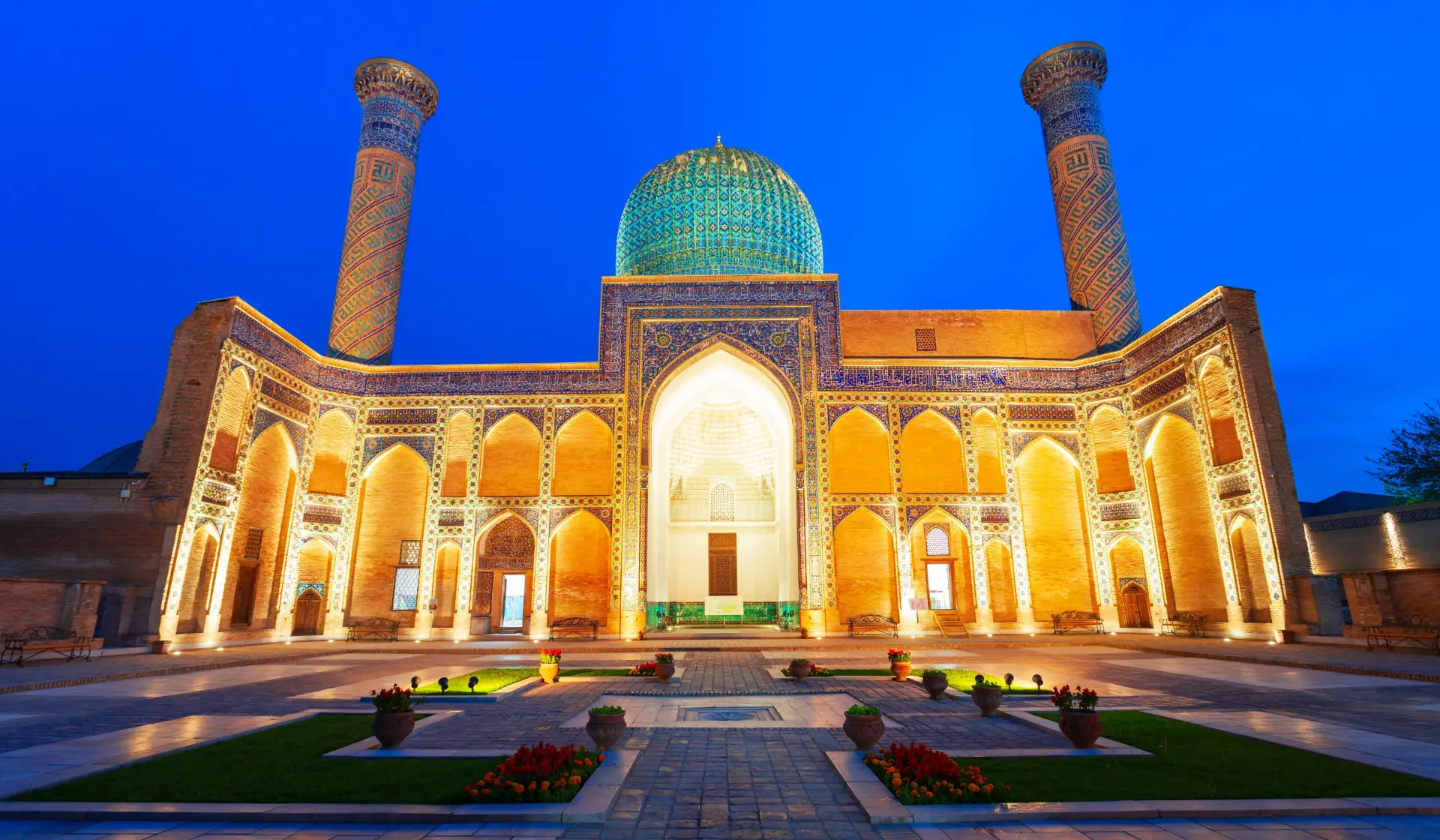
The Ribbed Blue Dome and the Burial Place of the Timurid Dynasty
During a visit, you can examine the exterior decoration of the mausoleum up close: the portal, the glazed tile cladding, mosaic inserts, and the dome with pronounced vertical ribs characteristic of Samarkand. The building's well-balanced proportions are especially noticeable: its relatively compact volume is combined with a tall drum and a large dome, allowing the mausoleum to be appreciated from different points of the square in front of the entrance.
Inside, visitors see a memorial hall with decorative finishes using gilding, carved ornamentation, and stone and tile cladding. The tombstones in the hall have symbolic significance, while the actual burials are located in the underground crypt. One of the most famous is the dark jade stone above the presumed burial place of Timur.
Gur-e-Amir is especially interesting for those who want to compare the exterior restraint of Timurid architecture with the richness of its interior decoration. A visit usually does not take too much time, so it is convenient to include it in an itinerary around historic Samarkand. Registan Square and the Rukhabad Mausoleum are located nearby and are often visited on the same day.
The mausoleum is usually reached by taxi or on foot from the center of Samarkand if you are already exploring the old city. It is best to plan your visit during daylight hours in order to see the details of the facades and interior.
Best tours and travel experiences across the continent


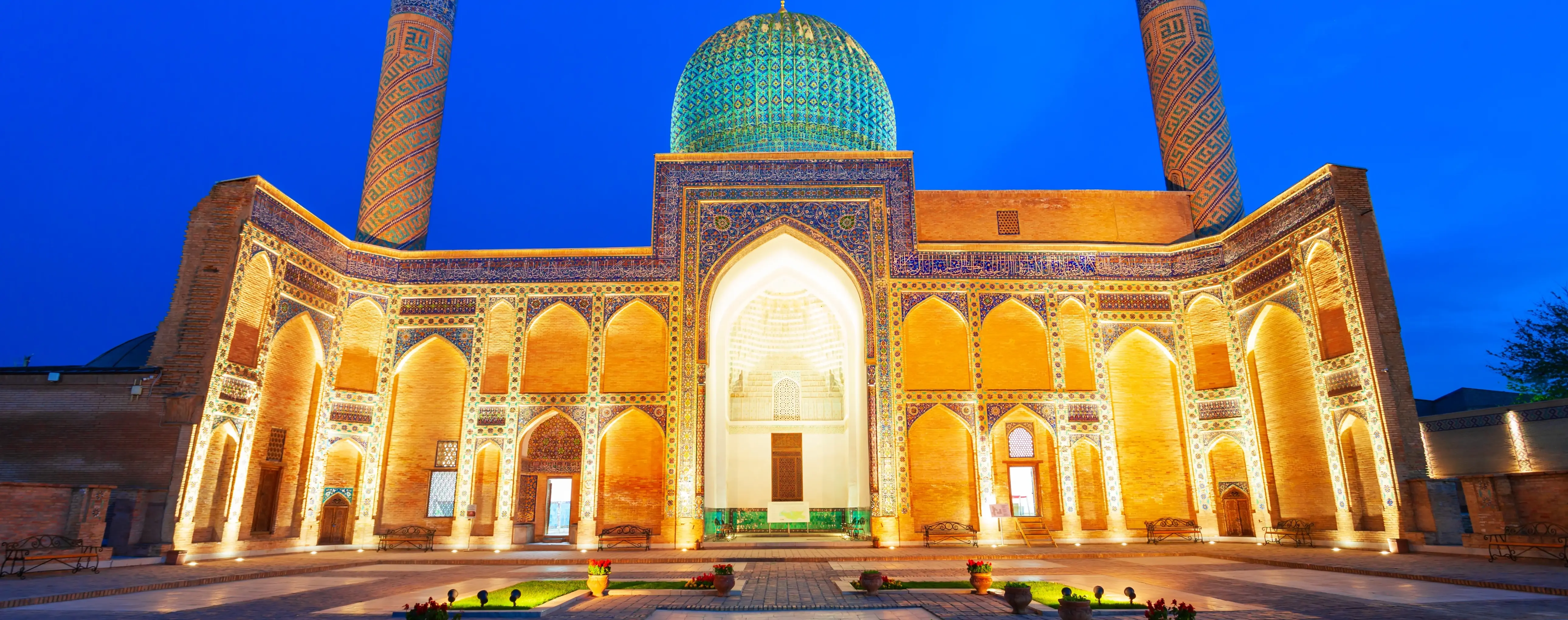
Photos of Gur-e-Amir
Guided tours, popular attractions, and top-rated hotels across the continent


