
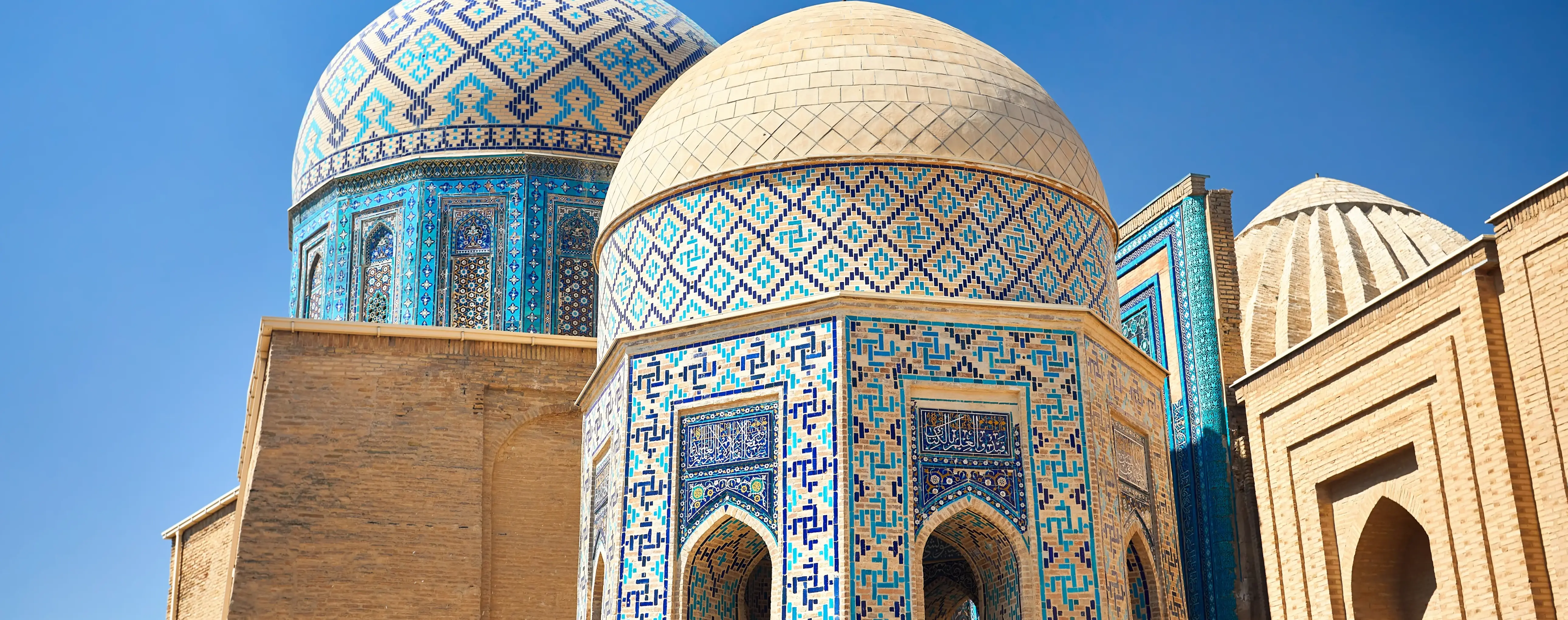
The Octagonal Mausoleum in Shah-i-Zinda
The Octagonal Mausoleum in Shah-i-Zinda in Samarkand, Uzbekistan
The Octagonal Mausoleum is part of the Shah-i-Zinda ensemble in Samarkand, on the slope of Afrasiab, not far from the city's historic center. It is one of the structures of the famous necropolis, where mausoleums and memorial buildings from different periods are concentrated. Based on the cladding technique and the nature of its decorative design, the building is dated to the first half of the 15th century, during the reign of Ulugh Beg.
The monument stands out for its octagonal shape, which is clearly noticeable among the other buildings in the complex. The architecture of the Timurid period is characterized by carefully considered proportions, ceramic cladding, and attention to detail, and the mausoleum makes it possible to see these features on a more intimate scale. Even with the partial loss of its original decor, it remains an important part of the overall appearance of Shah-i-Zinda.
During restoration work in 1957, archaeological research was carried out here. Several gravestones were discovered, preliminarily dated to the 14th century, but it was not possible to determine exactly to whom the burials belonged because no inscriptions had survived. For visitors, this place is interesting as an example of how architecture, restoration history, and archaeological finds are combined in a single monument.
The Octagonal Mausoleum in Shah-i-Zinda on the map
Samarkand, Shah-i-Zinda Complex: Mausoleums and tombs
Mausoleum of Qusam ibn Abbas, Shah-i-Zinda Mausoleum Ensemble, The Double-Domed Mausoleum of the Shah-i-Zinda Complex, Shodi-Mulk-Oko Mausoleum of the Shah-i-Zinda Complex
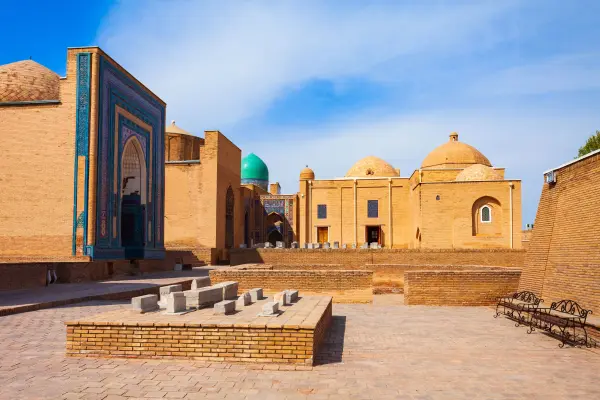
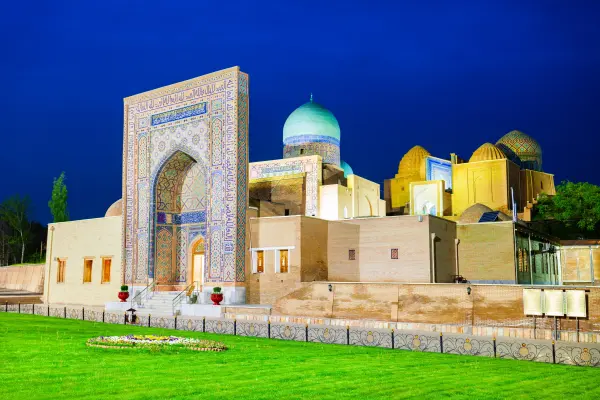
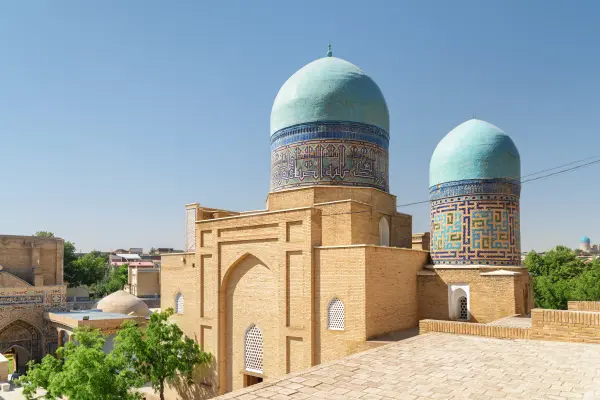
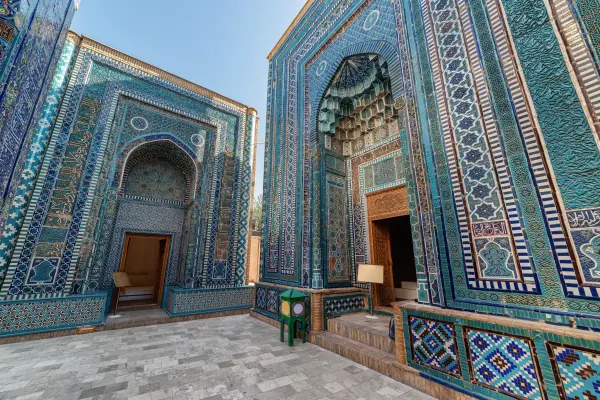
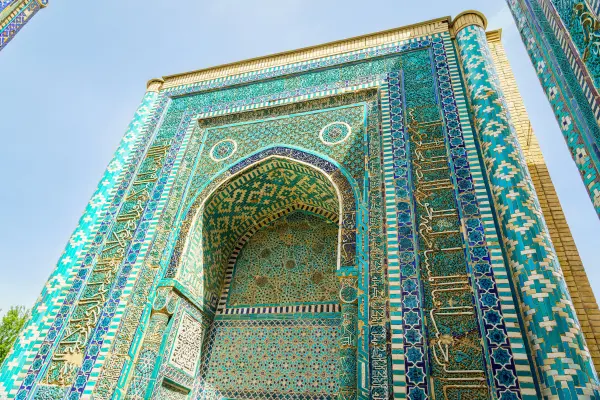
The Octagonal Mausoleum in Shah-i-Zinda and the features of its cladding
The monument shows Timurid-era architecture and traces of later restoration.
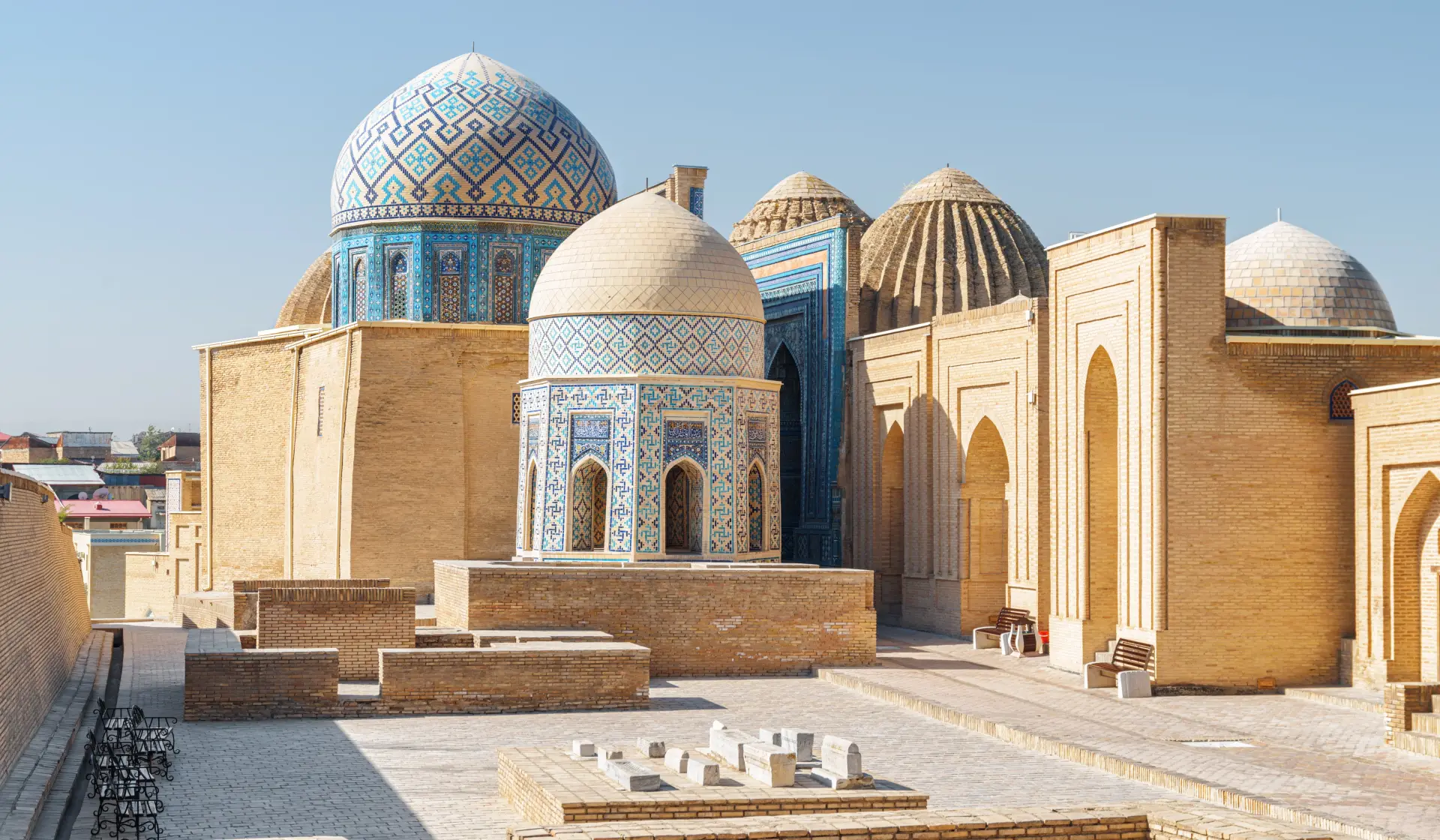
Timurid cladding and a rare octagonal composition
When viewing the mausoleum within the Shah-i-Zinda ensemble, it is worth paying attention not only to its shape but also to the cladding technique by which researchers date the structure. The octagonal plan is not so common here, so the building stands out noticeably against the neighboring mausoleums with their more familiar facade solutions. It is best appreciated as part of the overall route through the necropolis, comparing decorative techniques from different periods.
Visitors usually examine the ceramic decor, the proportions of the walls, and the transition from the base to the upper part of the structure. The monument is not associated with a museum exhibition in the usual sense, but on site you can observe the features of the construction technique and imagine how the ensemble changed over the centuries. Traces of restoration remind us that the mausoleum's present appearance is the result of both medieval construction and later work to preserve the monument.
Nearby are other mausoleums of the Shah-i-Zinda ensemble, as well as the entrance group of the complex and the stair passage leading through the main memorial structures. The easiest way to get here is by taxi or on foot from the historic center of Samarkand, if you are already exploring Afrasiab and the nearby monuments.
Best tours and travel experiences across the continent




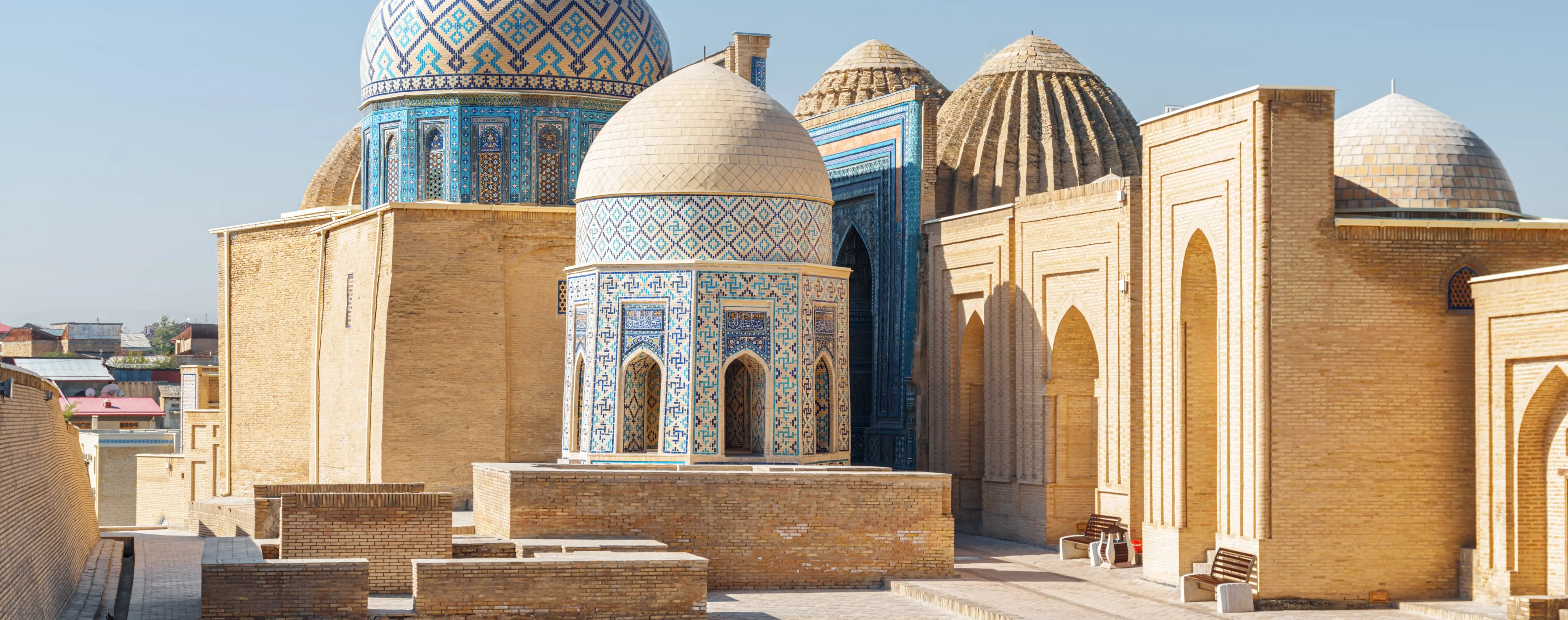
Photos of the mausoleum
Guided tours, popular attractions, and top-rated hotels across the continent


