
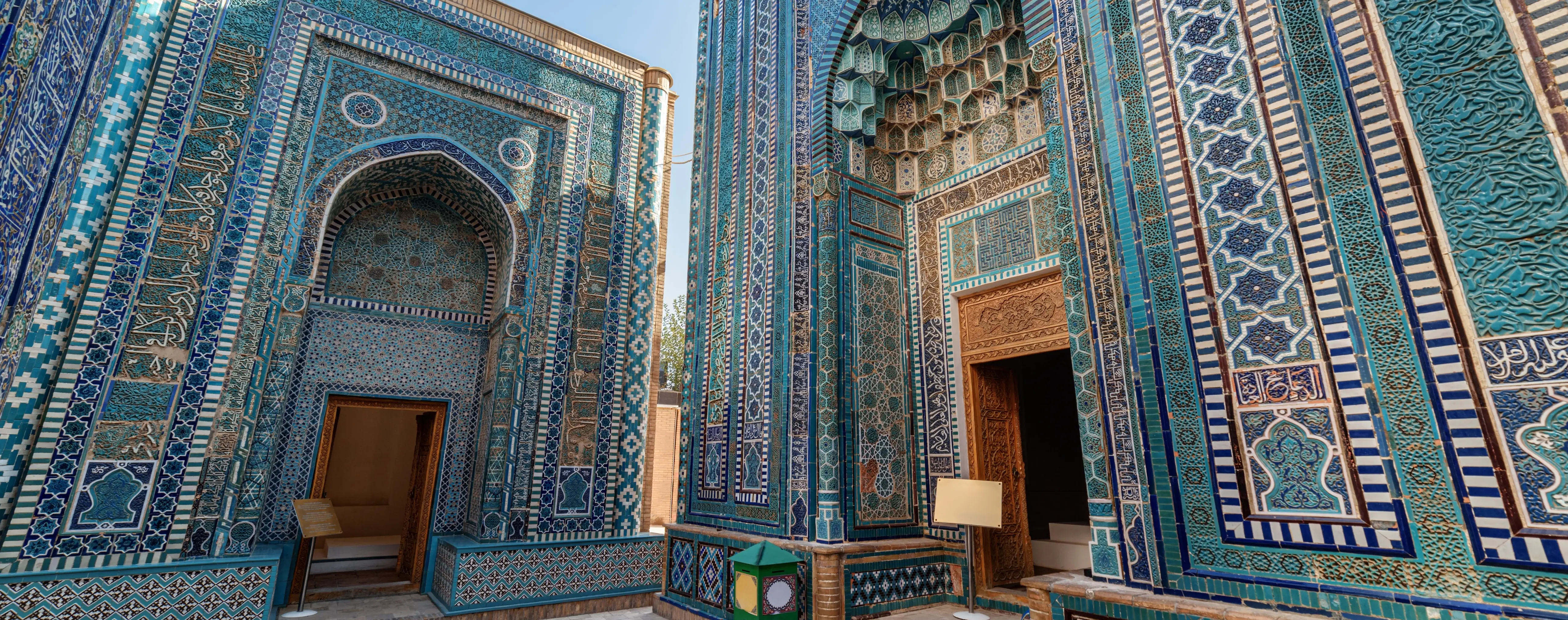
Shodi-Mulk-Oko Mausoleum of the Shah-i-Zinda Complex
Shodi-Mulk-Oko Mausoleum of the Shah-i-Zinda Complex in Samarkand
The Shodi-Mulk-Oko Mausoleum is part of the Shah-i-Zinda ensemble in Samarkand, on the slope of Afrasiab, near the historic part of the city. It is one of the monuments of the early Timurid period in the necropolis, where mausoleums and religious buildings of the 14th-15th centuries are concentrated. The structure is dated to 1372.
The name of the mausoleum is associated with Shodi-Mulk-Oko, a niece of Amir Timur and the daughter of his elder sister Kutlug-Turkan-Oko. Previously, the monument was sometimes mistakenly associated with the name of Turkan-Oko and considered the burial place of Timur's wife, but the inscription on the portal made it possible to clarify the building's identity. According to one version, the mausoleum was built by order of the mother over the grave of her daughter, who died young.
The monument is well known for the high degree of preservation of its decorative decoration. The facade stands out with its slender corner columns with carved decoration and complex bases, while the portal features small columns with muqarnas capitals. The decoration uses majolica panels and tiles characteristic of 14th-century Samarkand architecture.
For visitors, the mausoleum is interesting both as part of the route through Shah-i-Zinda and as a clear example of how memorial architecture and highly developed decorative art were combined in the early Timurid period. Viewing this building helps to better understand the artistic language of the ensemble and notice the differences between structures from different periods.
Shodi-Mulk-Oko Mausoleum of the Shah-i-Zinda Complex on the map
Samarkand, Shah-i-Zinda Complex: Mausoleums and tombs
The Double-Domed Mausoleum of the Shah-i-Zinda Complex, Shah-i-Zinda Mausoleum Ensemble, The Octagonal Mausoleum in Shah-i-Zinda, Shirin-Beka-Aka Mausoleum of the Shah-i-Zinda Complex
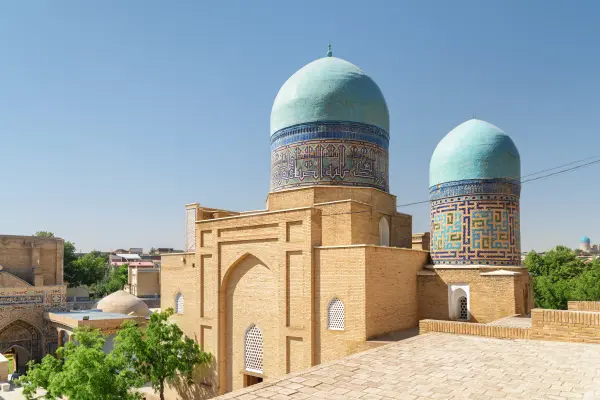
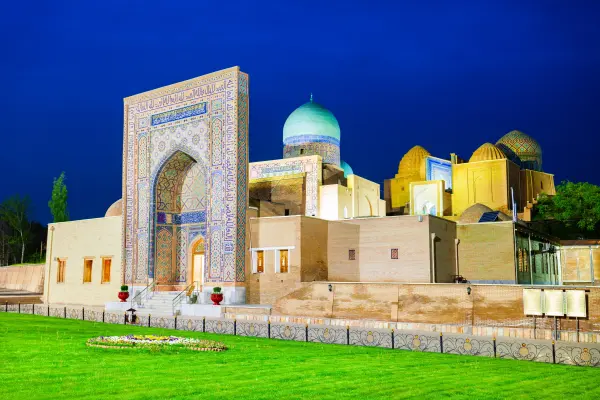
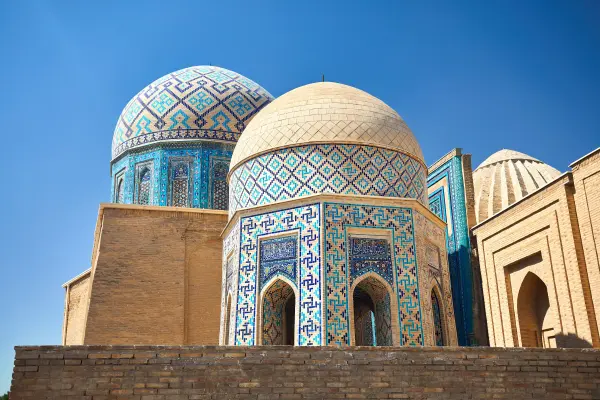
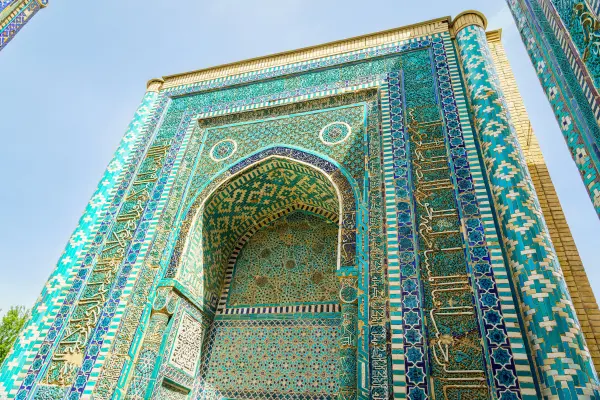
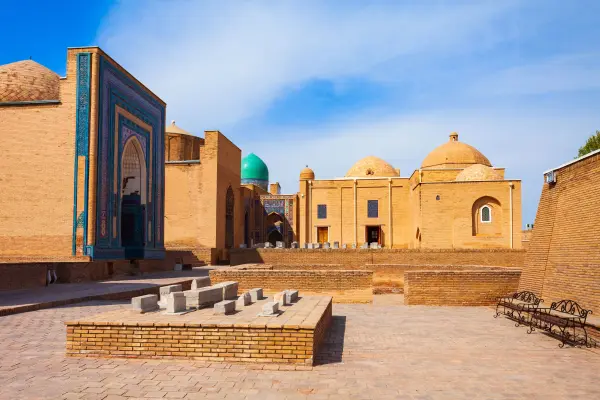
The Shodi-Mulk-Oko Mausoleum of the Shah-i-Zinda Complex and Its Decor
A monument of early Timurid architecture in the Shah-i-Zinda necropolis.
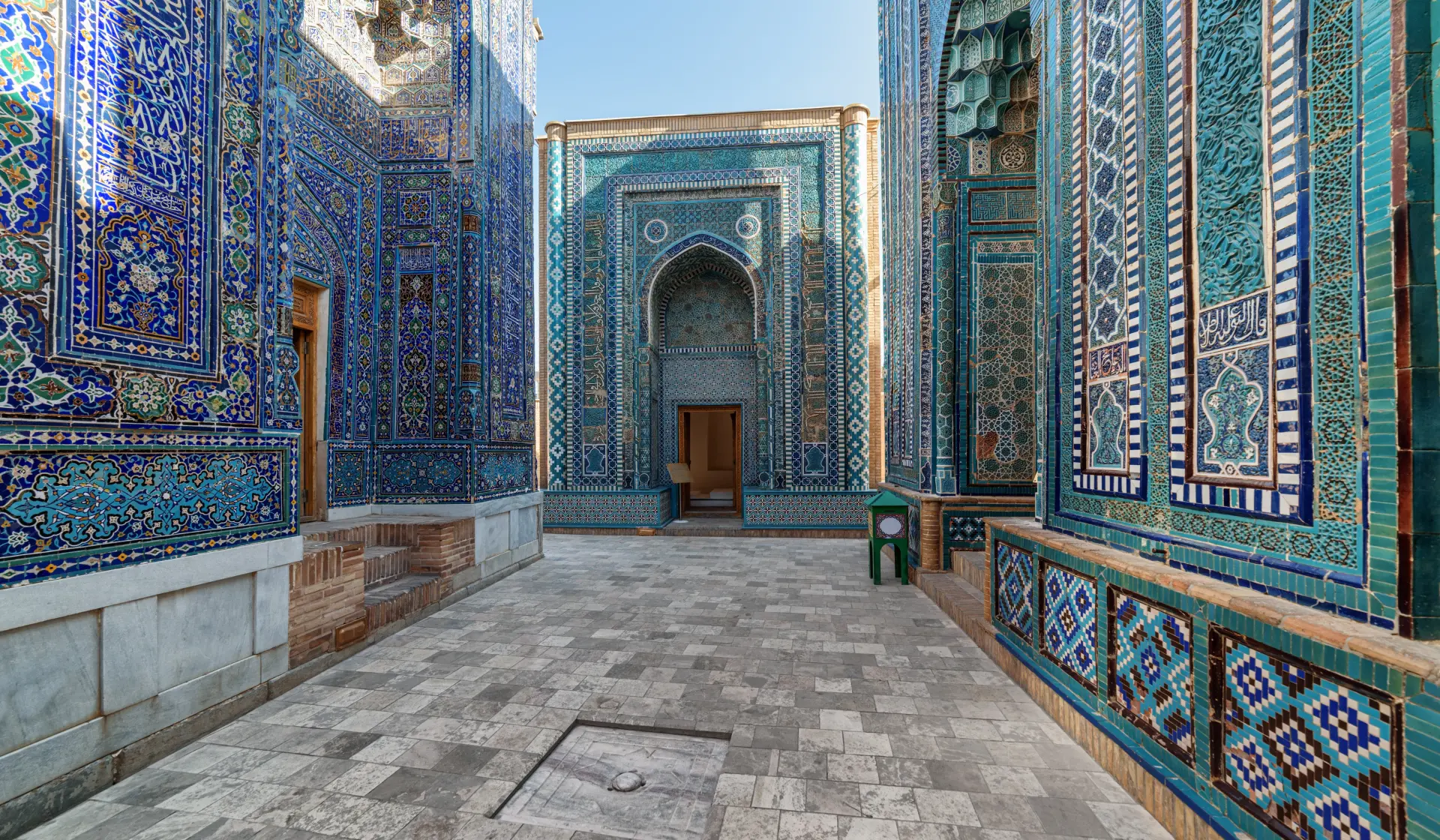
Carved Portal and Majolica of Early Timurid Samarkand
During your visit, it is worth paying attention to the proportions of the portal and the fine workmanship of its details. The corner columns, shaped bases, and muqarnas elements of the capitals clearly demonstrate the techniques that were developed in the architecture of Samarkand in the late 14th century. Even against the background of other buildings in Shah-i-Zinda, this mausoleum stands out for the coherence of its composition.
Inside, the majolica tile cladding and the overall design of the burial chamber are of interest. What matters here is not only the individual patterns, but also the combination of color, geometry, and calligraphic elements characteristic of the Timurid period. It is best to view the decoration slowly and from close range, when the flow of visitors is smaller.
The mausoleum is convenient to visit as part of a walk through the entire Shah-i-Zinda ensemble: nearby are other well-known mausoleums of the necropolis, the mosque, and the entrance group of the complex. This makes it possible to compare buildings from different decades and see how the forms of portals, domes, and cladding changed.
The easiest way to get here is by taxi or public transport to the Shah-i-Zinda complex in Samarkand, and then walk to the entrance. It is worth keeping in mind that the site includes stairs and ascending sections, so it is better to choose comfortable shoes for the visit.
Best tours and travel experiences across the continent




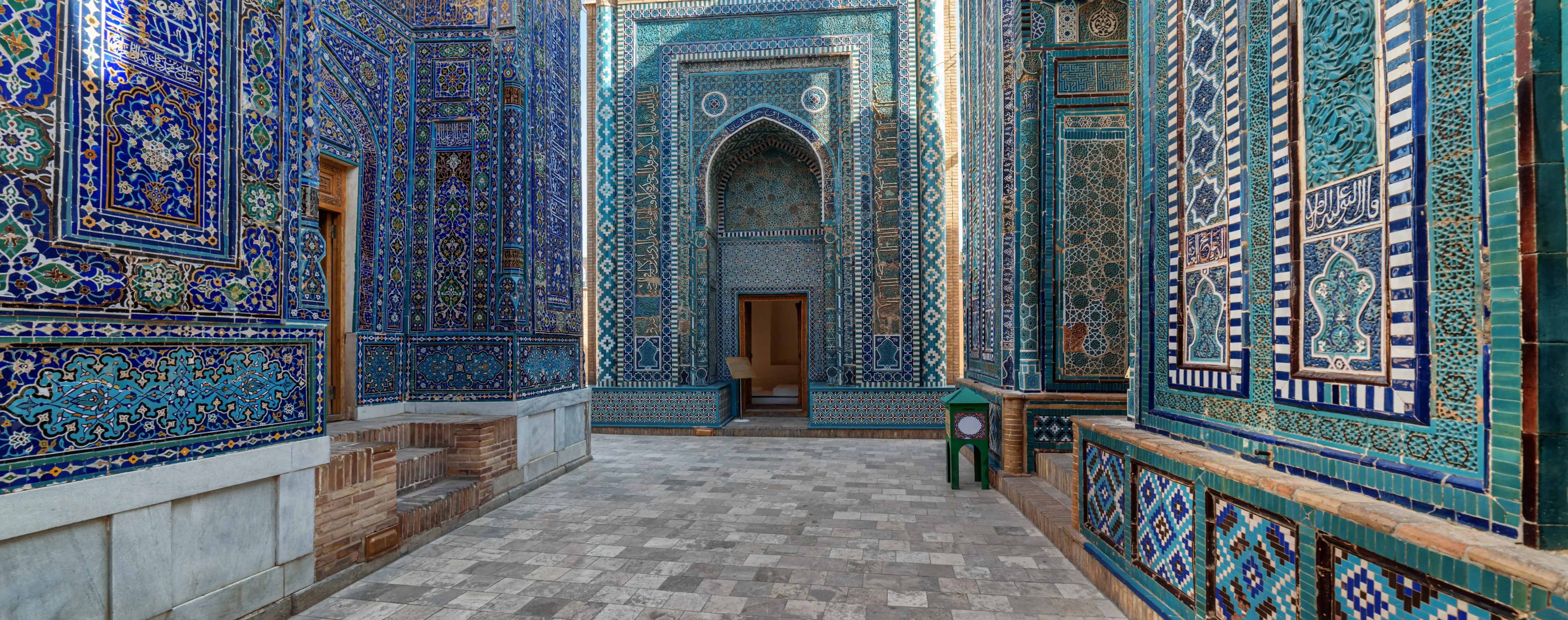
Photos of the mausoleum
Guided tours, popular attractions, and top-rated hotels across the continent


