
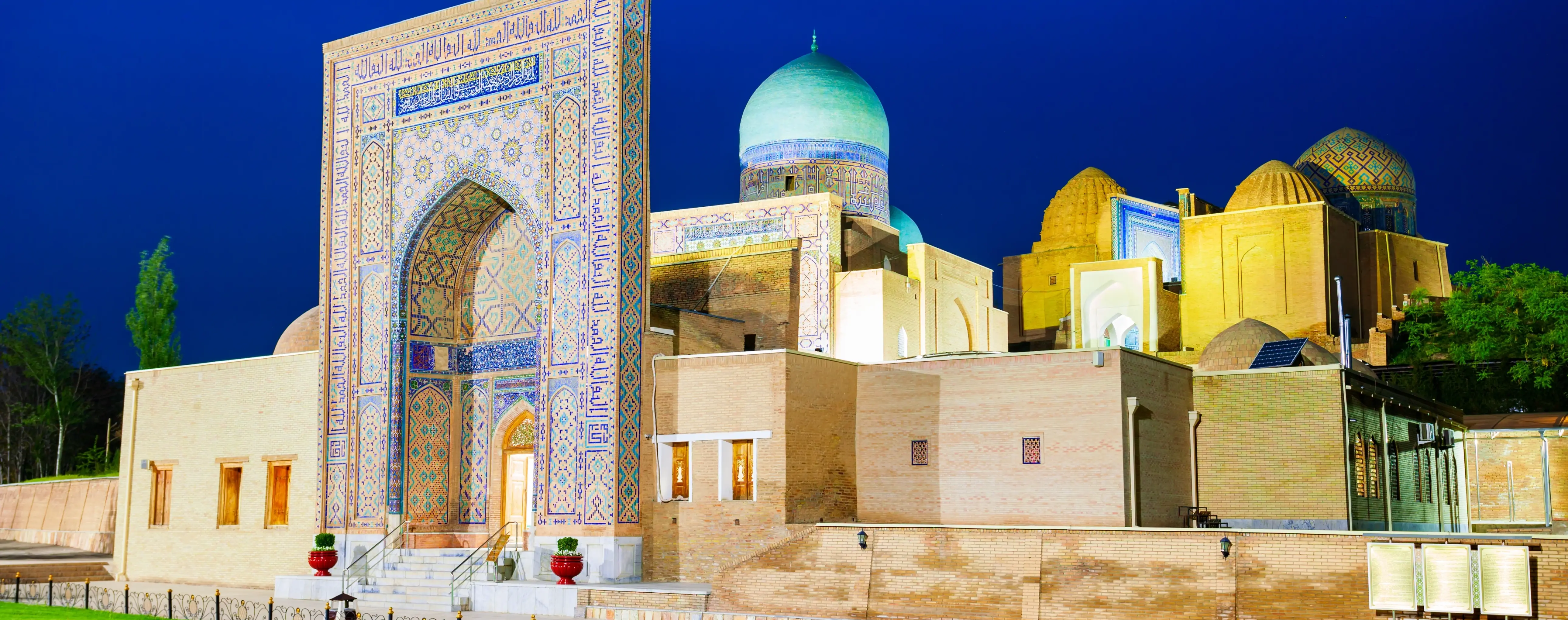
Shah-i-Zinda Mausoleum Ensemble
Shah-i-Zinda Mausoleum Ensemble in Samarkand, Uzbekistan
The Shah-i-Zinda Mausoleum Ensemble is located in the northeastern part of Samarkand, not far from the ancient site of Afrasiab. It is one of the most famous memorial and religious complexes in Uzbekistan, formed as a necropolis and place of veneration over the course of several centuries. The main part of the surviving structures dates to the 14th-15th centuries, although the history of this place begins earlier.
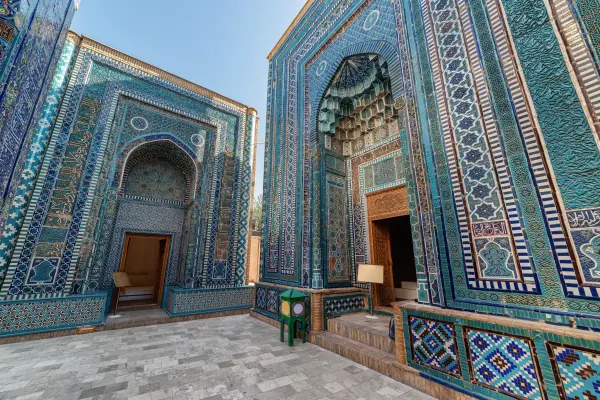
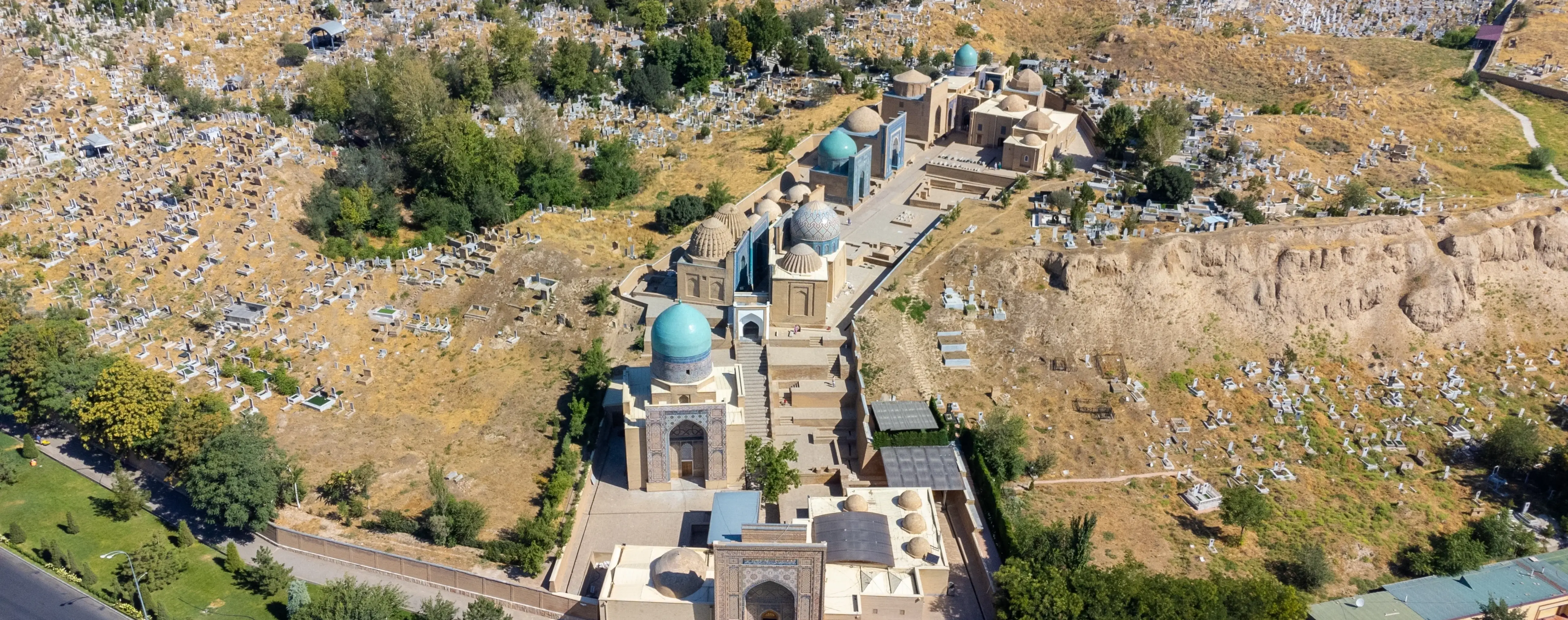
The complex consists of a chain of mausoleums, mosques, monumental entrances, and passageways built along a narrow stepped street. Shah-i-Zinda is especially famous for its rich decoration: here you can see majolica, mosaic panels, carved terracotta, and inscriptions executed in blue, turquoise, white, and ochre tones. Despite the differences in the decoration of individual tombs, the ensemble is perceived as a unified architectural space.
The name of the complex is associated with the veneration of Qutham ibn Abbas, whom Islamic tradition considers a relative of the Prophet Muhammad and a preacher of Islam in Samarkand. For the history of the city, Shah-i-Zinda is important not only as a place of pilgrimage, but also as a necropolis associated with representatives of the nobility, the clergy, and the Timurid entourage. It is here that one can especially clearly see how religious memory, funerary architecture, and decorative art were combined in medieval Samarkand.
Today the ensemble is part of the UNESCO World Heritage site "Samarkand - Crossroads of Cultures." A visit to Shah-i-Zinda is usually of interest to those who want to see one of the most expressive monuments of Samarkand architecture, examine the work of ceramists and calligraphers, and better understand the structure of a medieval necropolis in Central Asia.
Shah-i-Zinda Mausoleum Ensemble on the map
Samarkand, Shah-i-Zinda Complex: Mausoleums and tombs
Mausoleum of Qusam ibn Abbas, The Double-Domed Mausoleum of the Shah-i-Zinda Complex, Shodi-Mulk-Oko Mausoleum of the Shah-i-Zinda Complex, The Octagonal Mausoleum in Shah-i-Zinda
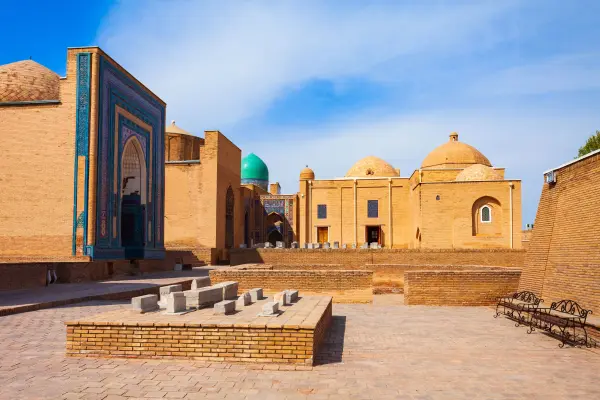
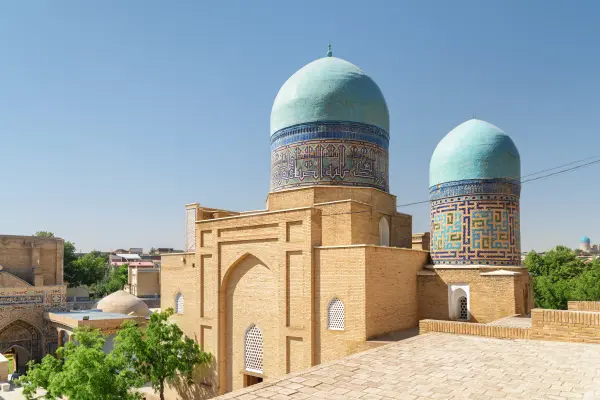
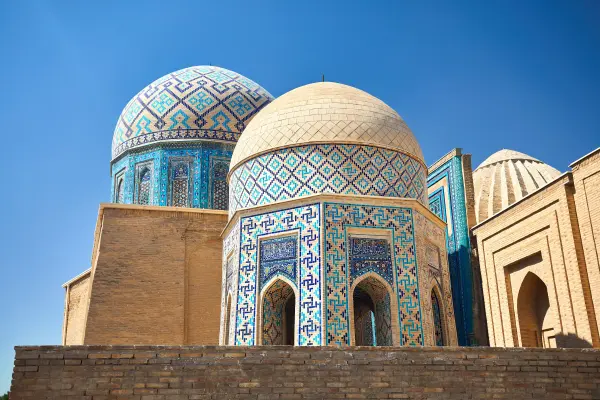
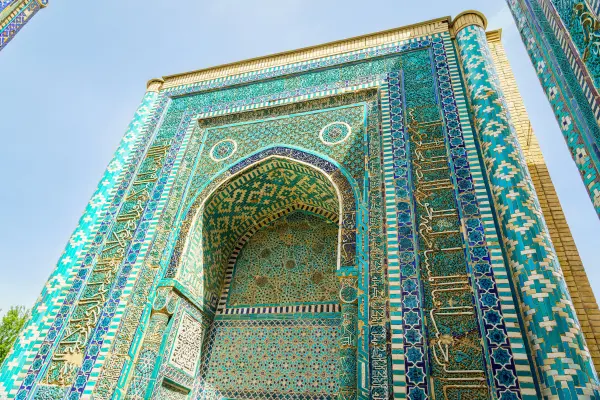
The Shah-i-Zinda Mausoleum Ensemble and its architectural features
A memorial complex with mausoleums and decorative ornamentation has been preserved here.
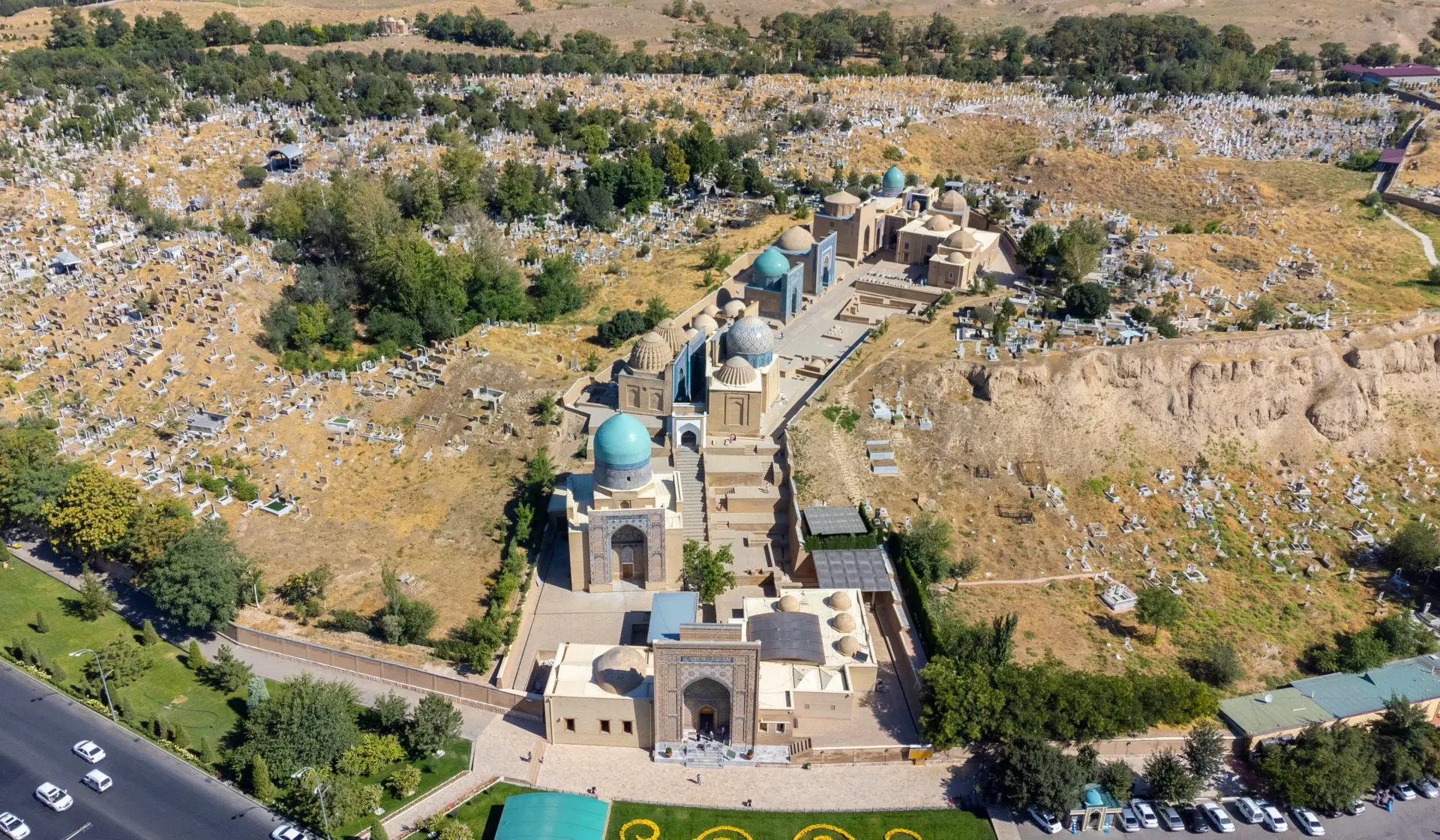
The stepped street of mausoleums with outstanding ceramic decoration
A visit to the complex usually begins at the lower entrance and continues upward along the stairs through a series of portals and small courtyards. As you ascend, the structure of the ensemble becomes clearly visible: the individual mausoleums stand very close to one another, and the decorative design becomes one of the main themes of the walk. Visitors usually pay attention to the domes, muqarnas elements of the portals, geometric patterns, and epigraphy on the facades.
Inside and outside the mausoleums, the variety of techniques characteristic of 14th-15th century Samarkand architecture is noticeable. On the walls, you can observe glazed bricks, majolica inserts, mosaics, and carved details, while the patterns and color combinations differ from one tomb to another. An important part of the visit is not only viewing the individual structures, but also perceiving the entire passage as a single architectural composition.
On the grounds, it is worth keeping in mind the religious and memorial character of the place: visitors usually choose modest clothing and a quiet manner of sightseeing. It is better to wear comfortable shoes for the walk, as the complex has stairs and sections with uneven surfaces. From the upper points, there are views of the adjacent part of Samarkand and the surroundings of Afrasiab.
Nearby are the Afrasiab archaeological site, the Afrasiab Museum, and the Bibi-Khanym Mosque, which are convenient to combine into one route through the historic part of Samarkand. The ensemble is usually reached by taxi or city transport from the center of Samarkand, after which a short walk to the entrance remains.
Best tours and travel experiences across the continent


Photos of Shah-i-Zinda
Guided tours, popular attractions, and top-rated hotels across the continent


