
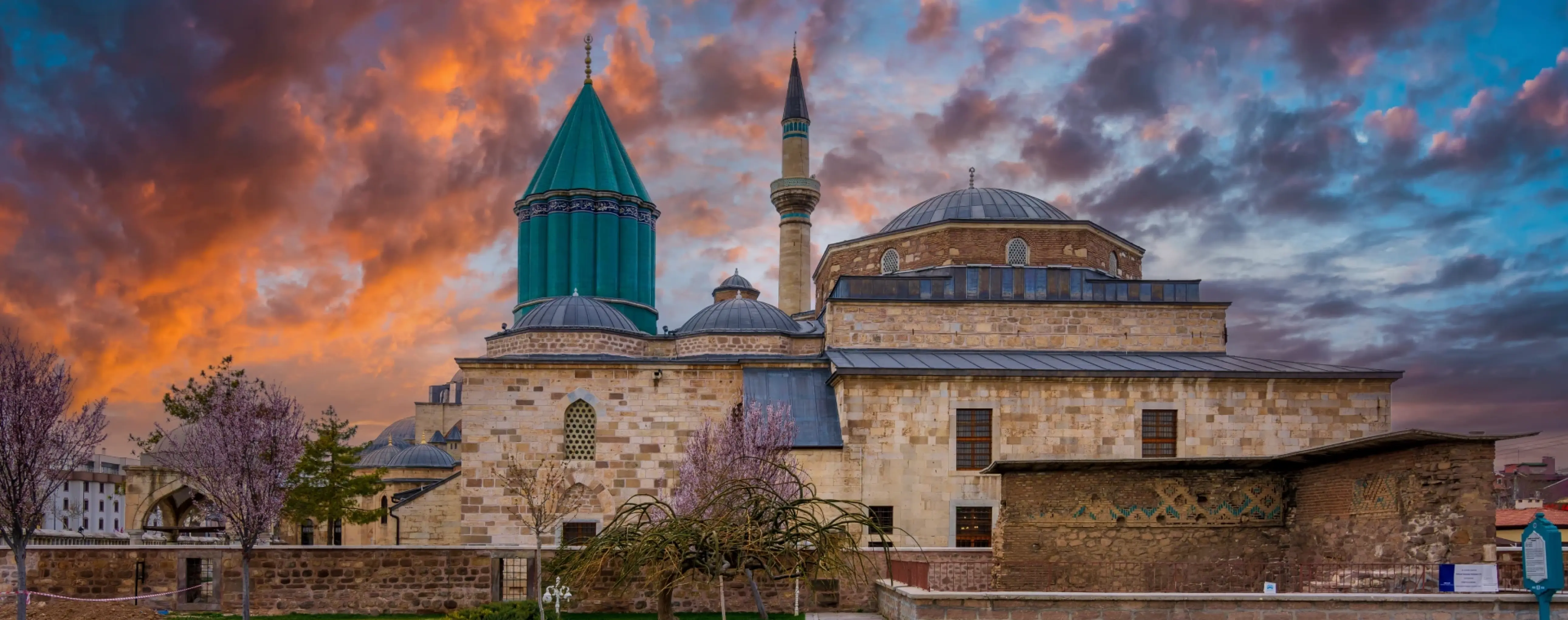
Mevlana Monastery
Mevlana Monastery in Konya, Turkey - Rumi Museum and Tomb
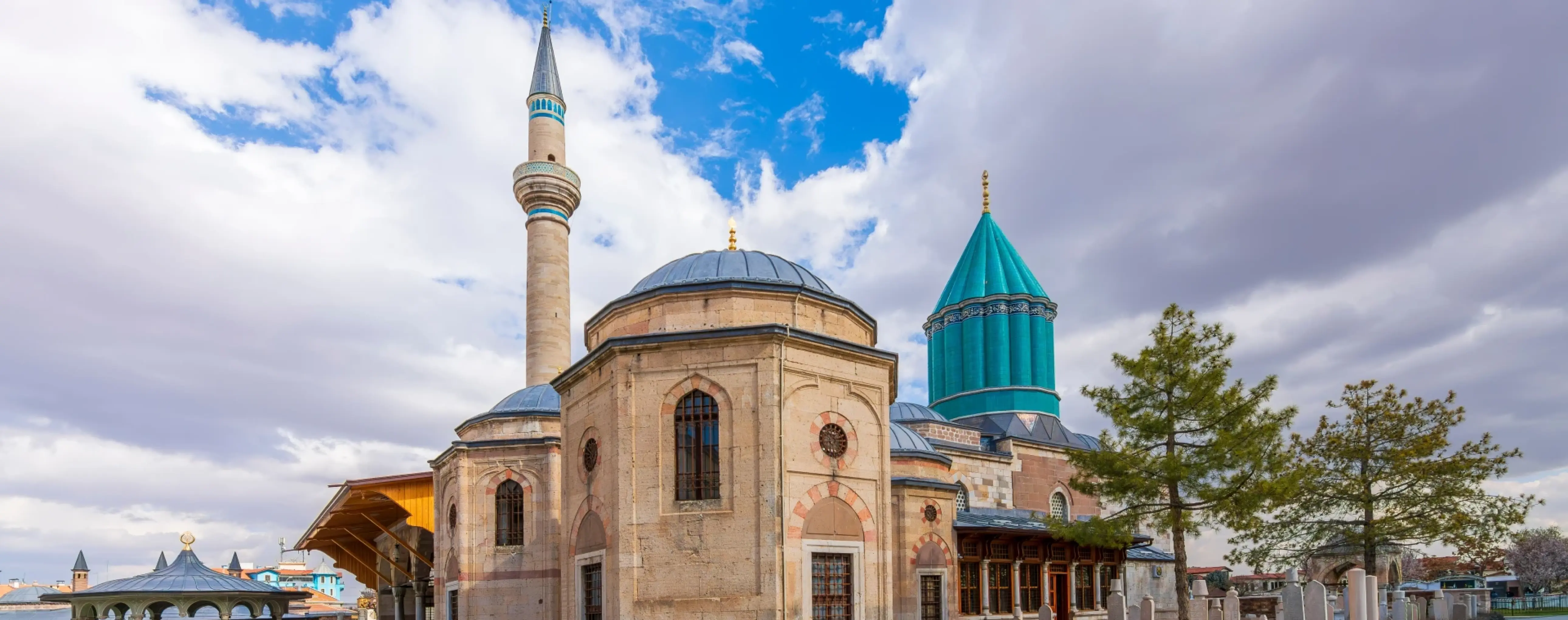
Mevlana Monastery is located in the Karatay district, not far from the center of Konya. It is the former lodge of the Mevlevi order and the burial place of Jalal ad-Din Rumi - a poet, theologian, and Sufi thinker known far beyond Turkey. The complex is easy to recognize by the turquoise-green dome above the mausoleum, which has become one of the city's most recognizable landmarks.
The history of the ensemble begins in the 13th century, when a religious and cultural center of the Mevlevi tradition formed around Rumi's grave. Over the following centuries, a monastic complex took shape here with prayer, residential, and service rooms. After tekkes and zawiyas were banned in Turkey in 1925, the lodge was closed and soon reopened as a museum.
Today, the Mevlana Museum brings together the mausoleum, the former rooms of the dervish lodge, and exhibitions dedicated to the history of the order. Visitors can see the sarcophagi of Rumi, his son Sultan Veled, and other members of the brotherhood, ancient manuscripts, musical instruments, ritual objects, and examples of dervish clothing. The interiors show features of Seljuk and Ottoman architecture, and the layout itself makes it possible to imagine how the spiritual center of the Mevlevi was arranged.
The site is especially interesting for those who want to better understand the cultural and religious history of Anatolia. The sema tradition - the ritual whirling of the dervishes, recognized as UNESCO Intangible Cultural Heritage - is associated with the monastery. In December, Konya hosts the commemorative Seb-i Arus ceremonies dedicated to the anniversary of Rumi's death, and at that time interest in the museum is especially high.
Mevlana Monastery on the map
Mevlana Monastery - exhibitions, architecture, and inner courtyards
The site combines religious memory, museum exhibits, and historic architecture
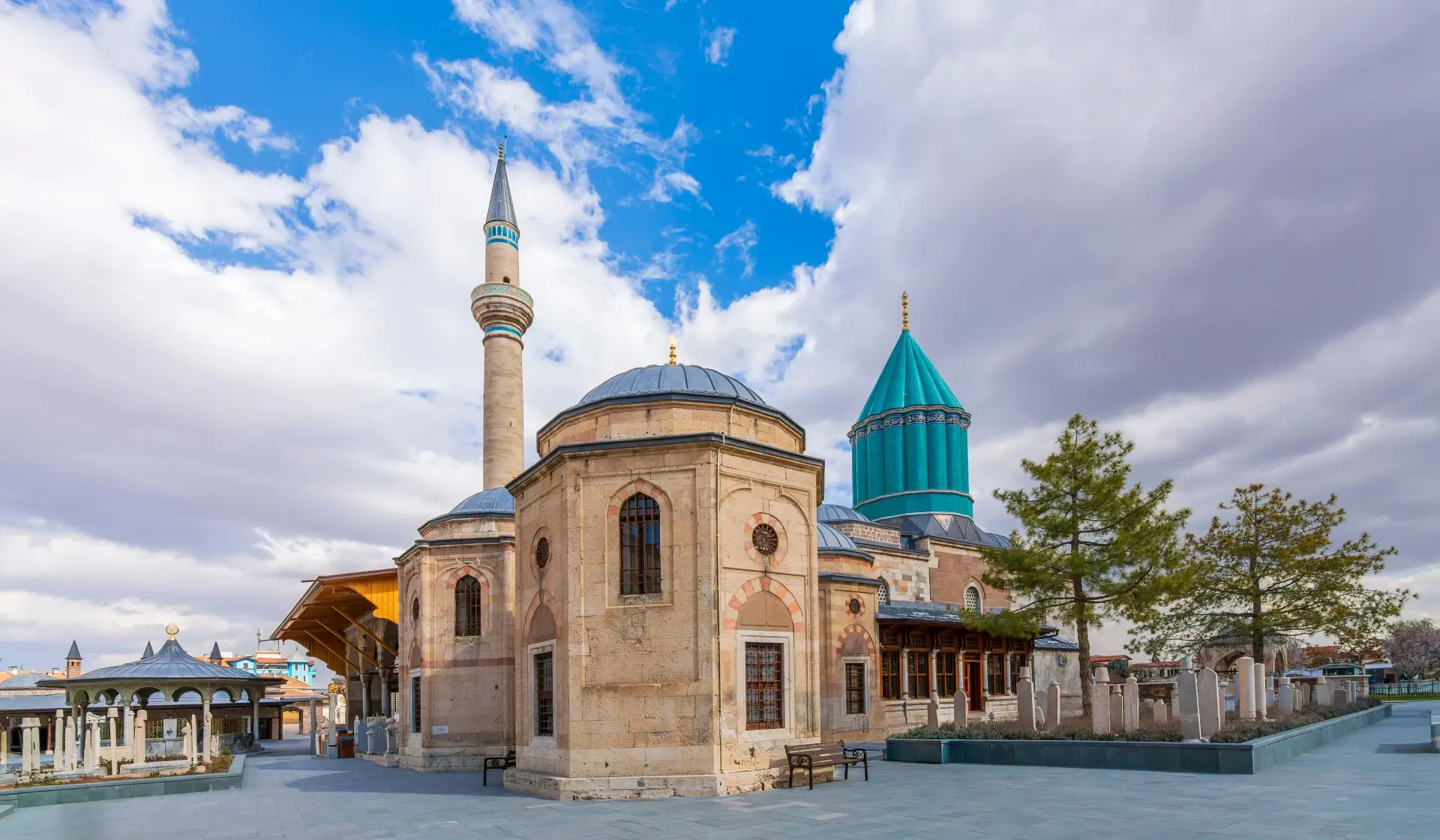
The Green Dome, Rumi's mausoleum, and the legacy of the Mevlevi order
The main part of the visit is Rumi's tomb beneath the Green Dome and the halls where memorial sarcophagi and religious relics are preserved. The museum rooms display calligraphic manuscripts of the Quran, old books, candlesticks, musical instruments used to accompany the sema ceremony, and items from the everyday life of the dervishes. The exhibition helps visitors understand not only the spiritual side of the order, but also its way of life.
On the grounds, visitors can explore the inner courtyards, former dervish cells, and rooms that now house thematic exhibitions. Many visitors pay attention to the carved details, tiles, wooden interior elements, and inscriptions preserved from the Ottoman period. Inside, it is usually customary to behave calmly and respectfully, as for many this is not only a museum, but also a place of remembrance.
A visit to the complex is usually easy to combine with a walk through the historic part of Konya. Nearby are Selimiye Mosque, Alaeddin Hill, and the Karatay Madrasa Museum, so the area is well suited for a walking route of several hours. The museum is easy to reach from central Konya on foot, by tram, or by taxi.
Best tours and travel experiences across the continent


Photos of Mevlana Monastery
Guided tours, popular attractions, and top-rated hotels across the continent


