
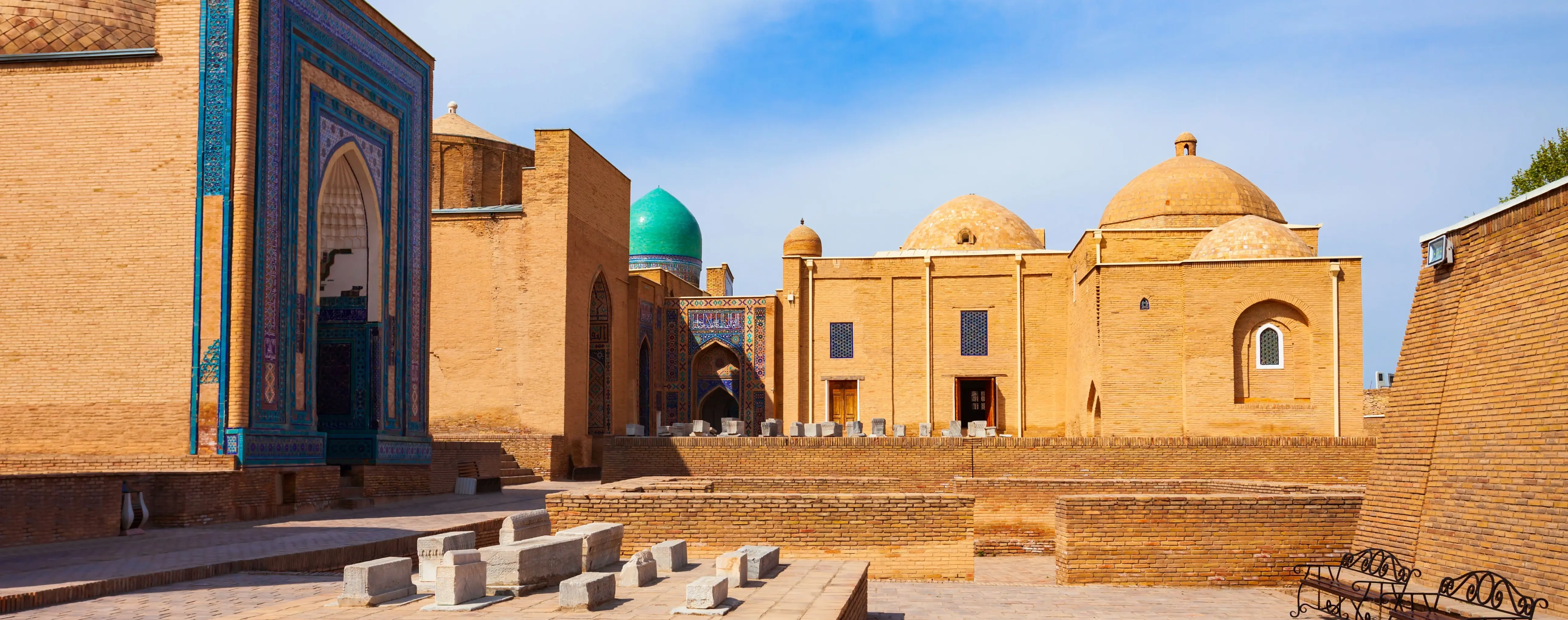
Mausoleum of Qusam ibn Abbas
Mausoleum of Qusam ibn Abbas in Samarkand, Uzbekistan
The Mausoleum of Qusam ibn Abbas is located in Samarkand within the Shakhi-Zinda ensemble, one of the city's most famous historical complexes. This tomb is associated with the veneration of Qusam ibn Abbas, whom Islamic tradition considers a relative of the Prophet Muhammad. It was around this revered site that the entire ensemble gradually took shape over several centuries.
The oldest surviving parts of the complex date back to the 11th century, although much of its current appearance was formed later, including during the era of Amir Timur and the Timurids. The mausoleum and the adjoining rooms were rebuilt several times, so traces of different construction phases can be seen here. This combination makes the monument especially interesting for those who want to understand how the architecture of Samarkand developed.
Associated with the mausoleum are a ziaratkhana for pilgrims, an underground memorial mosque, and several small rooms that complete the structure of the shrine. The decoration features glazed tiles characteristic of Samarkand, carved wood, and decorative ceramics. Particular attention is drawn to the historic carved door from the early 15th century, created by the master Yusuf Shirazi.
For tourists, this place is interesting not only as a separate monument but also as the symbolic center of Shakhi-Zinda. A visit to the mausoleum makes it possible to see one of the ensemble's most important religious sites and better understand why this necropolis holds a special place in the history and culture of Samarkand.
Mausoleum of Qusam ibn Abbas on the map
Samarkand, Shah-i-Zinda Complex: Mausoleums and tombs
Shah-i-Zinda Mausoleum Ensemble, Shodi-Mulk-Oko Mausoleum of the Shah-i-Zinda Complex, The Octagonal Mausoleum in Shah-i-Zinda, Shirin-Beka-Aka Mausoleum of the Shah-i-Zinda Complex
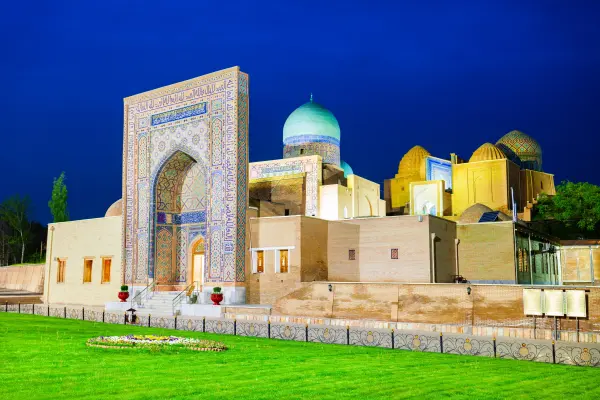
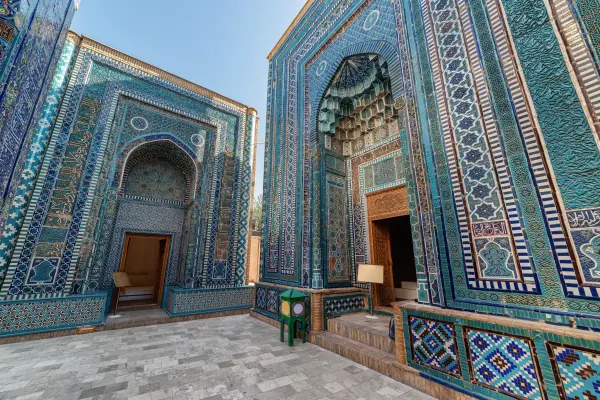
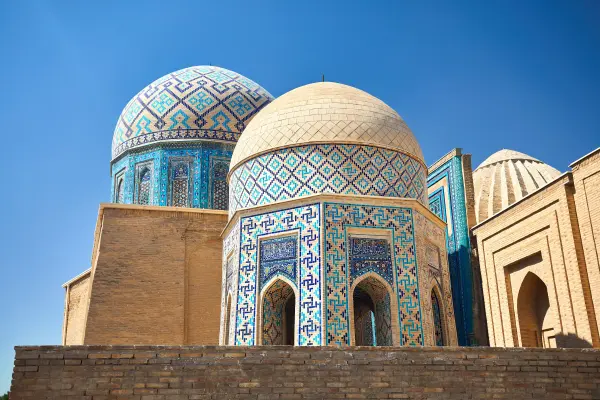
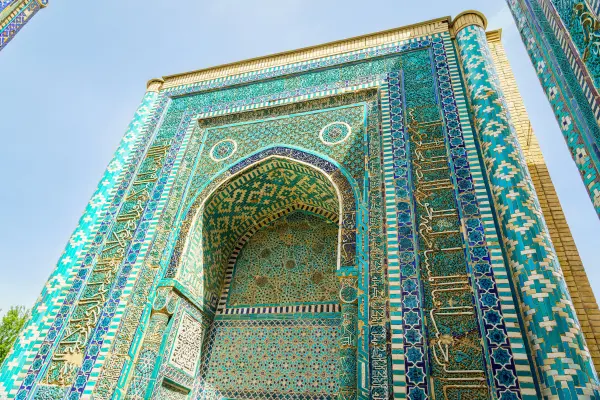
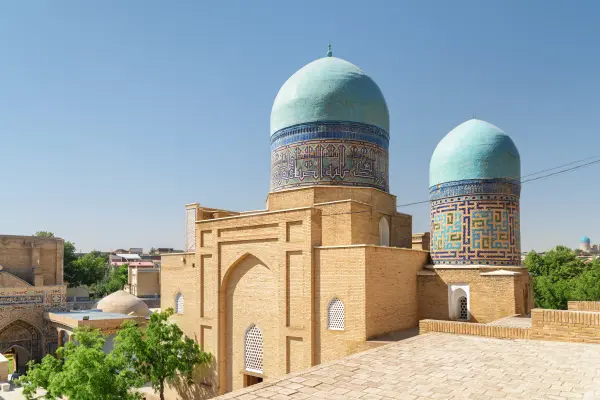
Mausoleum of Qusam ibn Abbas in the Shakhi-Zinda ensemble
Traces of different stages of construction and Samarkand's religious tradition have been preserved here.
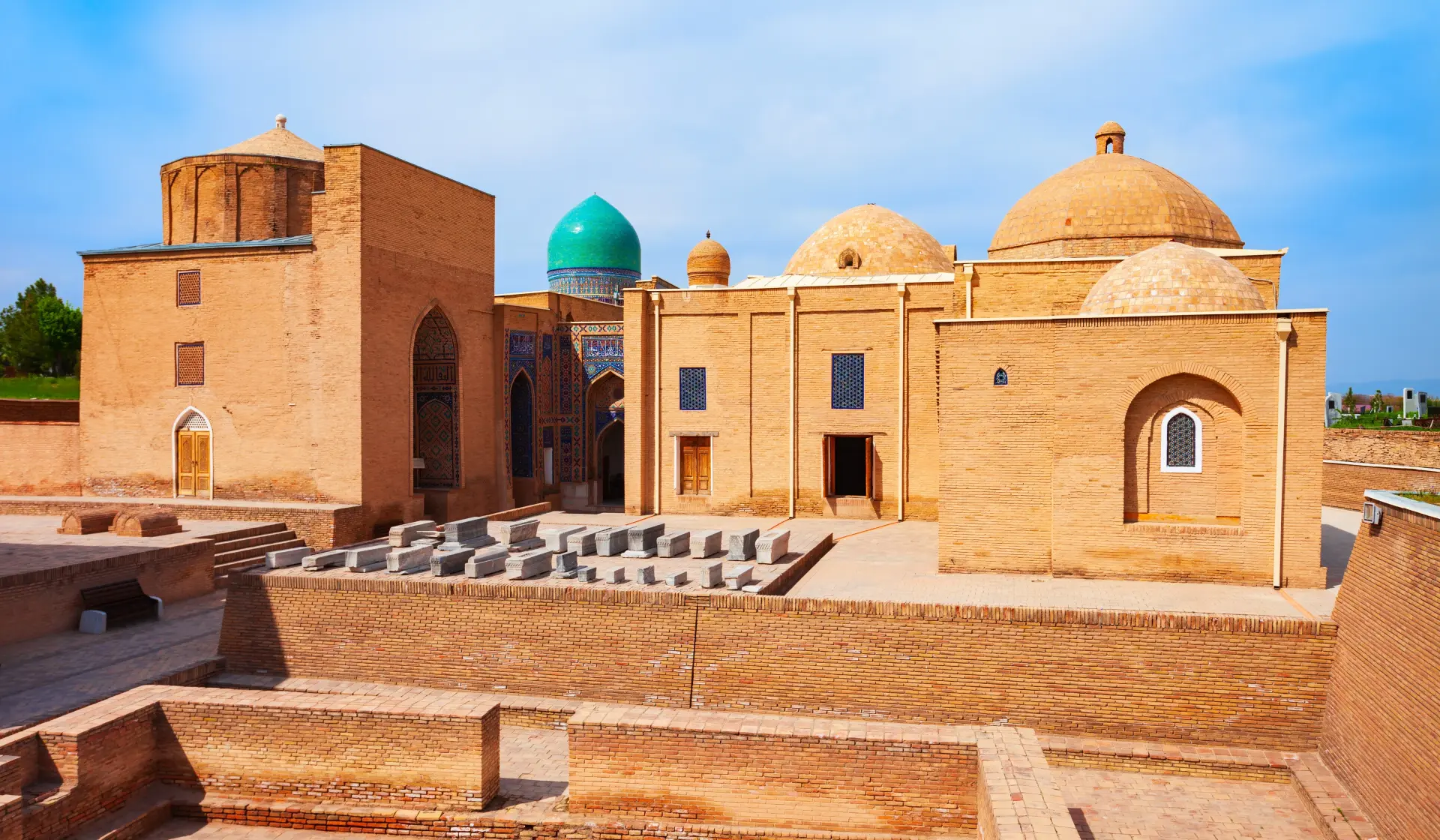
A shrine in the heart of the Shakhi-Zinda ensemble
During a visit, you can examine the layout of the complex, which developed gradually: the tomb, rooms for prayer and pilgrimage, as well as passages and small side chambers. The interior space is relatively intimate, so attention is usually focused on the wall decoration, domed ceilings, and the tombstone adorned with glazed tiles. In some parts, differences in the decor are noticeable, reflecting later reconstructions.
One of the most famous details is the wooden door from the early 15th century, made of elm and decorated with delicate carving. It preserves the name of the master Yusuf Shirazi and the date of its creation, which makes it an important monument of applied art of its time. Also of interest is the descent into the 15th-century underground memorial mosque: this is an elongated room beneath three domes, where bright blue tiles run along the lower part of the walls.
A tour of the mausoleum is usually combined with a walk through the entire Shakhi-Zinda ensemble, where other mausoleums, portals, and historical burials from the 14th-15th centuries are located nearby. Not far away are the Bibi-Khanym Mosque, the necropolis, and the Afrasiab hill, so this area is convenient to explore step by step during one trip through old Samarkand.
You can get here from the center of Samarkand by taxi or on foot if you are already exploring the historic part of the city. When visiting, it is worth taking into account the religious nature of the place and choosing modest clothing, especially if pilgrims are inside.
Best tours and travel experiences across the continent




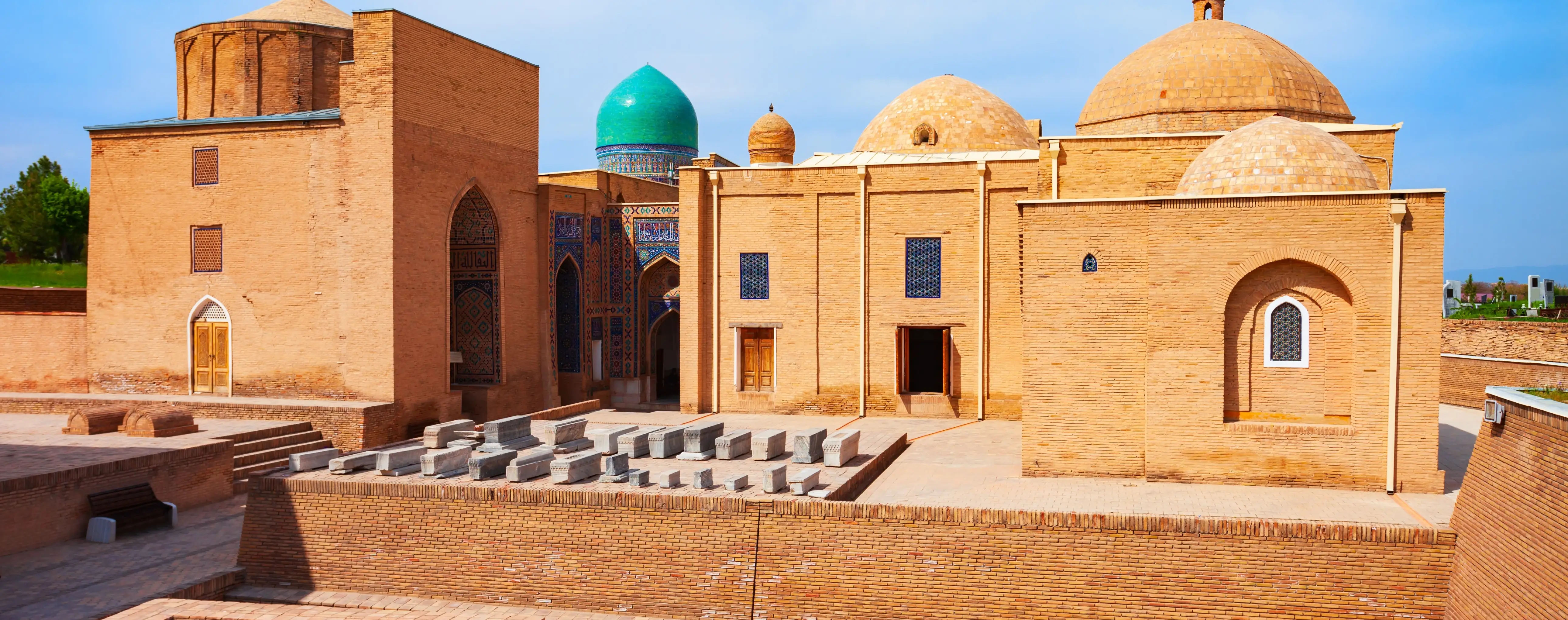
Photos of the mausoleum
Guided tours, popular attractions, and top-rated hotels across the continent


