
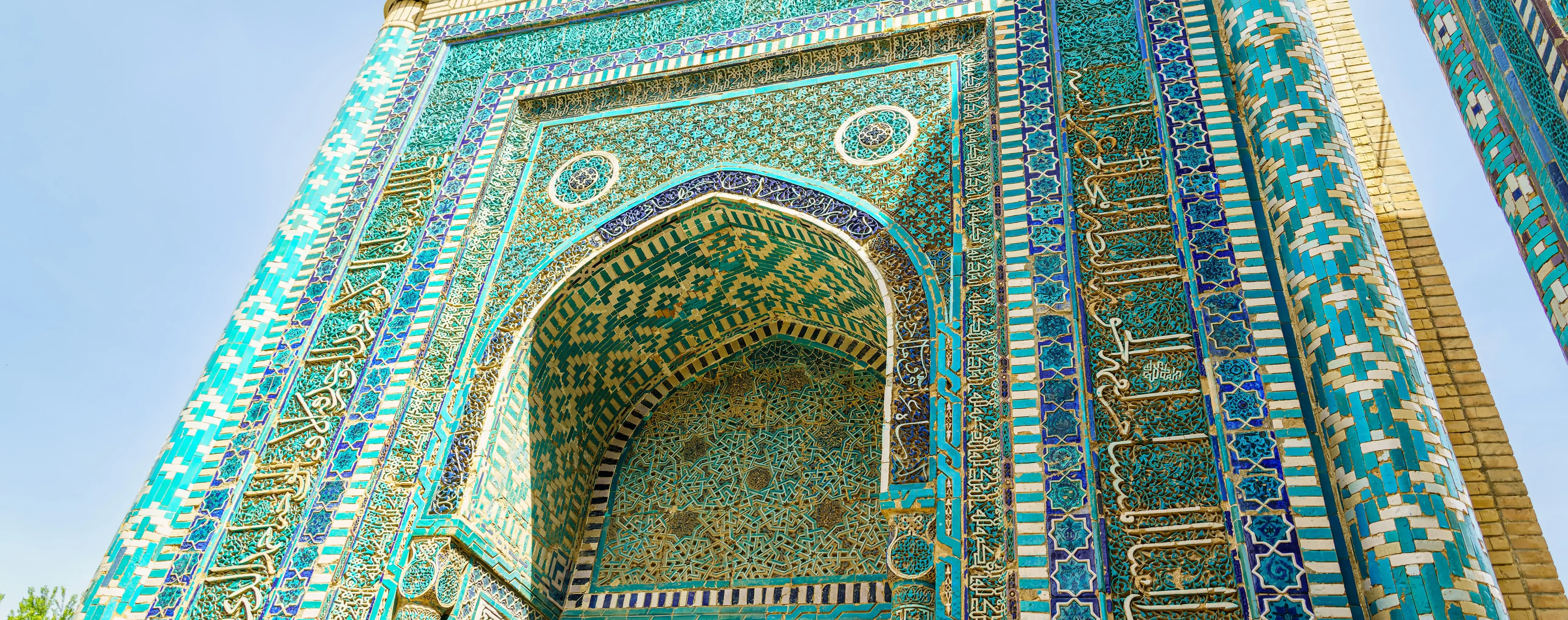
Shirin-Beka-Aka Mausoleum of the Shah-i-Zinda Complex
Shirin-Beka-Aka Mausoleum of the Shah-i-Zinda Complex in Samarkand, Uzbekistan
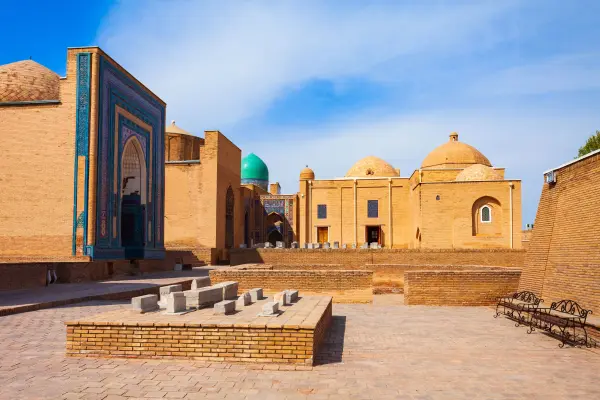
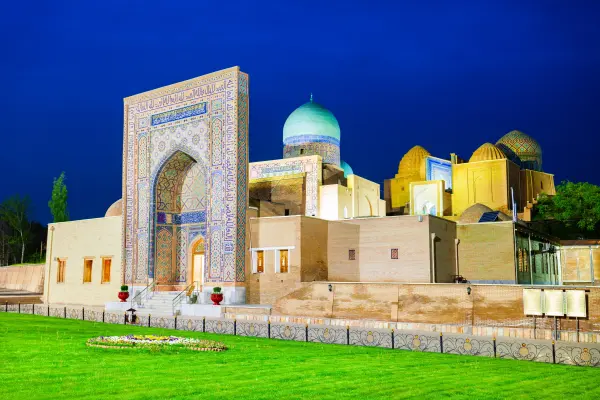
The Shirin-Beka-Aka Mausoleum is located within the Shah-i-Zinda ensemble in Samarkand, on one of the upper sections of this famous necropolis. It is usually dated to the late 14th century and associated with the circle of Amir Timur’s family. Among the structures of the complex, the mausoleum stands out for its especially refined decorative finish and harmonious proportions.
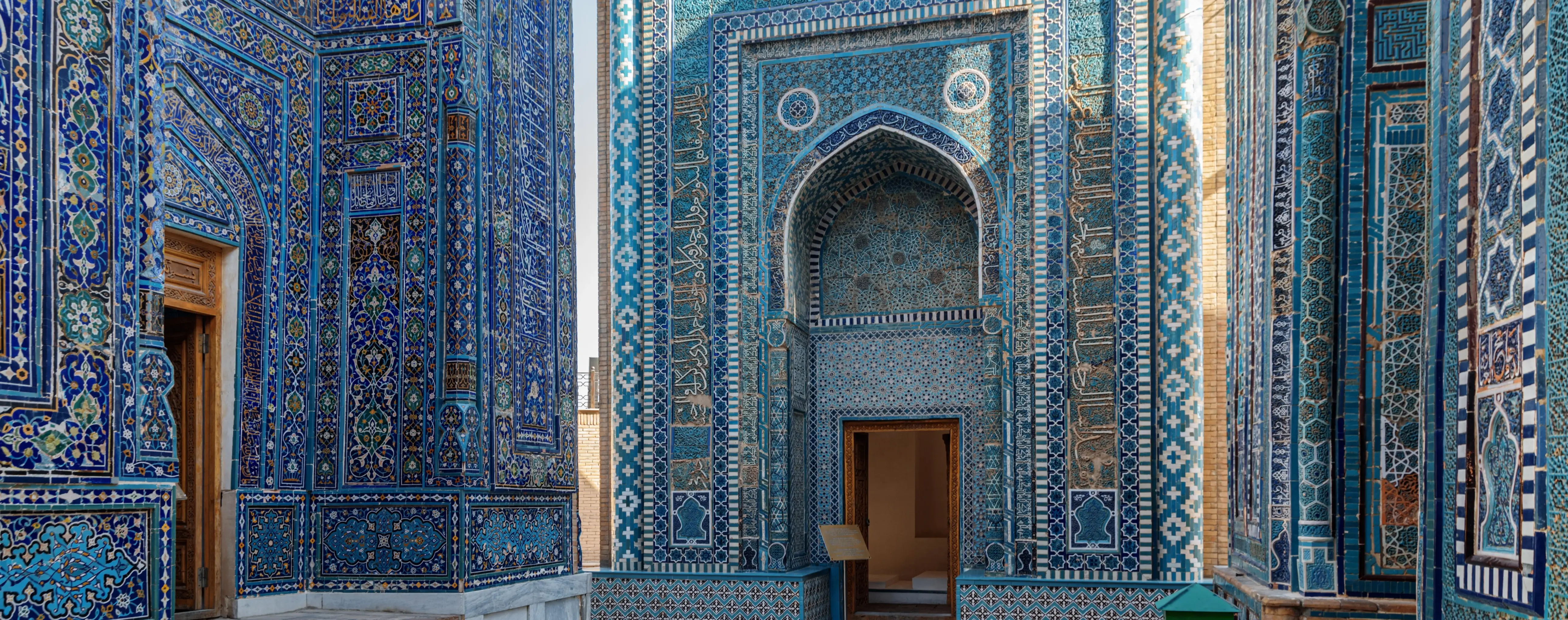
The building is notable above all for its facade cladding: inlaid mosaic, glazed tiles, and intricate ornamentation characteristic of Samarkand architecture of the Timurid period were used here. Researchers also note the influence of the Iranian artistic tradition, visible in the decorative patterns and the combination of shades. The dome is set on a drum with openings, allowing plenty of natural light to enter the interior.
The interior of the mausoleum draws attention to its details: the light background of the walls, ornamental painting, and the carefully considered composition of decorative elements create a unified space that clearly conveys the level of craftsmanship of medieval Samarkand artisans. In the 20th century, the monument was restored, and during the work fragments of the interior decoration were uncovered and studied.
For tourists, the mausoleum is of interest as part of the route through Shah-i-Zinda, where one can see the development of Samarkand’s memorial architecture over several centuries. Visiting this building is especially valuable for those who want to pay attention not only to the overall appearance of the complex, but also to the subtlety of its decorative art.
Shirin-Beka-Aka Mausoleum of the Shah-i-Zinda Complex on the map
Samarkand, Shah-i-Zinda Complex: Mausoleums and tombs
The Octagonal Mausoleum in Shah-i-Zinda, Shodi-Mulk-Oko Mausoleum of the Shah-i-Zinda Complex, The Double-Domed Mausoleum of the Shah-i-Zinda Complex, Mausoleum of Qusam ibn Abbas
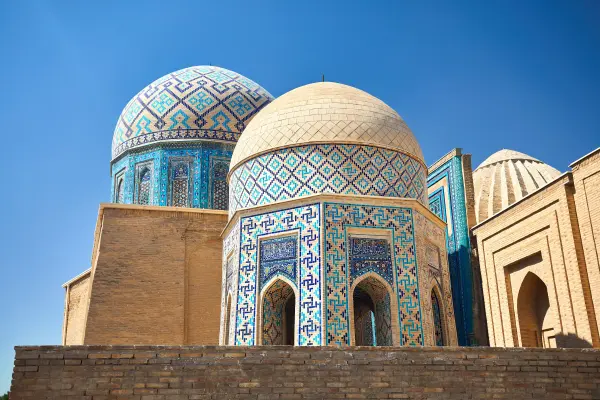
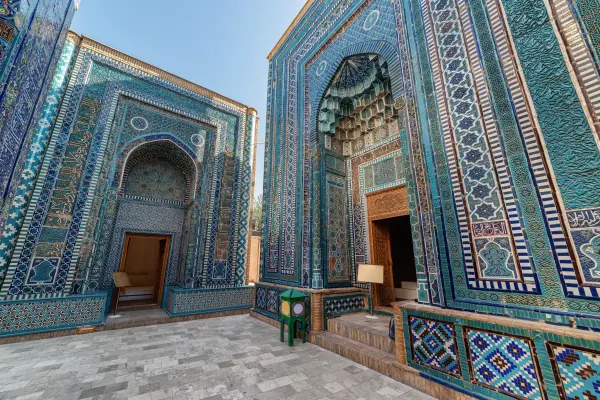
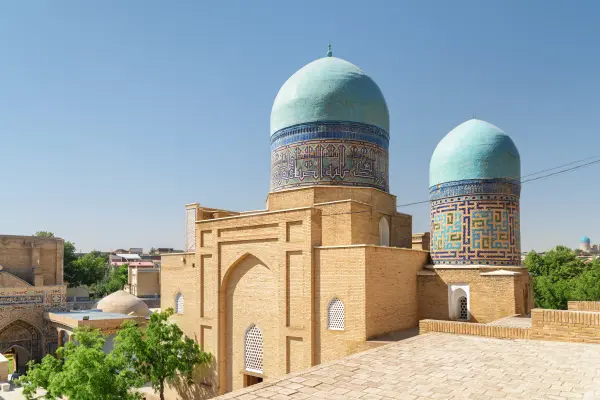
The Shirin-Beka-Aka Mausoleum of the Shah-i-Zinda Complex and Its Decor
A monument of Timurid architecture with mosaic, painting, and a light-filled interior.
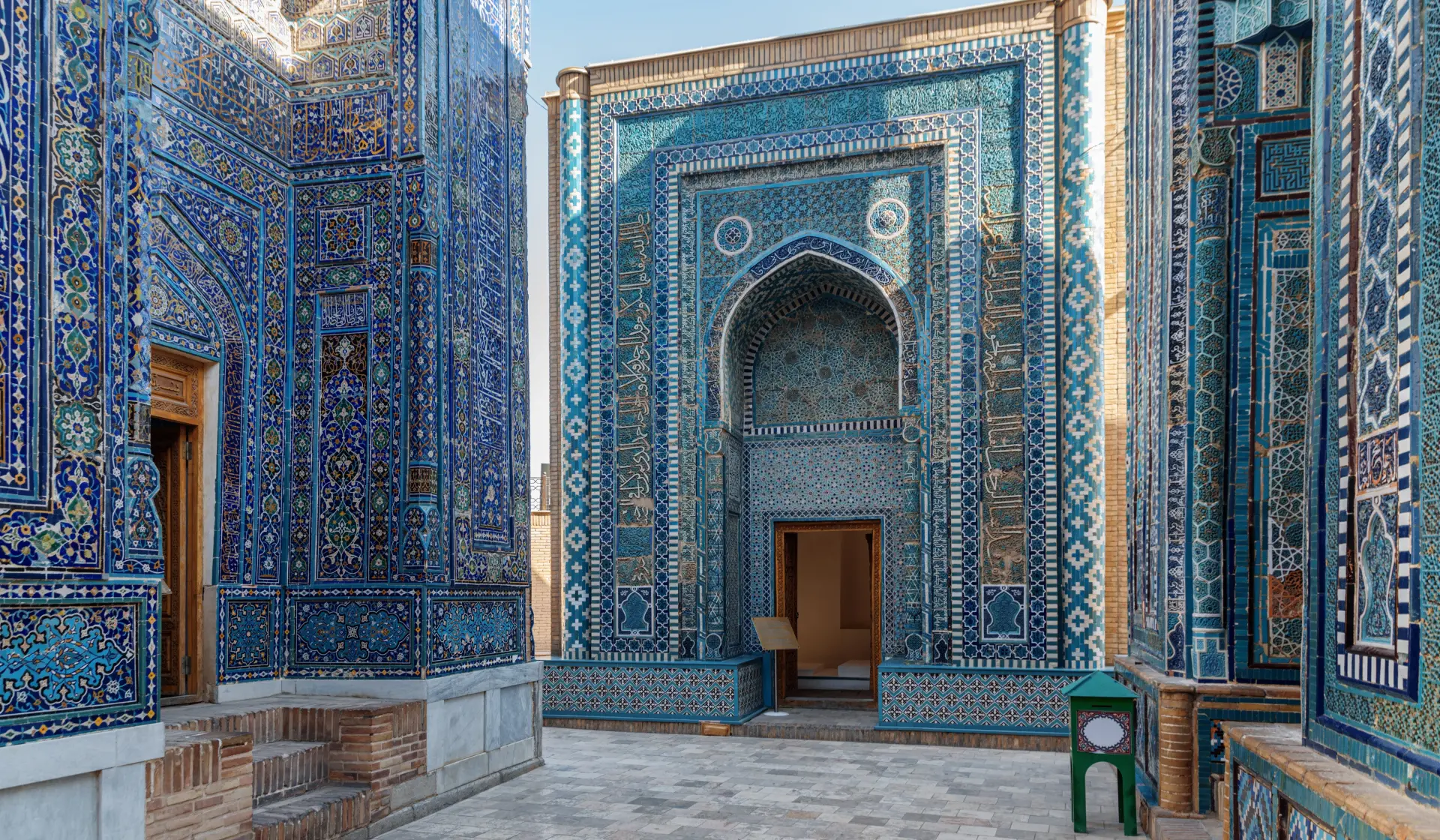
Fine mosaic, a light-filled interior, and a dome with window openings
When visiting the mausoleum, it is worth paying attention to the portal and the wall cladding: this is where the work with small mosaic elements and geometric ornament is best appreciated. The decor does not overload the facade, but emphasizes the architectural lines, so the building is easy to observe both up close and from a short distance while walking through the ensemble.
Inside, the lighting and the decoration of the domed space are of particular interest. Thanks to the openings in the drum, the interior appears more open than in many other small mausoleums, and the paintings and ornamental details are perceived more clearly. If the visit is unhurried, it makes sense to linger for a few minutes and observe the transition from the walls to the dome.
The mausoleum is usually visited during a walk through the entire Shah-i-Zinda complex, where other Timurid-period tombs, a mosque, and passageways with characteristic Samarkand ceramic decoration are located nearby. This makes it possible to compare the decorative techniques of different structures within a single ensemble.
You can get here through the entrance to the Shah-i-Zinda complex in Samarkand, after which the mausoleum is reached on foot via the main staircase and the passageways of the necropolis. It is best to keep in mind that the visit involves climbing steps and passing through several sections of the complex in sequence.
Best tours and travel experiences across the continent




Photos of the mausoleum
Guided tours, popular attractions, and top-rated hotels across the continent


