
Rukhabad Architectural Complex
Rukhabad Architectural Complex in Samarkand, Uzbekistan
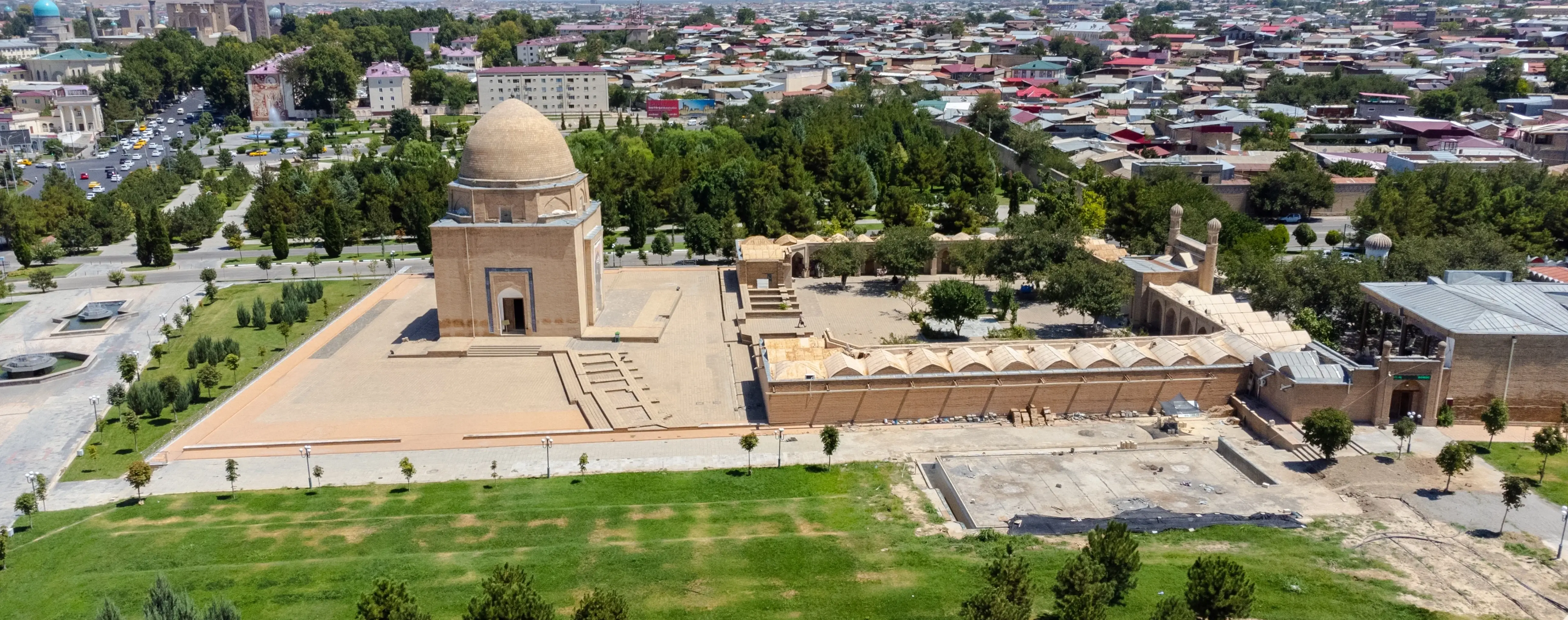
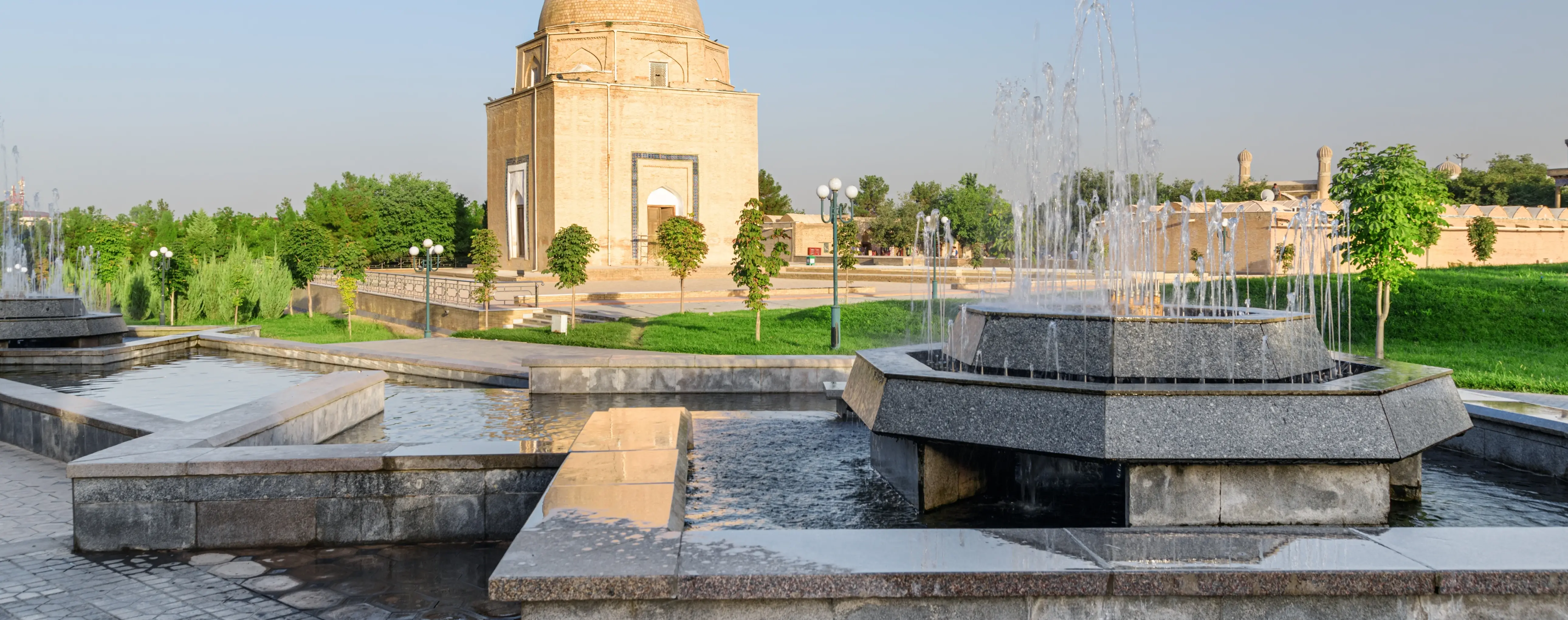
The Rukhabad Architectural Complex is located in the central part of Samarkand, not far from the city's main historical routes. It stands out for its restrained architecture: the complex does not feature the high ceremonial portal and extensive decorative cladding often associated with Samarkand monuments. Because of this, attention is focused on the clear volumes of the building and its memorial purpose.
The core of the complex is the Rukhabad Mausoleum, built in the 14th century during the reign of Amir Temur. Later, an ensemble of religious and auxiliary buildings formed around it. Today, visitors can see the mausoleum itself, a mosque and a khanqah, a 19th-century summer mosque, as well as other buildings connected with the religious and educational life of the complex.
Rukhabad is of interest to those who want to see in Samarkand not only the most ornate monuments, but also a more austere type of medieval architecture. The complex helps visitors better understand the diversity of urban development from different periods and the role of memorial structures in the region's history. It is easy to include in a walk through central Samarkand together with other famous nearby attractions.
Rukhabad Architectural Complex on the map
Samarkand, Historic Centre of Samarkand: Architectural and historical complexes
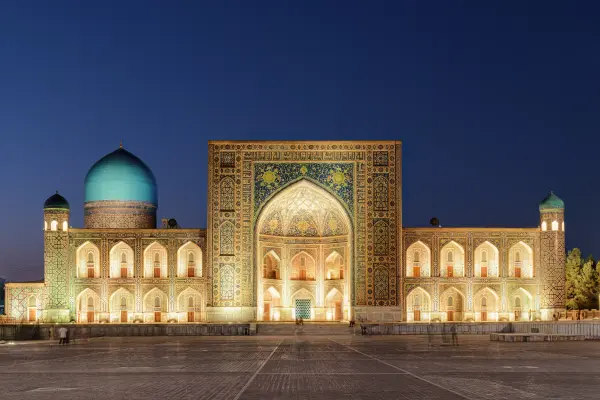
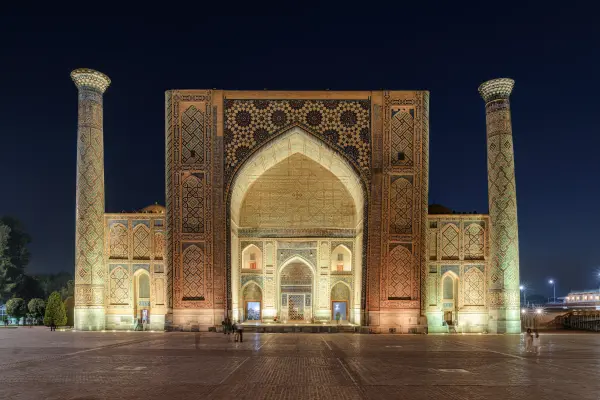
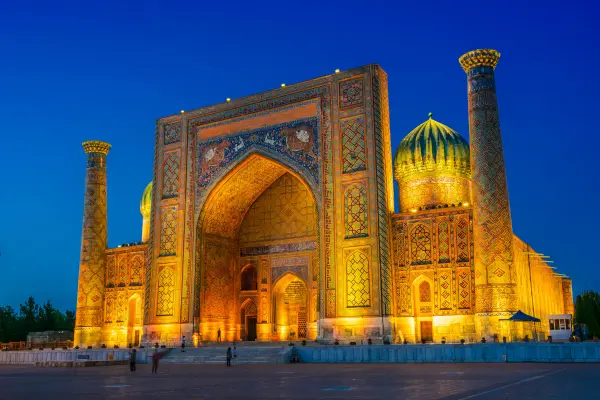
Tilla-Kori Madrasah, Ulugh Beg Madrasah in Samarkand, Sher-Dor Madrasah, Chorsu Trading Dome
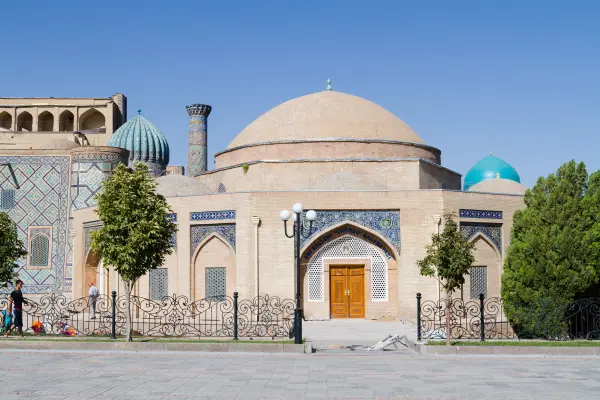
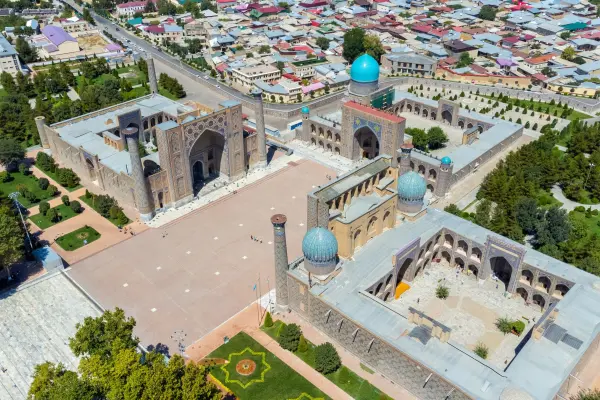
The Rukhabad Architectural Complex and its historic ensemble
The complex showcases Samarkand's restrained medieval architecture.
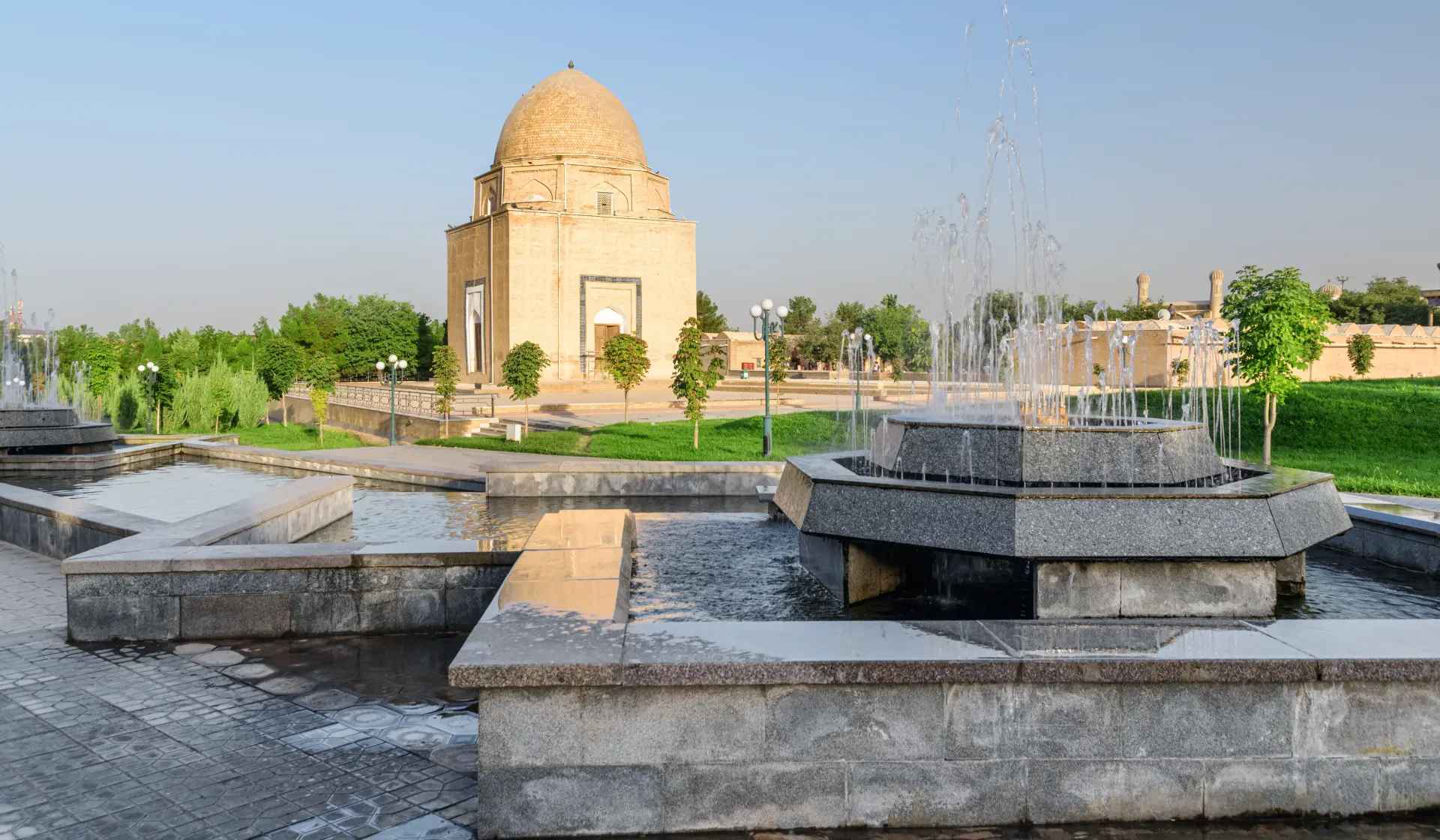
Austere memorial ensemble near the historic center
The main thing visitors notice is the mausoleum's appearance, unusually laconic for Samarkand. The building looks cohesive and monumental, without a lavish decorative accent on the facade. This appearance distinguishes Rukhabad from many structures of the Timurid era and makes it especially interesting for those comparing the city's different architectural traditions.
During a visit, it is worth paying attention not only to the mausoleum, but also to the overall structure of the complex. The mosque, khanqah, and later summer mosque show how the site developed over time and retained its religious significance. The area is perceived as a unified historical ensemble, where the proportions of the buildings, their arrangement in relation to one another, and the calm character of the decoration are important.
A visit usually takes little time, so Rukhabad is convenient to combine with a walk through the central part of Samarkand. The Gur-e-Amir Mausoleum and Registan Square are nearby, so the complex is often included in a route between the city's key landmarks. You can get here on foot or by taxi from central Samarkand.
Best tours and travel experiences across the continent

Photos of Rukhabad
Guided tours, popular attractions, and top-rated hotels across the continent


